



Every AI company uses the same three words. Visitors need to see one real task, done.
Web design for AI and automation companies: show what the model actually does

Why it matters
Most AI startups share the same problem: powerful technology, real results, yet a website that leaves an abstract promise the visitor can't quite picture, trust, or act on in the time they give you.
The problem
Powerful technology, abstract promise, a visitor who doesn't get it.
Why AI company websites all look the same
AI rarely fails on capability. It fails on the page, when a website can't make an abstract technology feel concrete, trustworthy, and worth a serious conversation in thirty seconds.
The traps
Trap 0101 / 04
Buzzwords
Nothing to picture
Models, agents, copilots: the words pile up, and the visitor still cannot picture what the product does.
Trap 0202 / 04
Hype, not use cases
Promises without a use case
Big claims, no customer task, no metric, no outcome. Nothing separates you from a demo built last week.
Trap 0303 / 04
Gradients and glow
The AI look
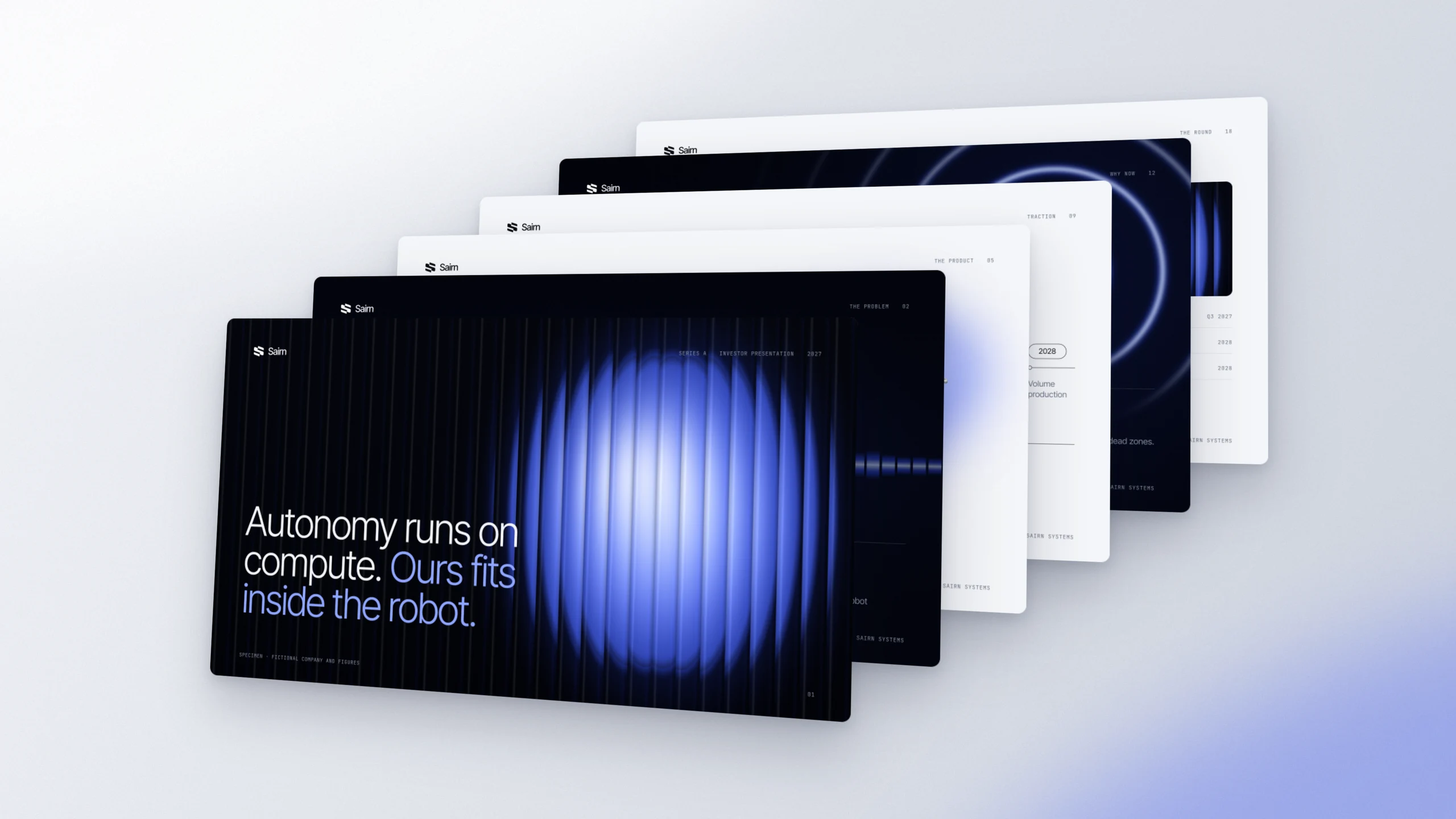
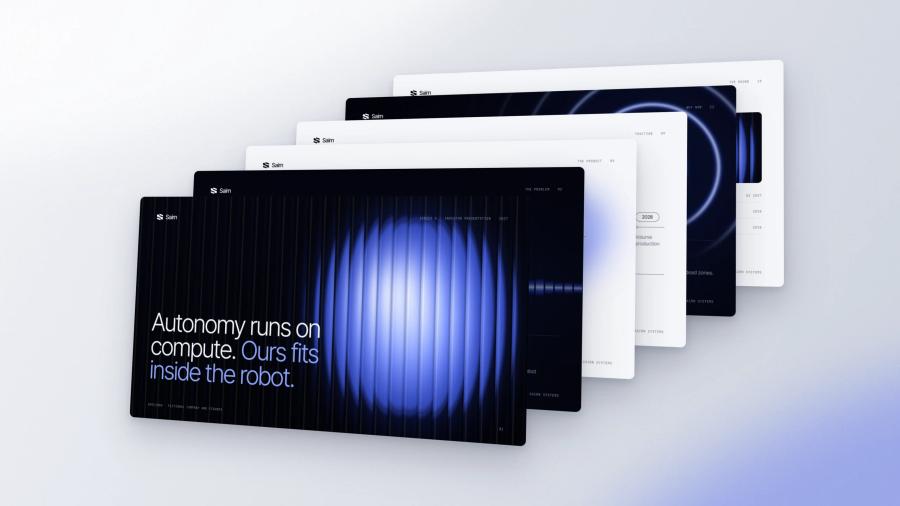
Purple gradients and glowing orbs say hype. Every competitor uses them, so none of them says substance.
Trap 0404 / 04
A black box
The model stays a black box
No demo, no flow, no input and output. The visitor never sees what the AI does with their data.
The AI market, in numbers
AI is everywhere now. Adoption is no longer the edge, trust is. With every company claiming AI, how clearly and credibly you present yours has become part of its value. Standing out is no longer optional.
Global investment
$581.7B
Global corporate AI investment in 2025, up 130% in a year.
Scaling
44%
Of companies say AI is now scaling across the enterprise, up from 38%.
Real impact
37%
Of companies see any EBIT impact from AI, about the same as a year ago.
First impression
50ms
The time it takes visitors to judge a web page's visual appeal.
Source: Stanford HAI, AI Index Report 2026 · McKinsey, The State of AI in 2026 · Lindgaard et al., Behaviour & Information Technology, 2006

03
Public sources behind the figures on this page
- 01Stanford HAI, AI Index Report 2026
- 02McKinsey, The State of AI in 2026
- 03Lindgaard et al., Behaviour & Information Technology, 2006
We only publish figures we can trace: every number links back to a public report, dataset or survey.
How we work with AI & Data
We map what your AI does, step by step, before we design
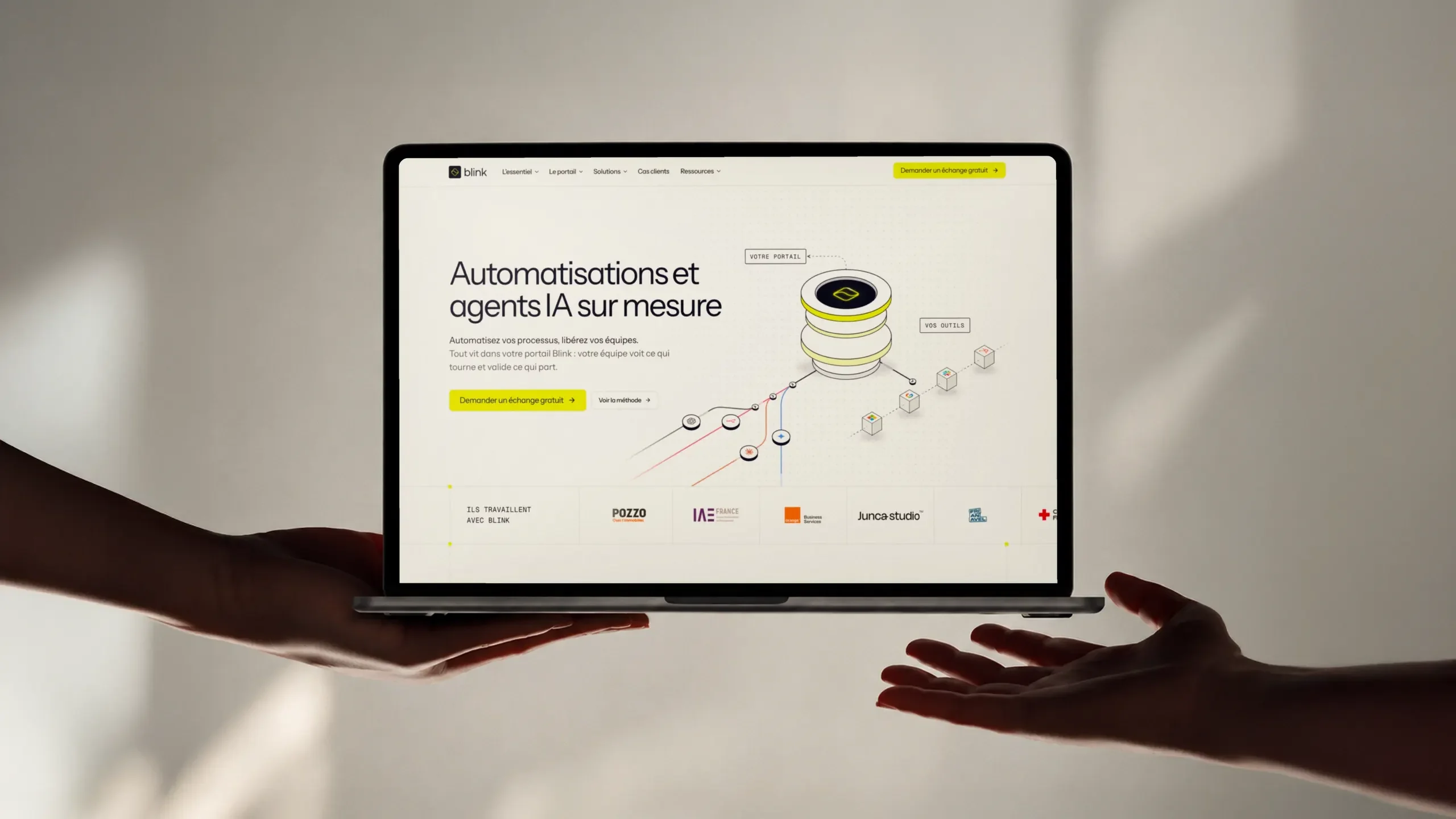
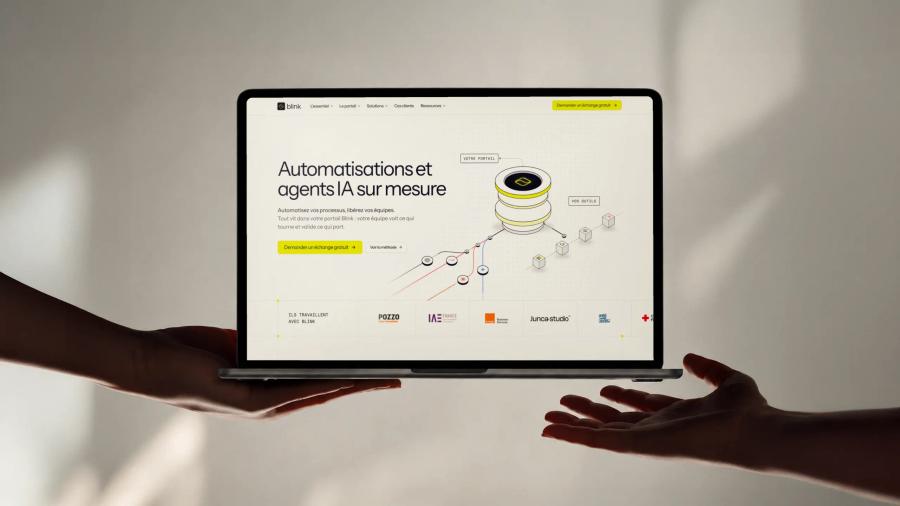
We've built for Blink and other automation teams. We read the workflows, grasp the models and the data, and we know what to keep, what to cut, and how to stage what's left.
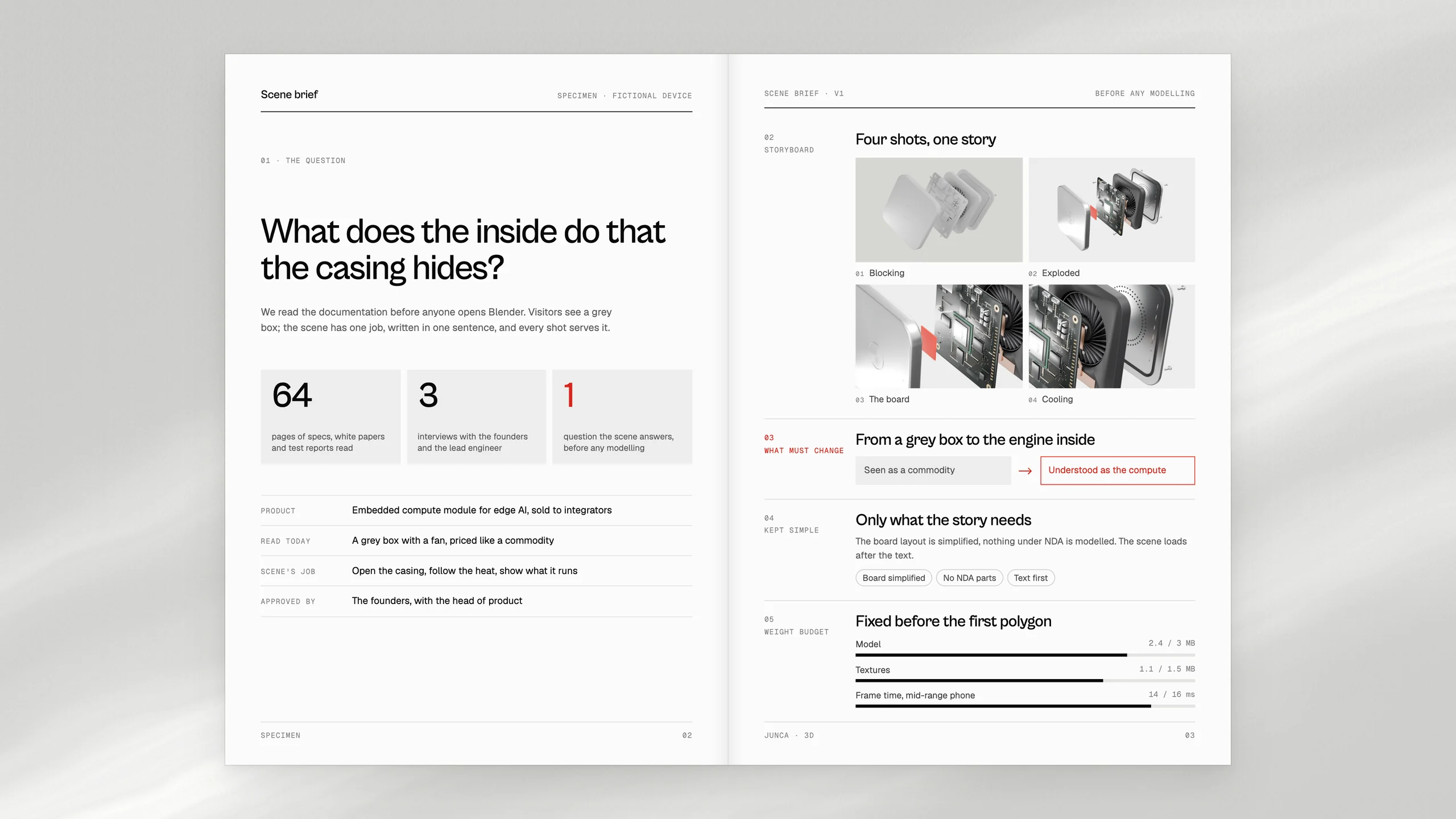
Step 01
Brief & Immersion
We dig into your tech through your deck, publications and founder interviews before we design.
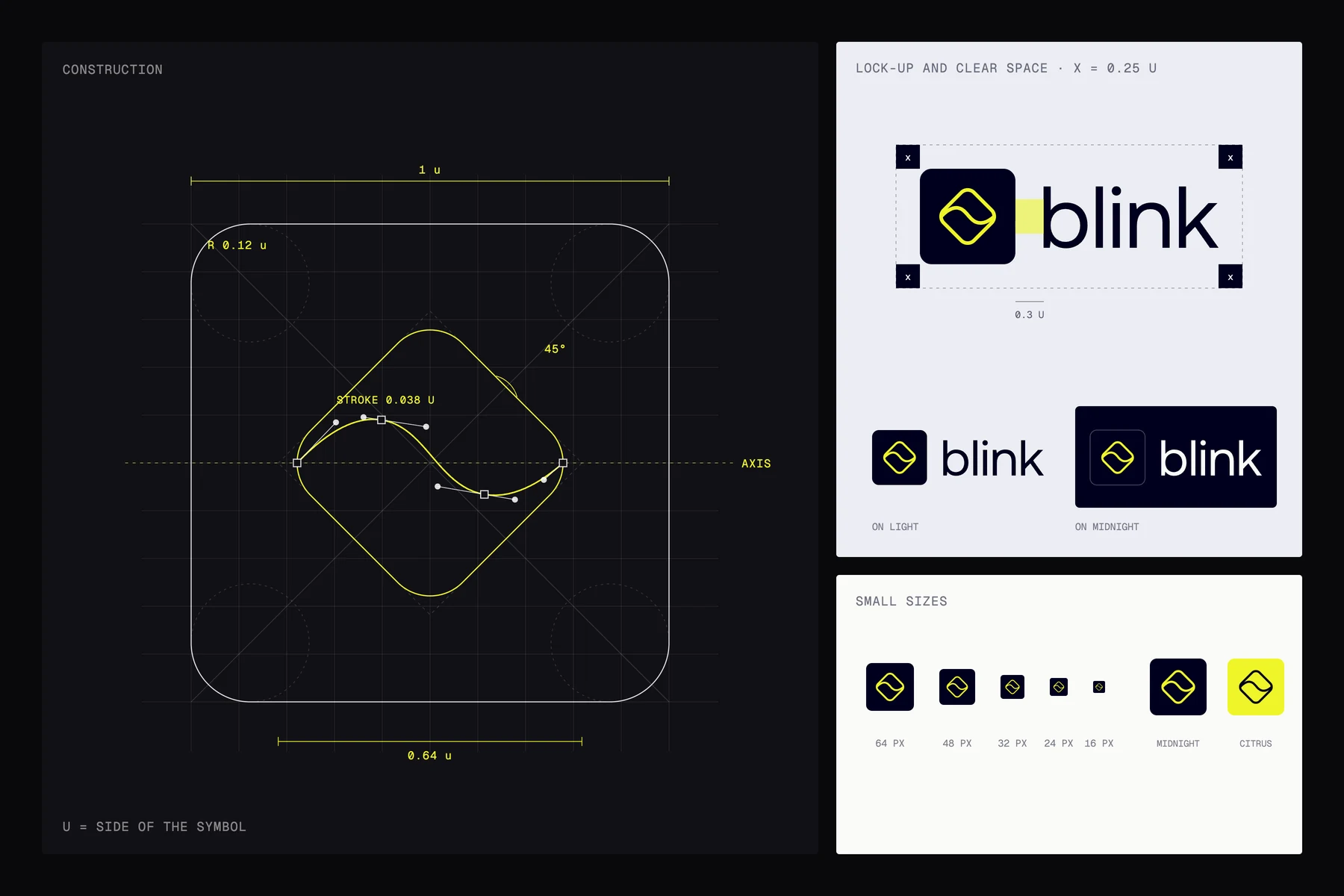
Step 02
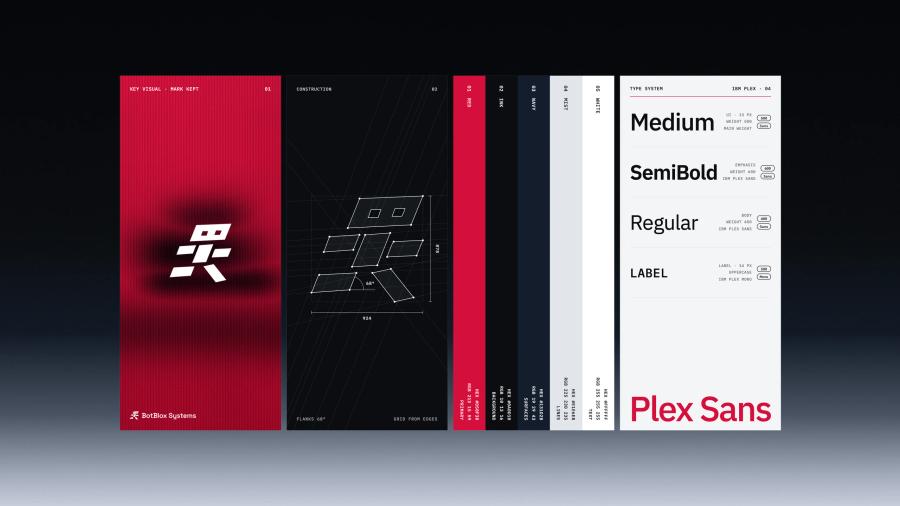
Branding & Art Direction
We craft your identity: logo, palette, typography, into a coherent, ownable direction.
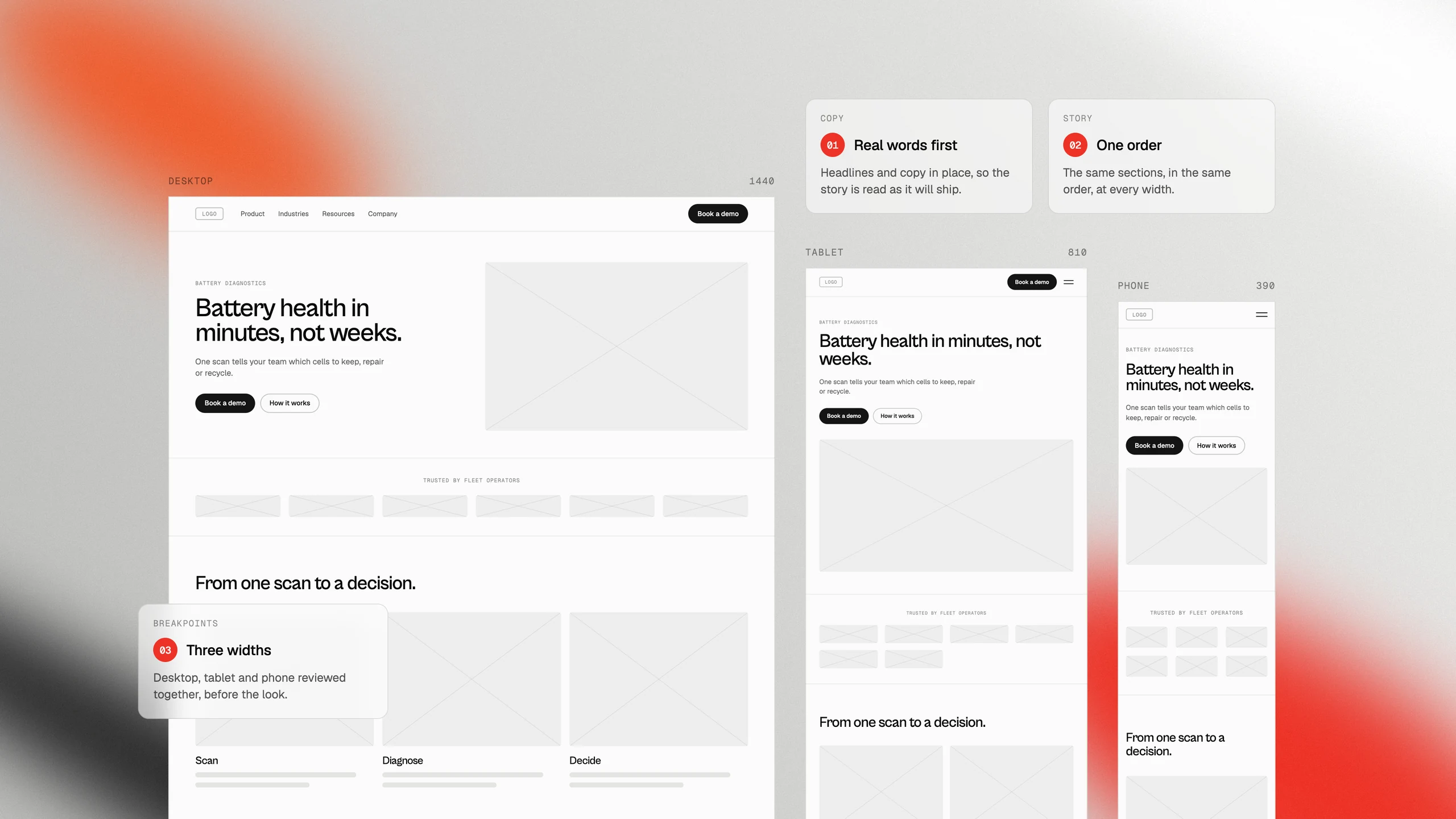
Step 03
Wireframing
We map each page as a low-fidelity skeleton, locking the structure before any visuals.
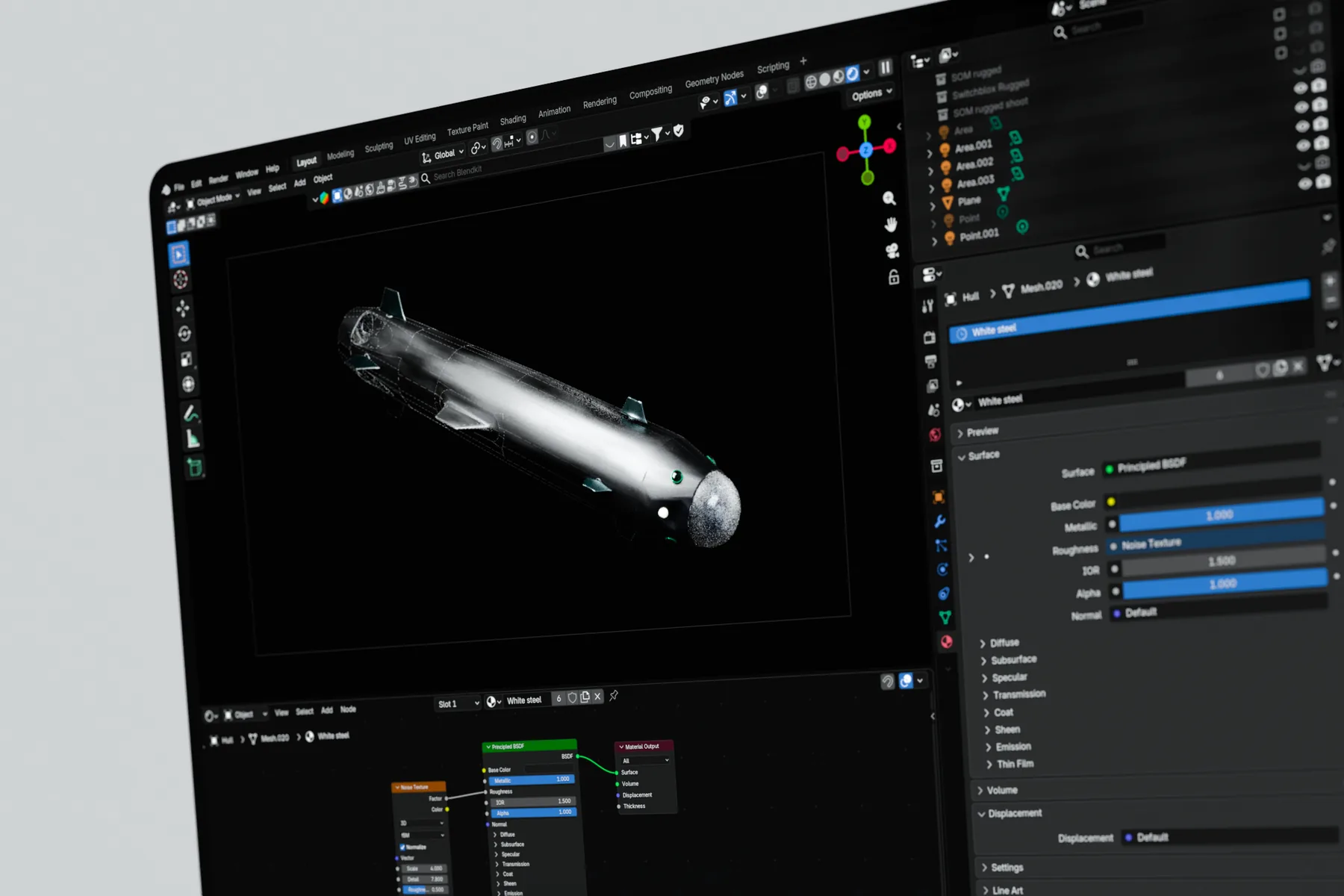
Step 04
Design & 3D
We turn the brand into final UI, custom 3D scenes, and motion that brings it all to life.
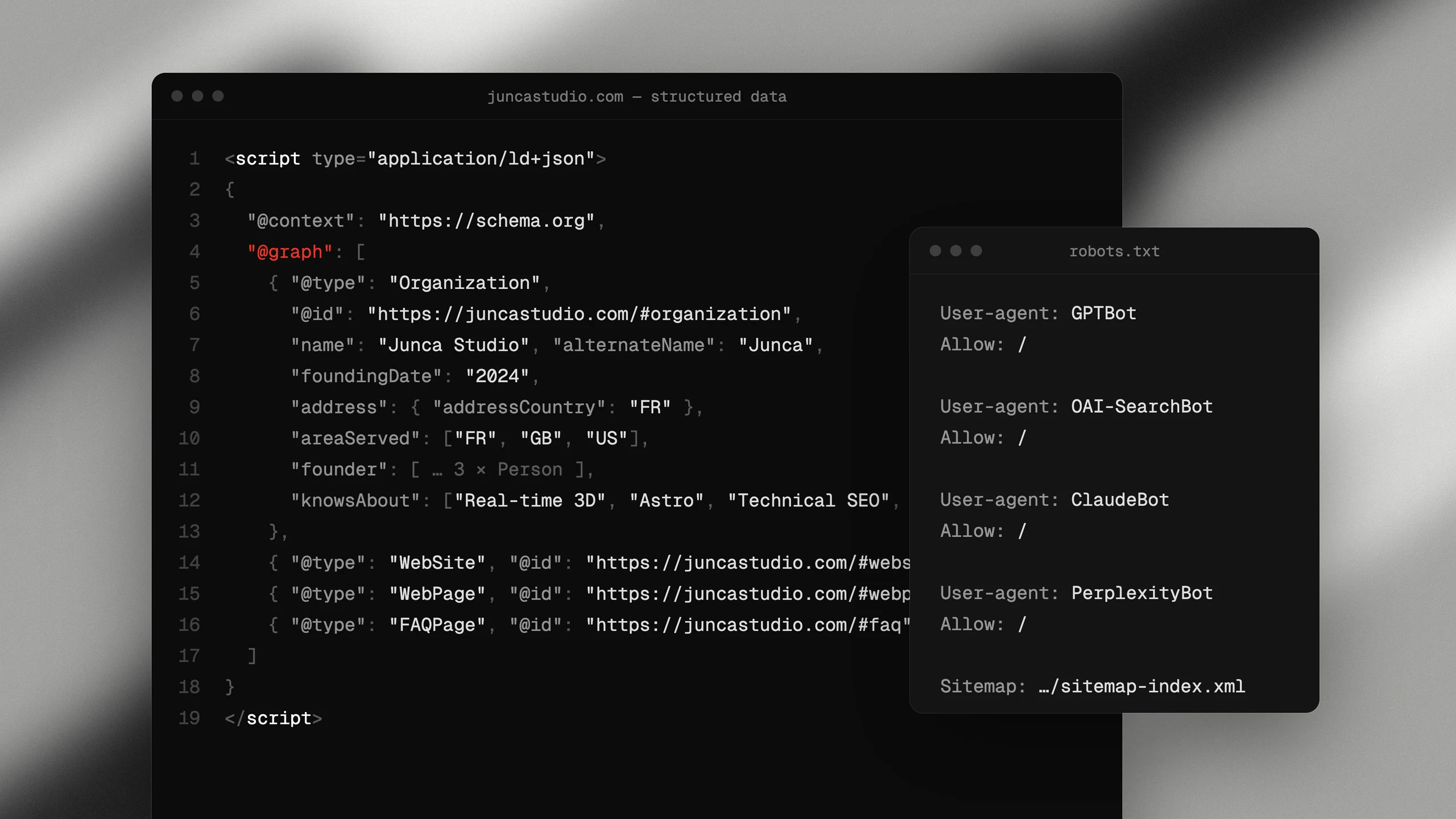
Step 05
Website Build & Integration
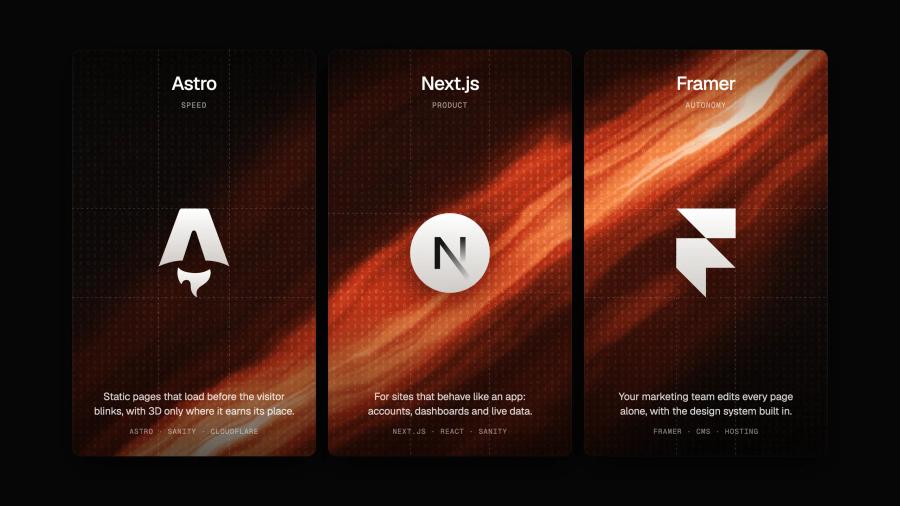
We ship a fast site on Framer, Astro or Next.js, with structured data and clean technical SEO.
Selected work
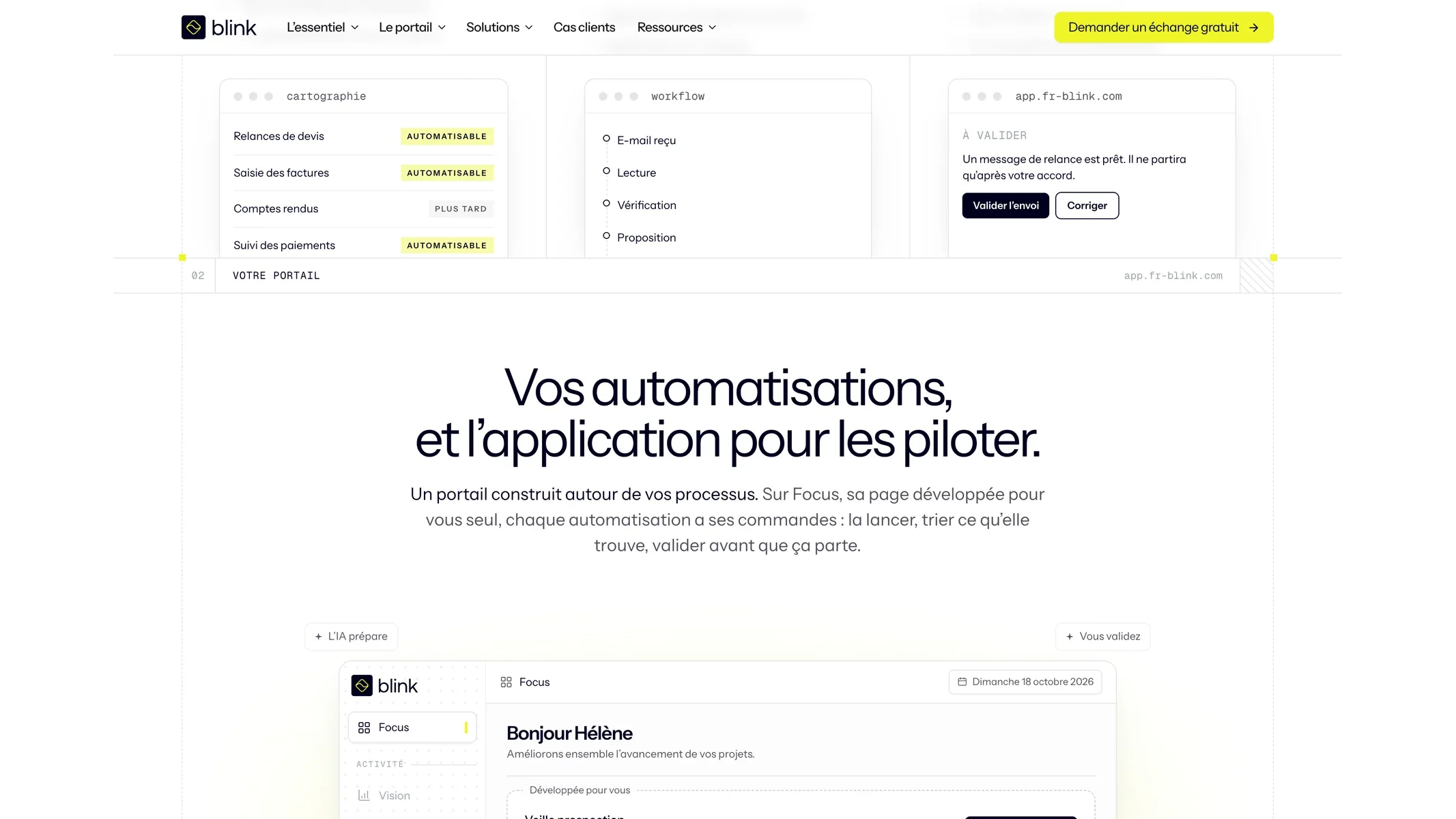
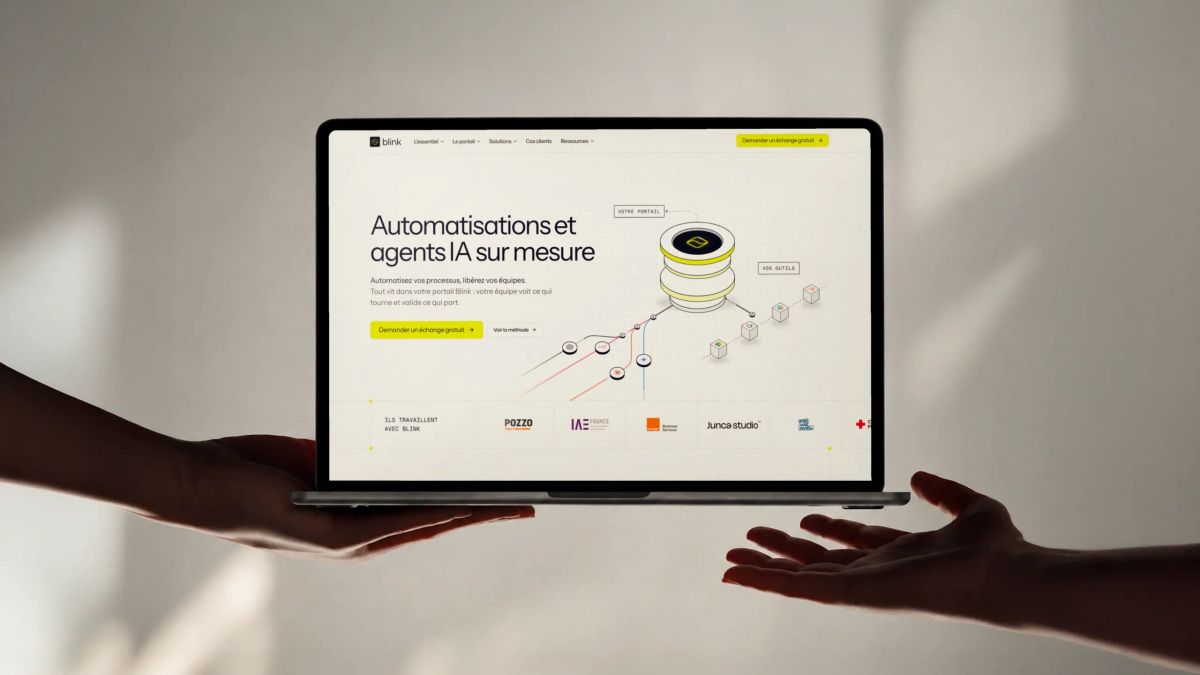
AI products we made tangible
- Fundraising
- B2B sales pipeline
- Technical hiring
- Industrial partnerships
- Going international
Services
The services we bring to this sector.
How much does an AI startup website cost?
For an AI company, the budget follows how you show the product thinking: static screens, an animated walkthrough or an interactive demo, plus the use-case and security pages buyers ask for. An AI company website built in Framer typically ranges from $10,000 to $20,000; with a full brand identity and custom interactive work, projects usually range from $20,000 to $50,000. We quote after a first call, based on what your site needs to prove.
How do you stop an AI product from looking like vaporware?
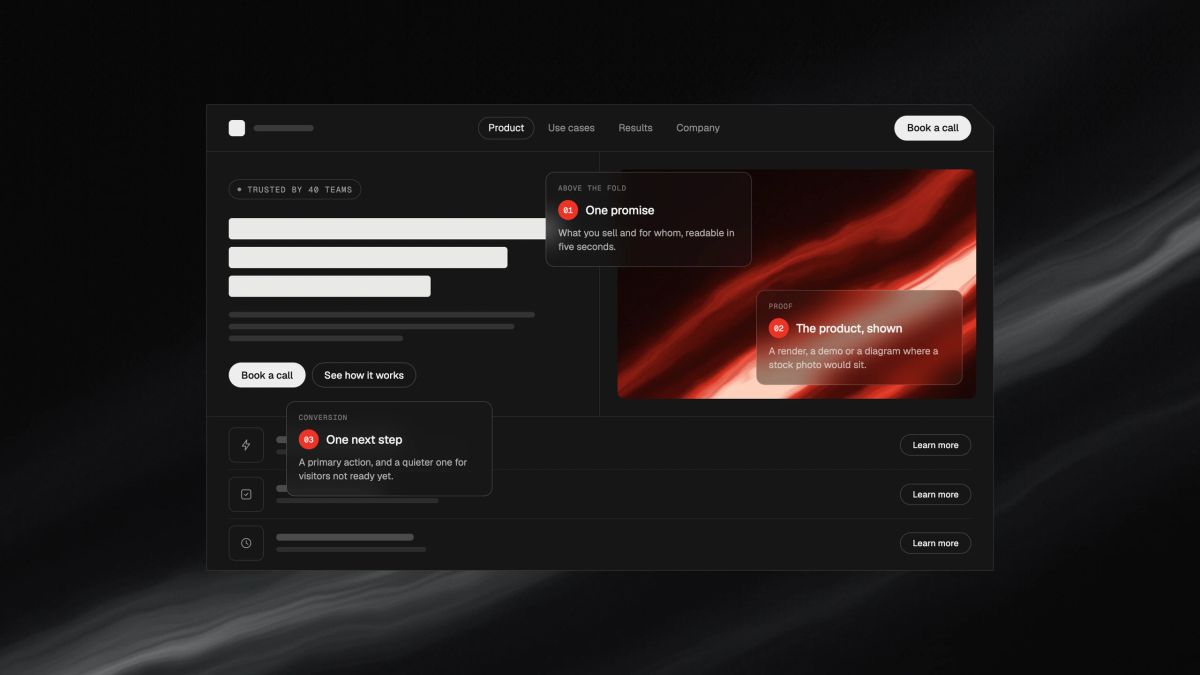
By showing the mechanism, not the magic: real product UI, visualized data flows, and concrete outcomes with numbers. Unverifiable claims are exactly why most AI websites feel interchangeable. Proof is the differentiator.
Every AI website looks the same. How do you differentiate ours?
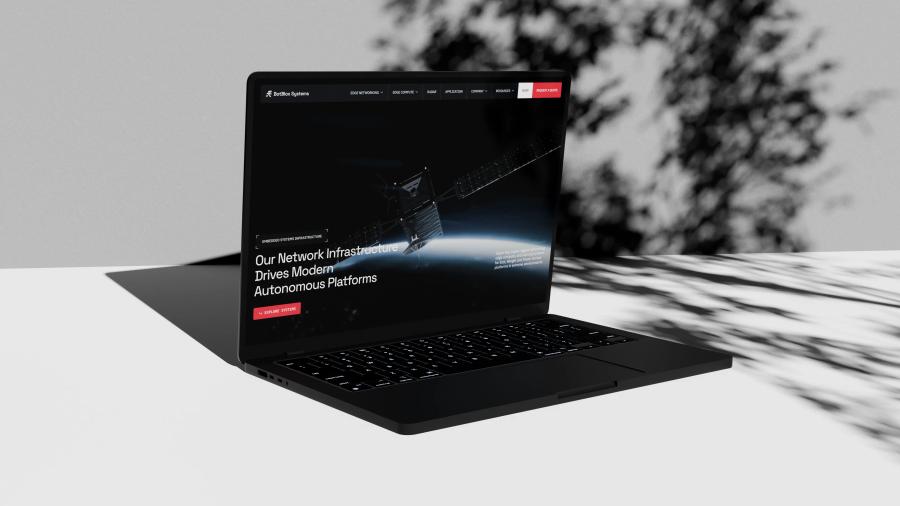
With a real identity: custom art direction instead of the template gradient-on-dark look, and visuals built for your product. For Blink, we created the full brand, logo, guidelines, art direction, plus a conversion-focused site.
Will you understand our models and pipelines without a long brief?
Yes, we're designer-engineers. We understand models, data pipelines and automation workflows well enough to write about them without an exhaustive brief, and to know what deserves to be shown versus simplified.
How long does an AI company website take?
Typically 4–6 weeks for a marketing site, 8–12 with full branding and custom animations. If you're timing a launch or a raise, we plan the schedule around it.
Why does an AI company need more than a template site?
Because AI sells on trust, and trust needs concreteness. Our engineering background plus custom identity work, like the full brand and site we built for Blink, makes abstract technology feel real and credible.
How to explain complex technology on a website (without dumbing it down)
4 min read
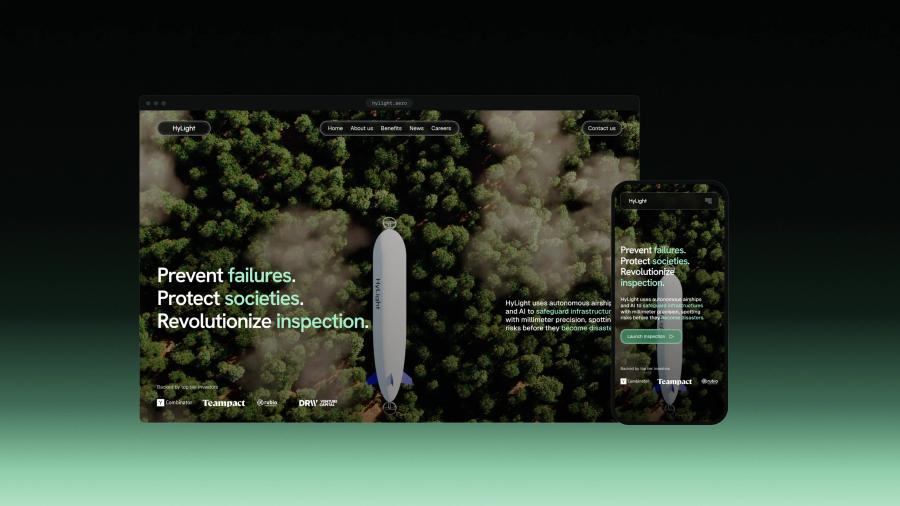
Jargon repels even when you define it, and visitors read 25% of your words. The layered-narrative method we use to make deeptech legible, from Hylight to Kestrix.

AI, templates, no-code: is web design still worth it?
9 min read
With AI generating layouts and no-code tools commoditizing websites, where does custom web design still create real value in 2026?
How to build a website designed for SEO and GEO from day one
6 min read
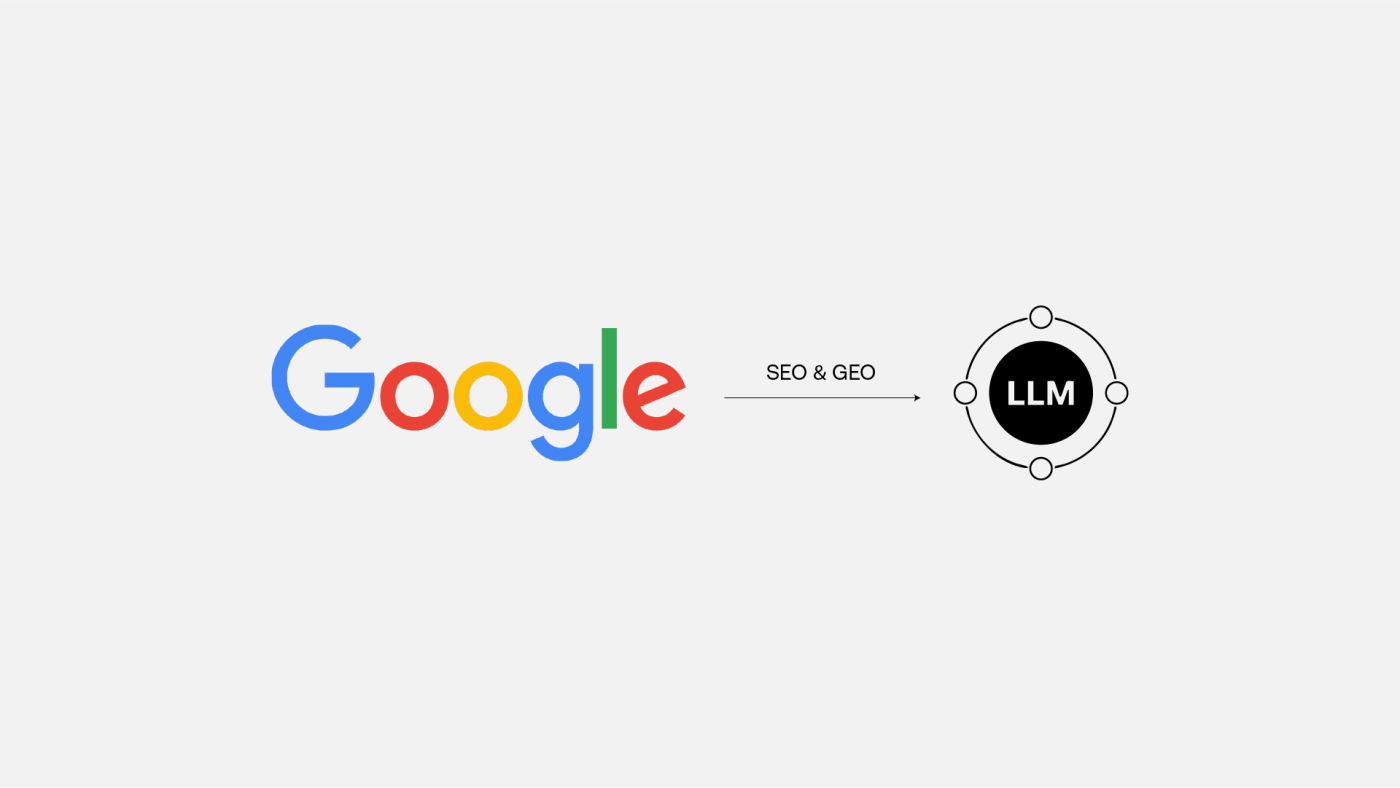
Building a high-performing website isn't about adding SEO at the end. Here's how to structure content, architecture, and visibility for SEO and GEO from the start.
UX and conversion rate: 7 design mistakes that drive your visitors away
5 min read
The most common UX mistakes we see on tech company websites, and how to fix them to stop losing conversions.
Framer in 2026: the complete guide for businesses
5 min read
Is Framer the right choice for your business website in 2026? Features, performance, limitations, costs, and real-world feedback after dozens of projects.
Other industries
Back to all industries