














Your buyers search Google, then ask an AI. Both should find you, and describe you correctly.
SEO and GEO for tech companies: found on Google, quoted by AI assistants

What it is
SEO and GEO for a tech company means being found on Google for the problems your product solves, and being read, understood and quoted correctly by AI assistants such as ChatGPT, Perplexity and Google's AI Overviews.
Junca builds both on the same foundations: a structure search engines can crawl, pages that answer the questions buyers actually ask, structured data that says who you are, and content worth citing.
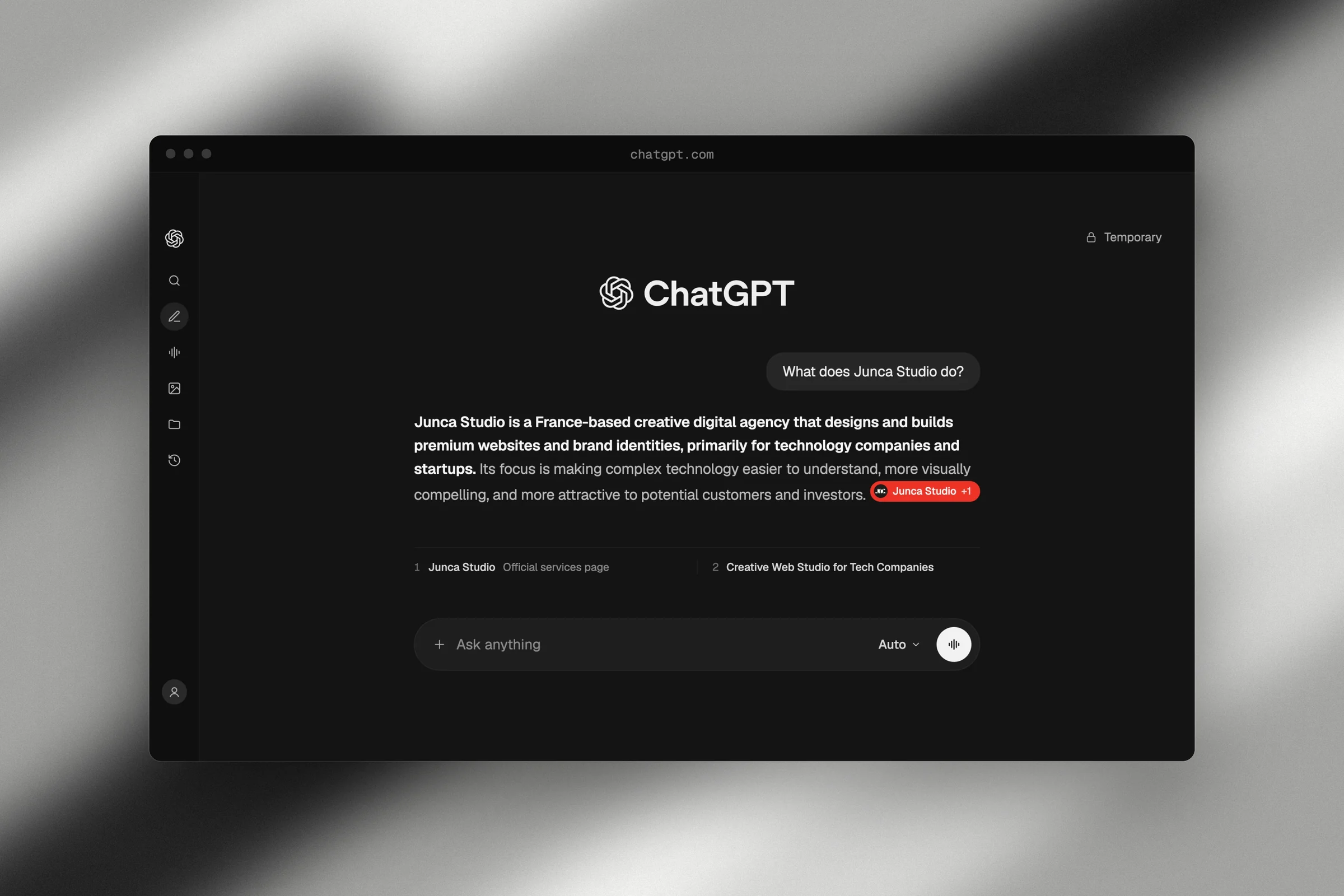
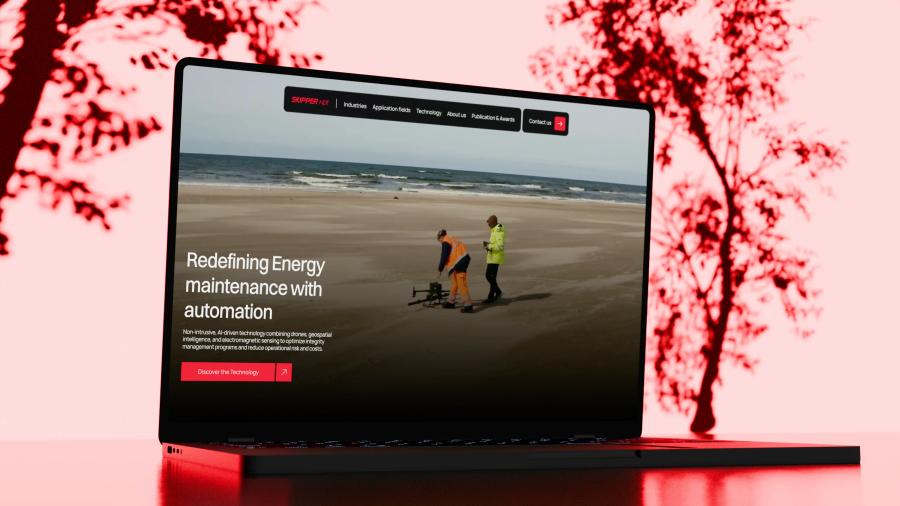
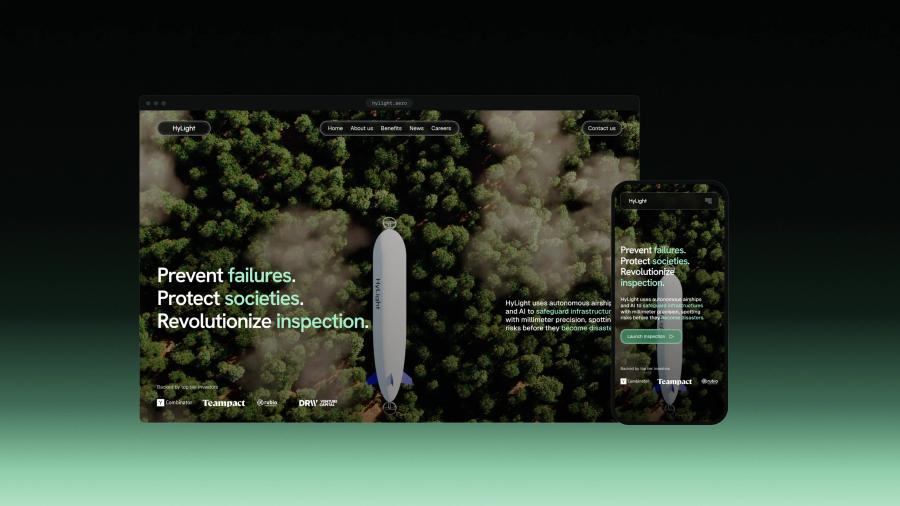
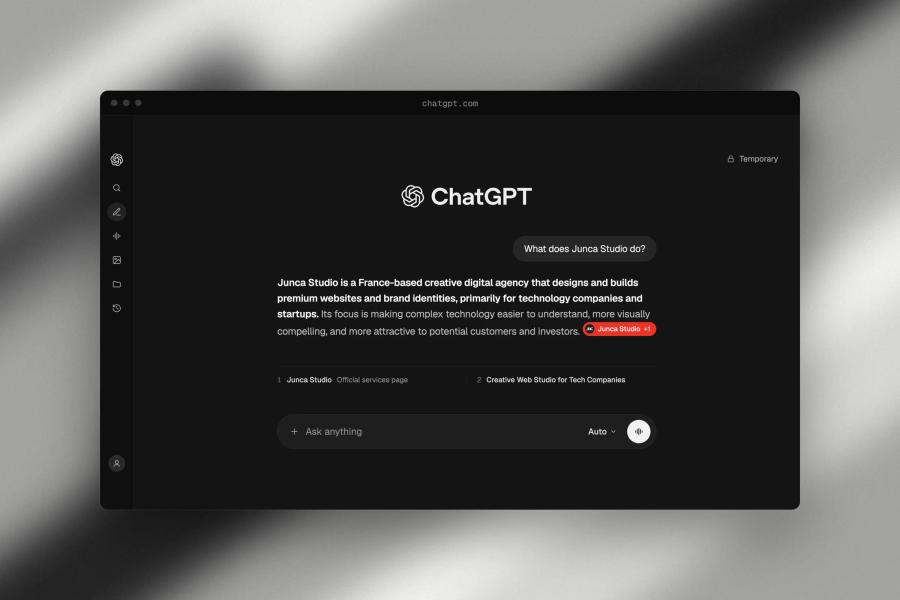
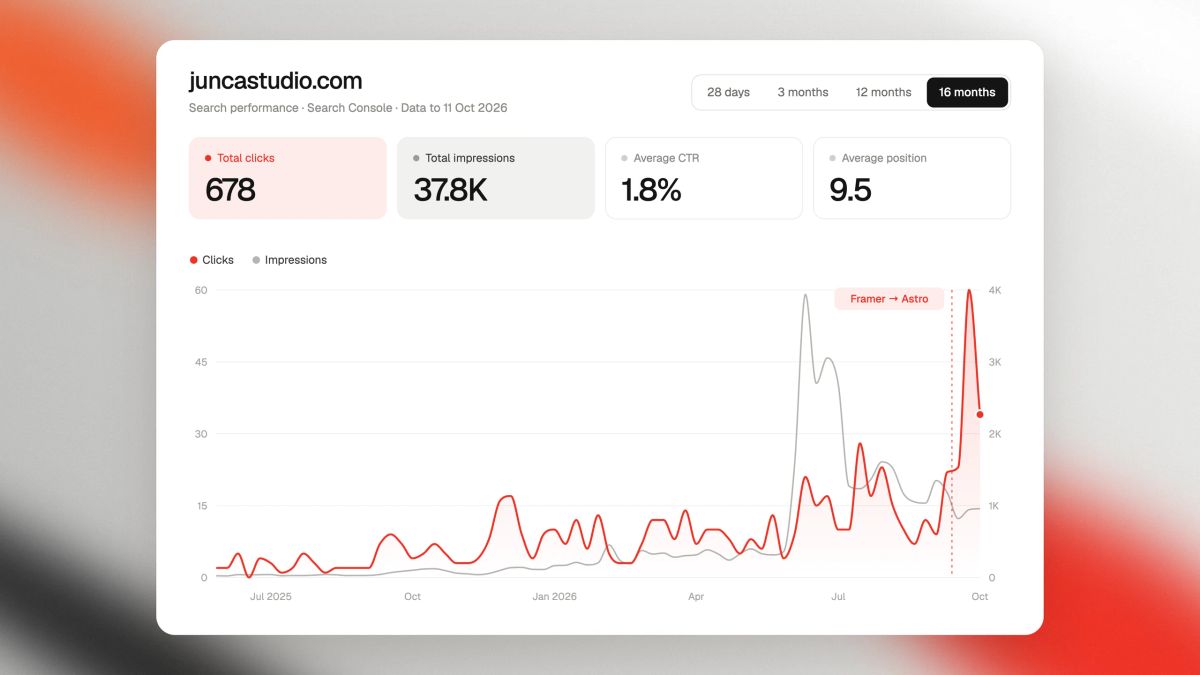
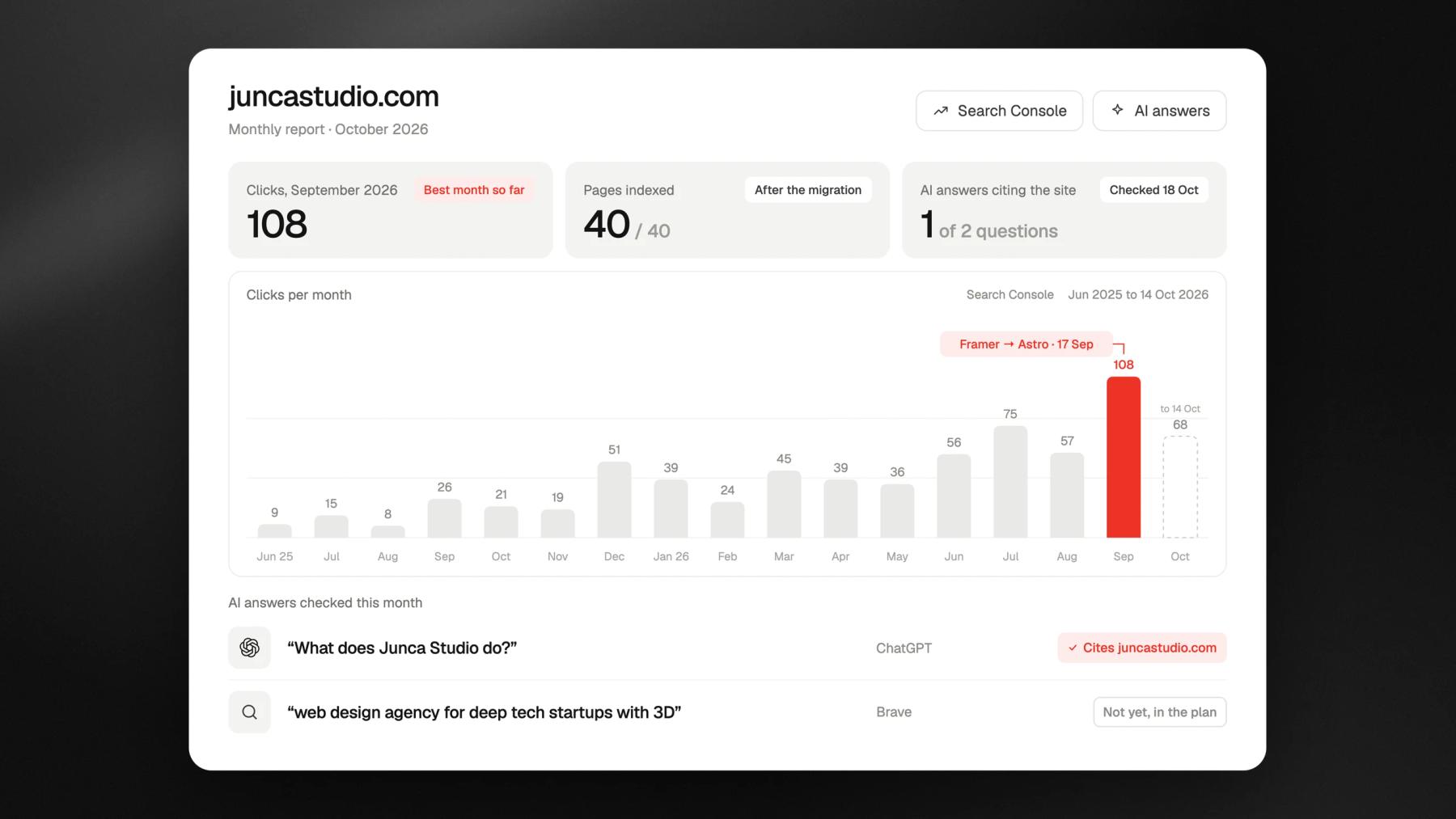
We do it on the sites we design and on the ones we inherit. Hylight moved from Webflow to Framer, Kestrix from Squarespace to Framer and Blink from Framer to Astro, each with its rankings carried over. Our own site moved from Framer to Astro the same way, and ChatGPT now describes Junca in our own words, citing our pages as the source.
SEO & GEO services
Get found, then get quoted.
An audit when you need to know where you stand, the full SEO and GEO work when you need to move, and a migration plan when you change platform. In the first call, we tell you where to start.
 SEO & AI searchTechnical foundations, pages and articles, then monthly follow-up, so Google ranks you and AI assistants quote you.See the process
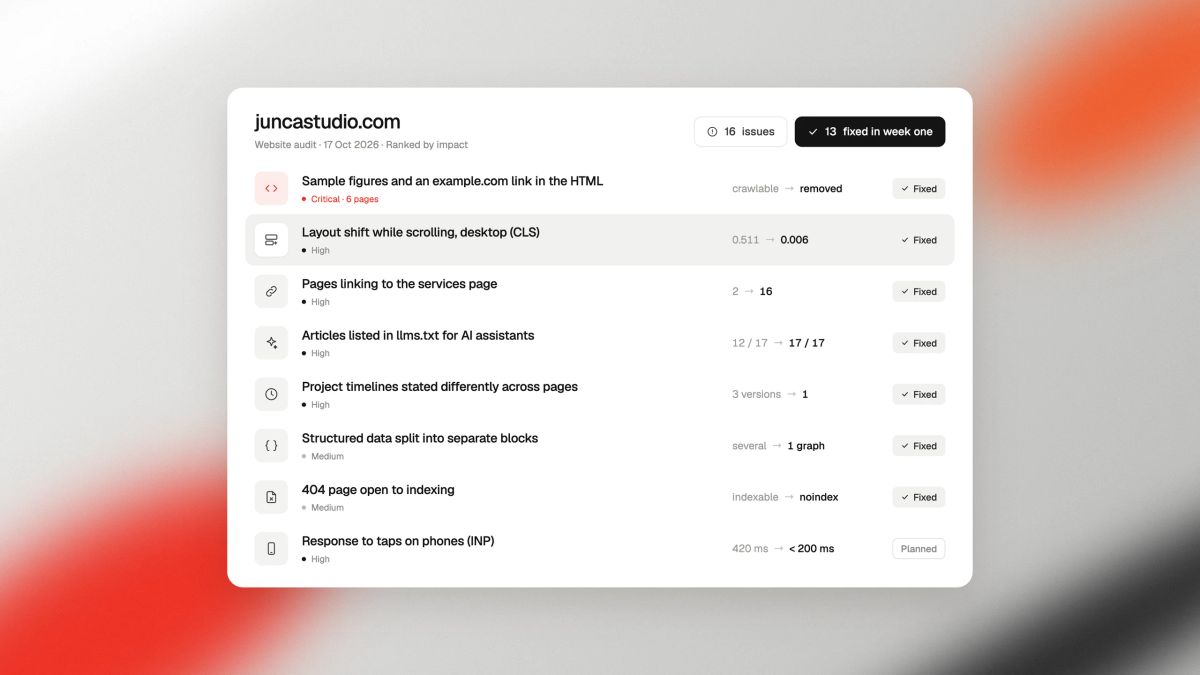 Website auditSpeed, structure, search and AI visibility, measured, ranked by impact and turned into a plan.View service
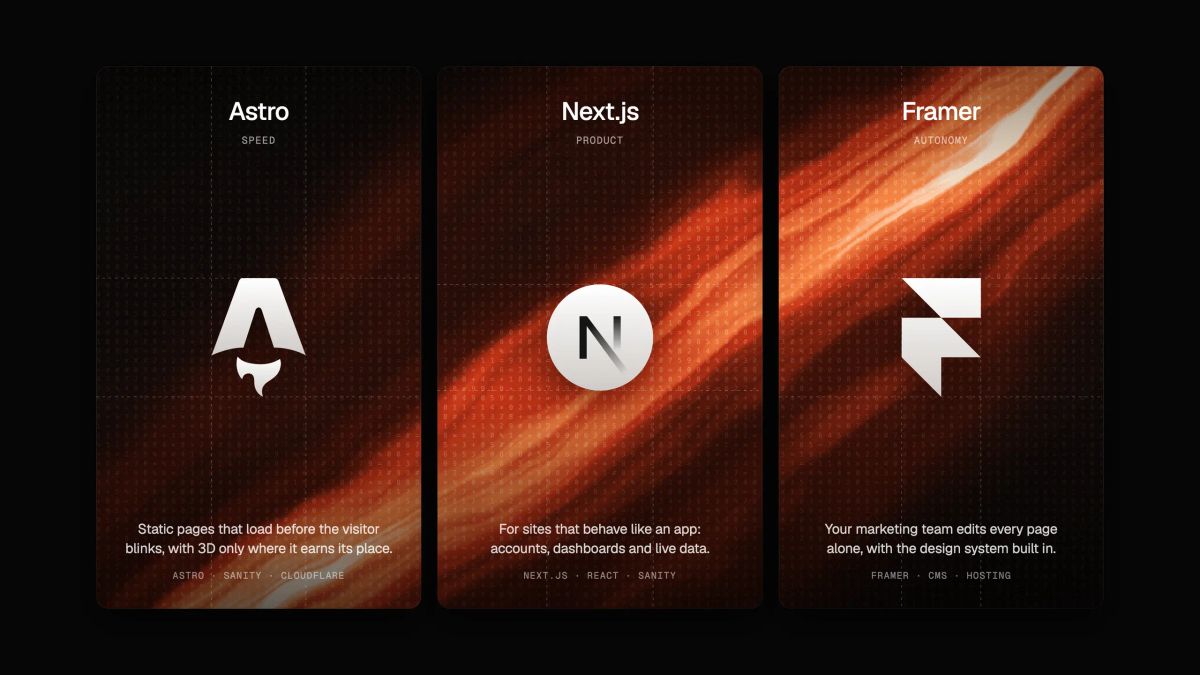 Website migrationChange platform without losing rankings: every URL mapped, redirected and checked after launch.View service
 Not sure which one?Send us your site. We tell you what holds it back on Google and in AI answers, and what to fix first.Ask us
The problem
Your product is ready. Search still cannot see it.
Why tech companies stay invisible in search and AI answers
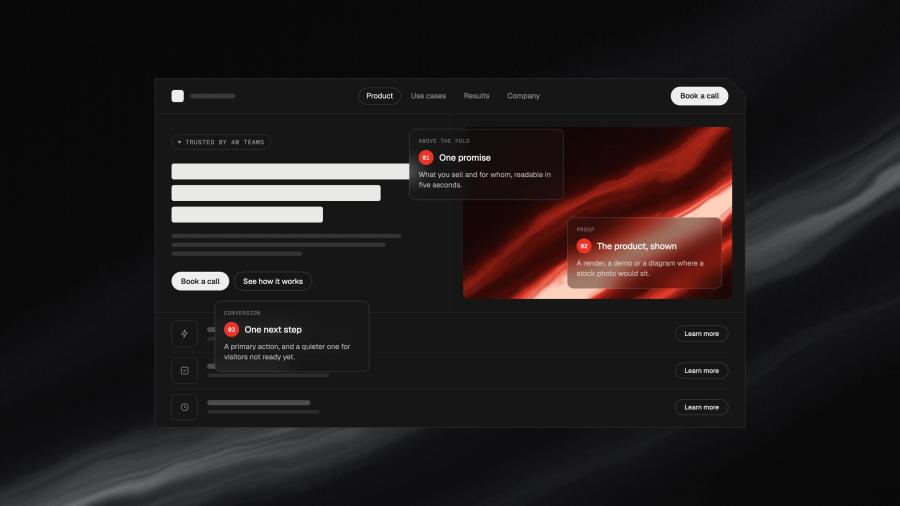
Most tech sites are built for the demo and the investor meeting. Search engines and AI assistants read them differently: they need text they can reach, pages that answer one question each, and signals that say who you are. When those are missing, the people looking for your product find someone else.
The traps
Trap 0101 / 05

Built for the demo
Content locked in the showpiece
The story lives in a 3D scene, a video or text drawn by scripts, so crawlers find an empty page. We keep the scene and put the words in the HTML, with titles and headings that say what the product does.
Trap 0202 / 05

Redirects forgotten
Migrated, then gone
A new platform, new addresses and no redirects: years of rankings and backlinks now point to 404 pages. We map every old URL to its new page before launch and watch Search Console in the weeks after.
Trap 0303 / 05

Found by name only
Ranking for your own name
People who already know you find you. People with the problem you solve do not, because no page answers their question. We map what buyers search and ask, then write the pages and articles that answer it.
Trap 0404 / 05

Written for the lab
Your words, not your buyers'
The site speaks the team's vocabulary while buyers search with their own. We keep the precision and add the terms people actually type, so the technology is found by those who need it.
Trap 0505 / 05

Closed to AI
Invisible to AI assistants
AI crawlers blocked by default, no structured data, no clear summary of who you are: assistants skip you or describe you wrong. We open the right crawlers, add JSON-LD and llms.txt, and check what the assistants answer.
The process
How we make a tech company visible in search and AI answers
Audit, structure, technical work and content are handled by the team that designs and builds the website. You follow every step in the Junca client portal, with the data, the decisions and the pages in one place.
Step 01
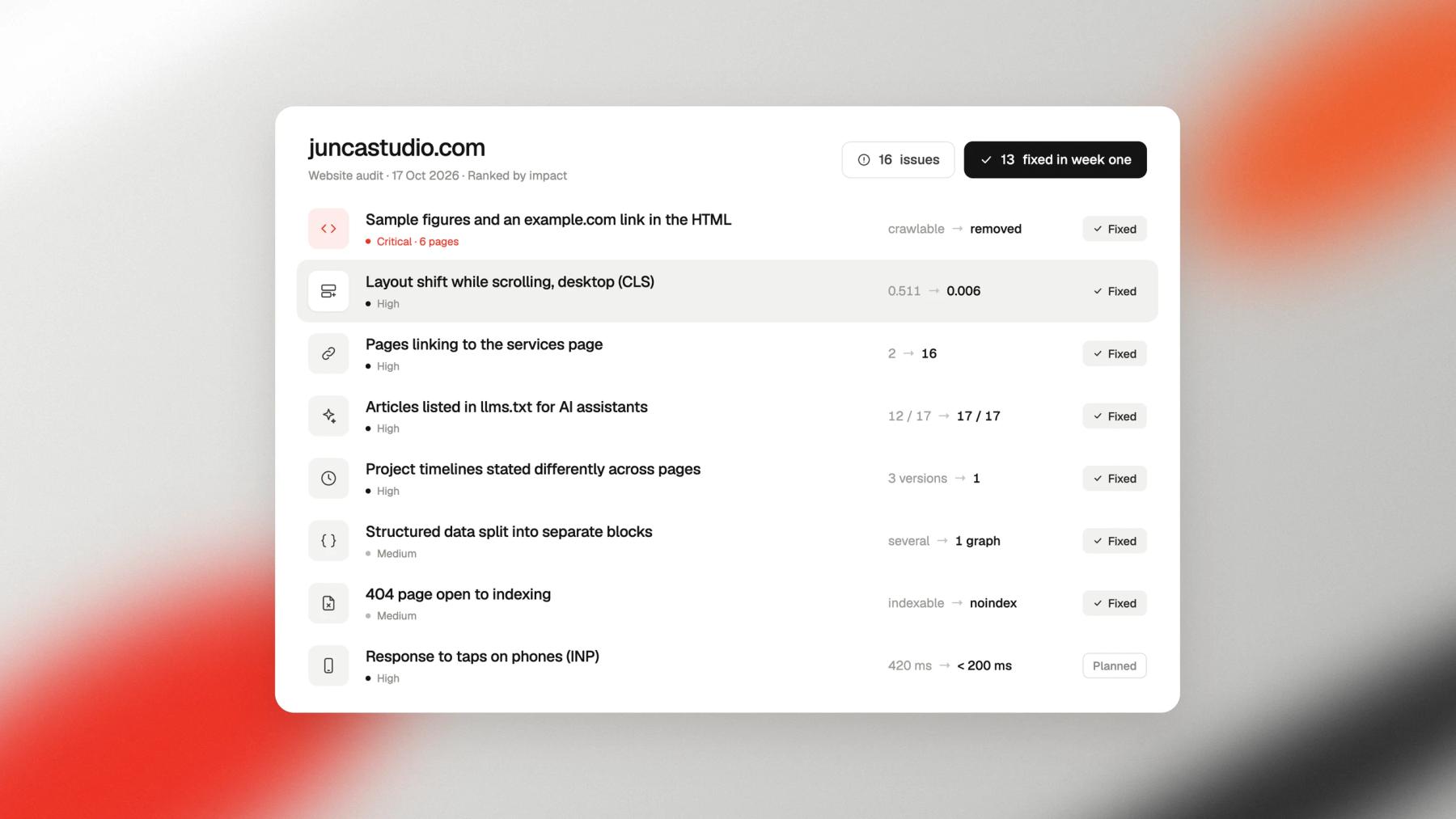
Audit
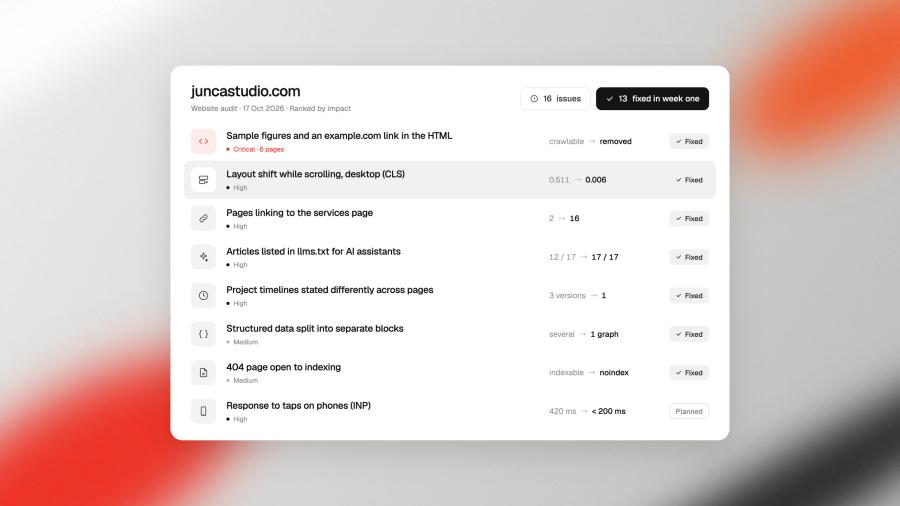
We crawl the site, read Search Console and Core Web Vitals, and ask AI assistants what they say about you. Every issue is ranked by impact.
Step 02
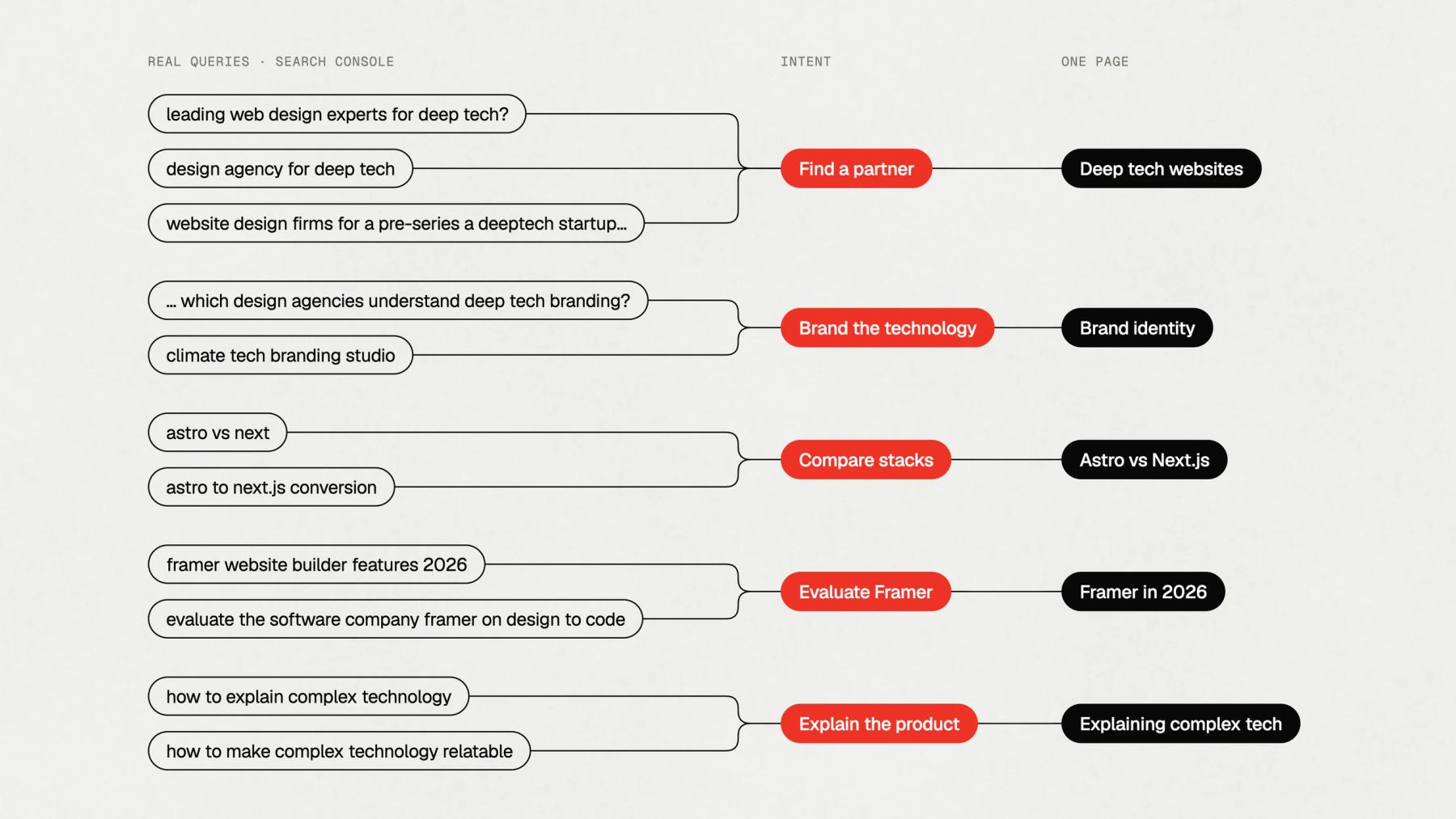
Search and question map
The searches and questions that lead to your product, grouped by intent, each one assigned to a single page.
Step 03
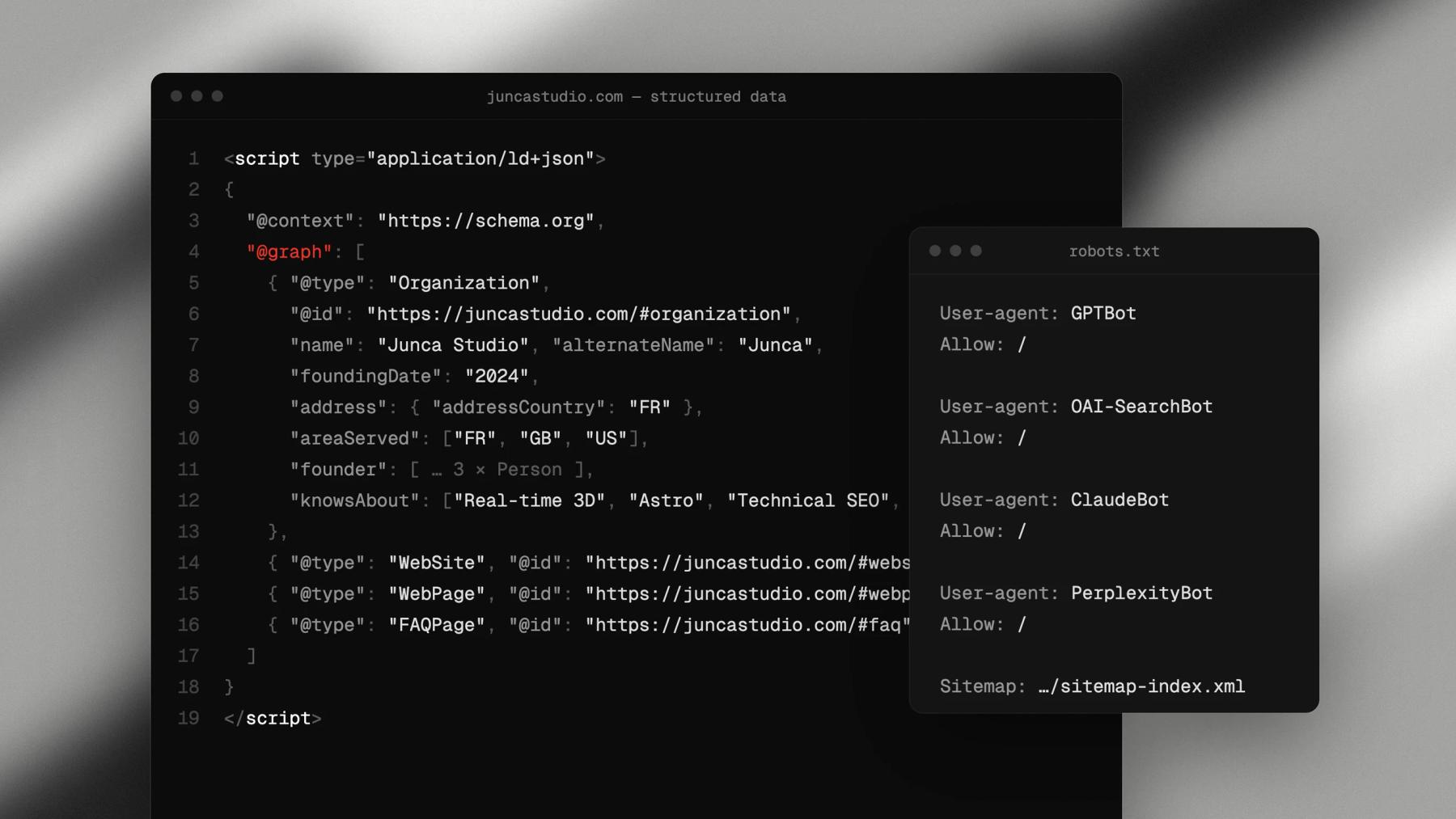
Technical foundations
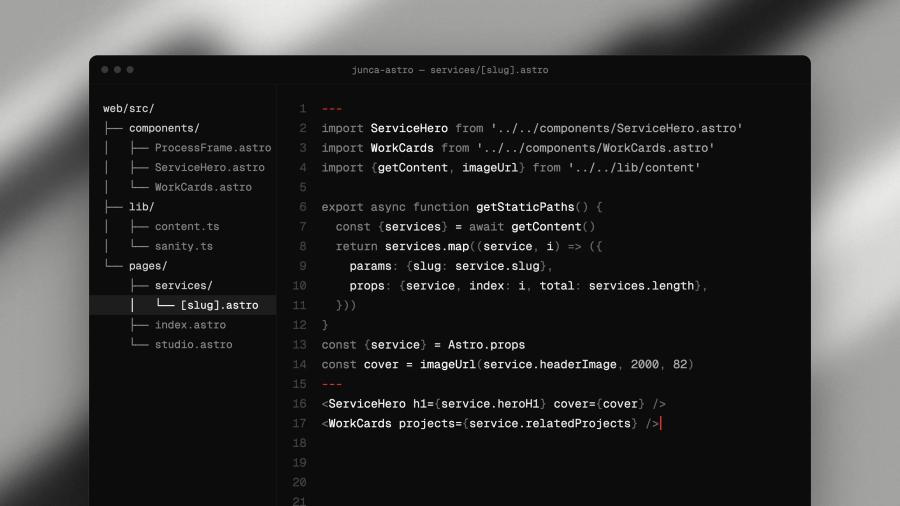
Crawlable structure, redirects, speed, JSON-LD, llms.txt and AI crawler access, fixed in the site itself.
Step 04
Pages and articles
Service pages and articles that answer one question each, written with your team's expertise and structured to be quoted.
Step 05
Monthly follow-up
Clicks, rankings and AI answers checked every month, new articles published, and the plan adjusted to what the data says.
What you get
Everything stays in your accounts.
Audit report
Every issue on the site, ranked by its impact on search and AI answers, with the fix and who makes it.
Search and question map
The searches and questions your buyers use, grouped by intent and assigned to pages.
Redirect map
Every old URL matched to its new page, for a migration or a restructure, and checked after launch.
Structured data and llms.txt
JSON-LD for the company, services, articles and FAQs, and a summary file written for AI assistants.
Search Console and Bing, set up
Both consoles in your name, sitemaps submitted and IndexNow on for every page you publish.
Pages and articles
Service pages first, then articles every month, written to be quoted, published in your CMS.
Monthly report
Clicks, rankings, Core Web Vitals and what AI assistants say about you, with next month's priorities.
Where to start
Ongoing search work, or an audit first?
Three questions. The answer comes with the services you can skip.

Often paired with
Selected work
Moved to a new platform, rankings kept.
 Webflow → Framer · Website migration
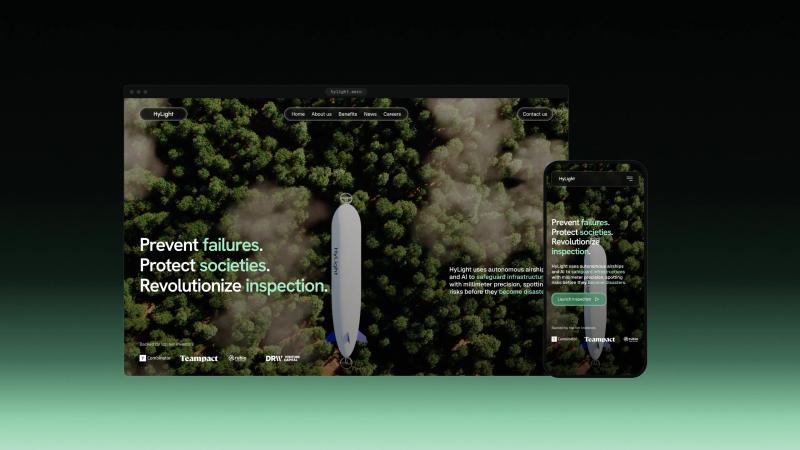
Hylight: an aerial inspection technology driven by design.
 Squarespace → Framer · Website migration
Kestrix: making thermal data readable to accelerate building retrofit
 Framer → Astro · Website migration
Building the identity and website of Blink, a human-centered automation agency
Same team
Search works best when it is planned with the site.
The people who structure your pages for search also design, build and write them, so visibility is part of the site from the first wireframe.
- WebsitesStructure, pages and speed come from the build, so SEO is in the site from day one, in Framer or in code.
- 3D & Motion3D scenes that keep the words in the HTML and the page fast, so the showpiece never hides the content.
- Brand identityA position and a vocabulary that match what buyers search, so the brand and the rankings tell the same story.
- FundraisingInvestors search you before the meeting: the right pages and an accurate AI answer are part of being ready.
What is the difference between SEO and GEO?
SEO gets your pages ranked in search results. GEO, generative engine optimization, gets your company read, understood and quoted by AI assistants such as ChatGPT, Perplexity and Google's AI Overviews. Both rely on the same foundations: crawlable pages, a clear structure, structured data and content worth citing. GEO adds what assistants need to summarise you correctly: answer-first pages, a clear description of who you are and access for their crawlers.
How long does SEO take to show results?
Technical fixes are picked up within weeks, once Google recrawls the site. New pages and articles usually take three to six months to settle in the rankings, longer on competitive terms. AI answers change as assistants refresh their sources, so we check them every month rather than promise a date.
Can a 3D or animated website rank well?
Yes, if the words are in the HTML and the page stays fast. We load 3D scenes after the text, keep headings and copy readable without scripts, and measure Core Web Vitals on mid-range phones. Our own site runs real-time 3D and has every page indexed.
How do you keep our rankings through a platform change?
We plan the migration before anything moves. We list every indexed URL, map each one to its new page, set permanent redirects, keep titles and structured data, and watch Search Console after launch. Hylight, Kestrix and Blink changed platform this way, and so did our own site.
Do you write the articles and service pages too?
Yes. We write service pages and articles with your team: we interview the people who know the product, draft, and you review in the Junca client portal. Nothing is published without your approval, and the expertise stays yours.
Do you work on sites you did not build?
Yes. We audit any site. We fix sites built in Framer or in code, and when the platform itself is the limit, we say so and plan the migration.
How do you measure GEO?
We ask the main AI assistants the questions your buyers ask, with and without your brand name, and record whether you appear, how you are described and which pages are cited. We repeat it every month alongside Search Console data, so you see a trend, not a single answer.
Do we have to let AI companies train on our content to be cited?
No. Most AI companies use one crawler to collect training data and another to fetch pages when they answer a question. Your robots.txt can refuse training, for example GPTBot, or Google-Extended for Gemini, and still allow the crawlers that read and cite your pages, such as OAI-SearchBot or PerplexityBot. We set these rules with you and check them in your CDN settings, since some providers block AI crawlers by default.
How much does SEO and GEO work cost?
It depends on the size of the site and on what you need: an audit, a one-off setup, or monthly follow-up with content. You get a detailed quote after a free first call.
How to build a website designed for SEO and GEO from day one
6 min read
Building a high-performing website isn't about adding SEO at the end. Here's how to structure content, architecture, and visibility for SEO and GEO from the start.

Deeptech branding: how to build an identity for invisible technology
9 min read
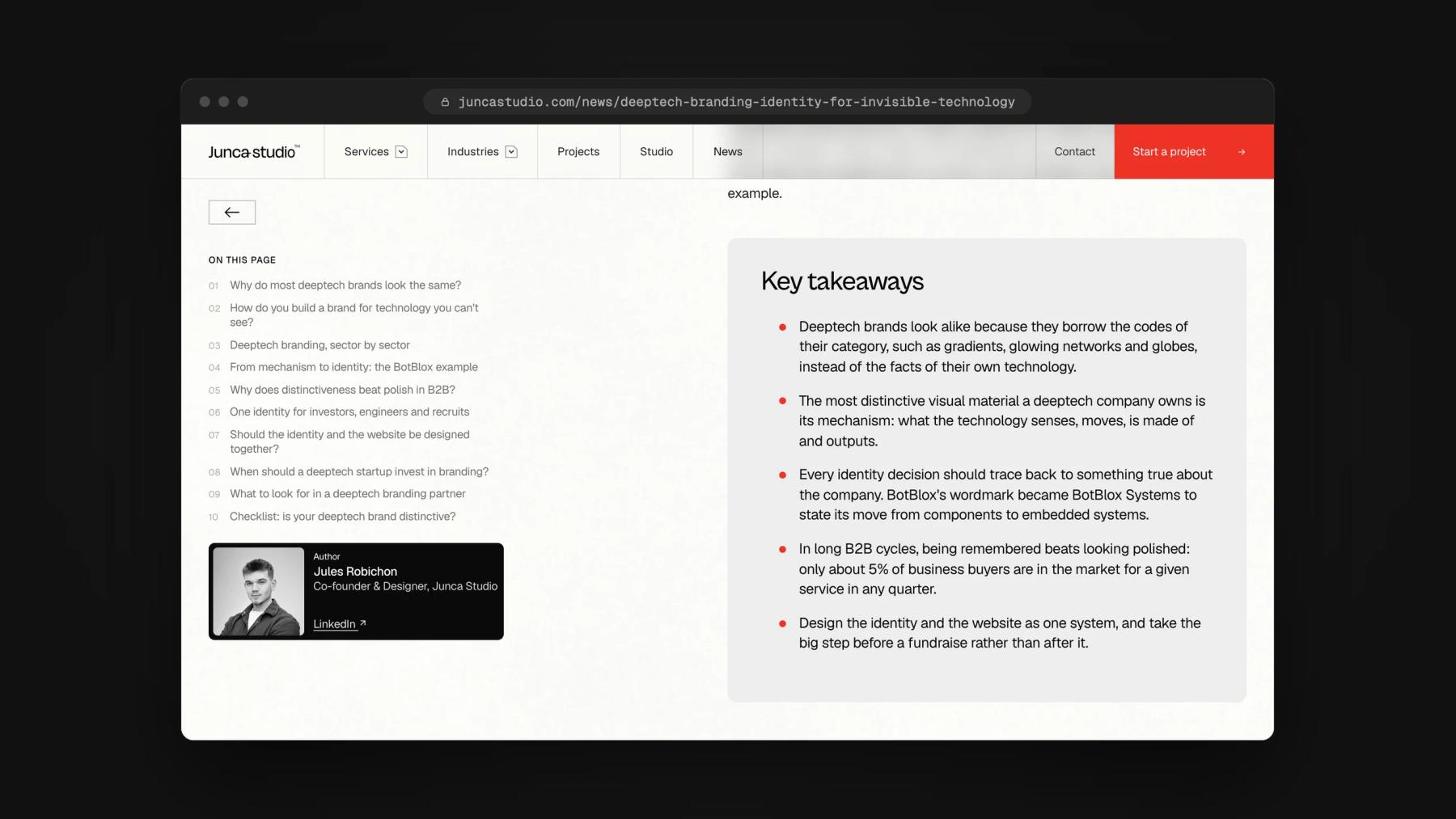
Your technology is years ahead and your brand looks like everyone else's. A method to build a deeptech identity from your mechanism, a worked example and a one-minute checklist.
Framer vs Webflow: why we chose Framer at Junca
7 min read
An honest, experience-based comparison of Framer and Webflow: performance, design freedom, CMS, SEO, and client autonomy.
Astro vs Next.js in 2026: which one should you choose for your website?
11 min read
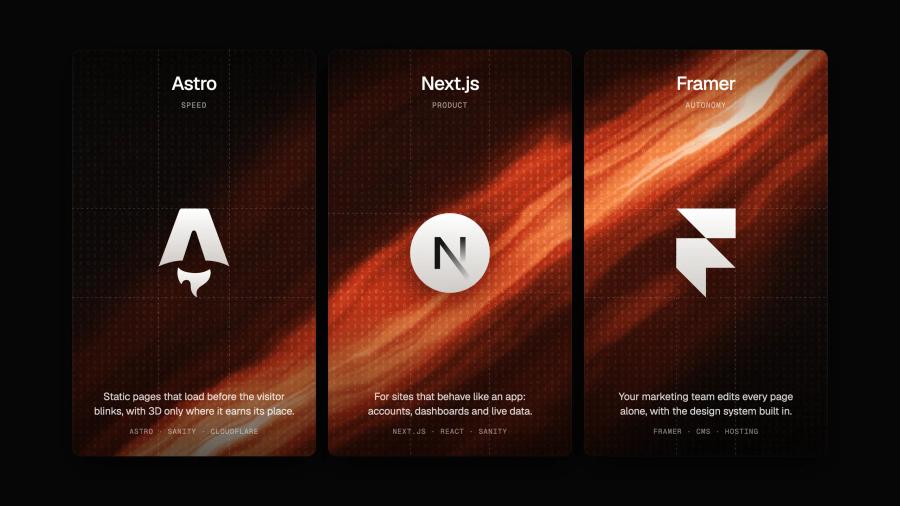
Islands architecture, 66% real-world Core Web Vitals pass rates, shader-level control with Three.js and TSL: the stack we use when a project outgrows no-code, and when we still say Framer.

Framer in 2026: the complete guide for businesses
5 min read
Is Framer the right choice for your business website in 2026? Features, performance, limitations, costs, and real-world feedback after dozens of projects.

How to explain complex technology on a website (without dumbing it down)
4 min read
Jargon repels even when you define it, and visitors read 25% of your words. The layered-narrative method we use to make deeptech legible, from Hylight to Kestrix.
Other services