

The company changed. The brand still describes the one you were two years ago.
Rebranding for tech companies that have outgrown the brand they launched with

What it is
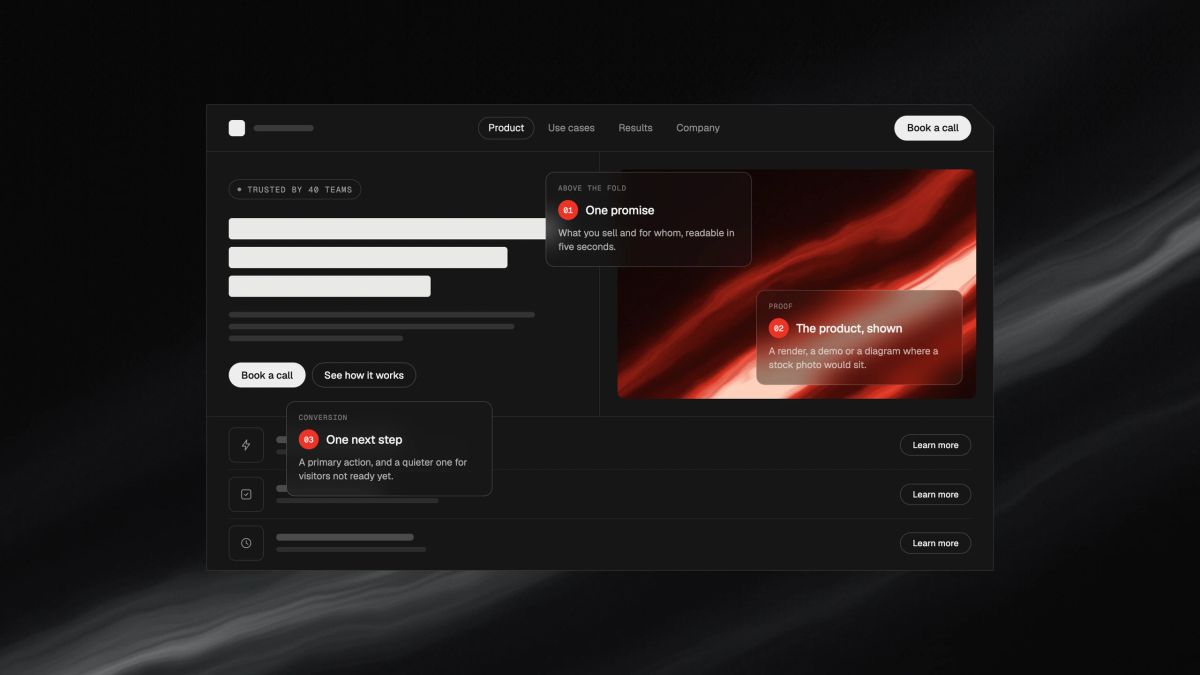
A rebrand changes how a tech company is perceived without throwing away what people already recognise: an audit decides what to keep, what to rebuild and what can wait, then the logo is evolved, a new visual system is built around it and every touchpoint moves over in one rollout.
Junca runs the whole sequence in-house, from the audit to the website.
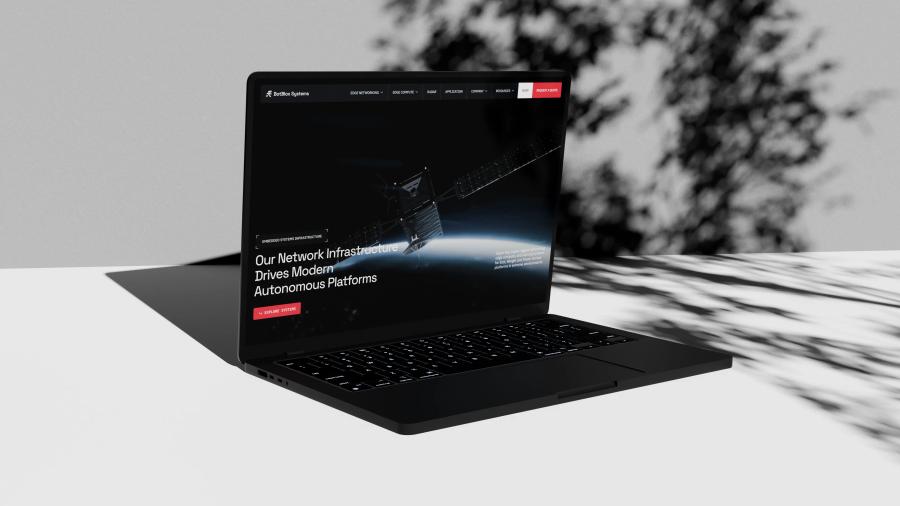
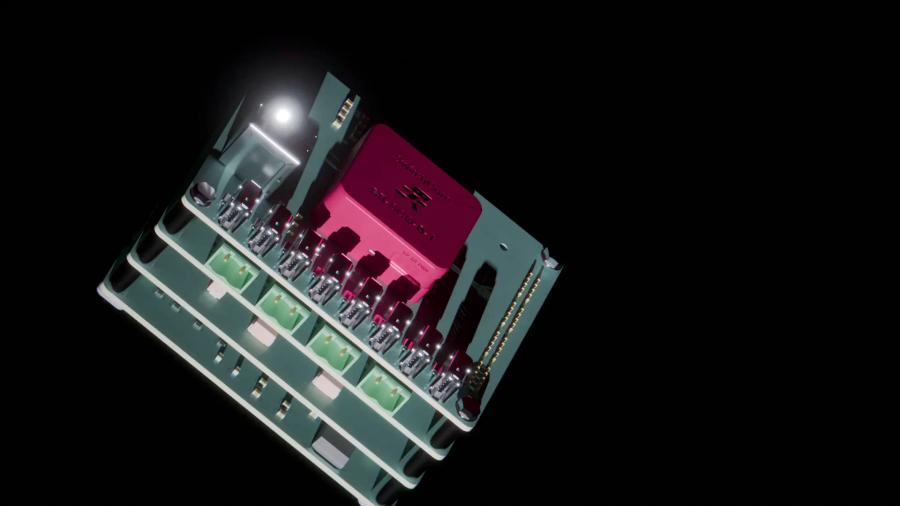
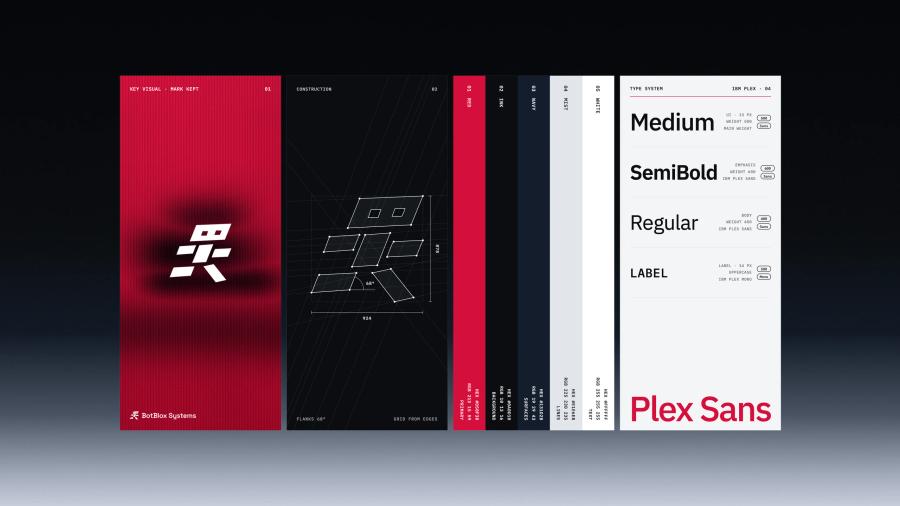
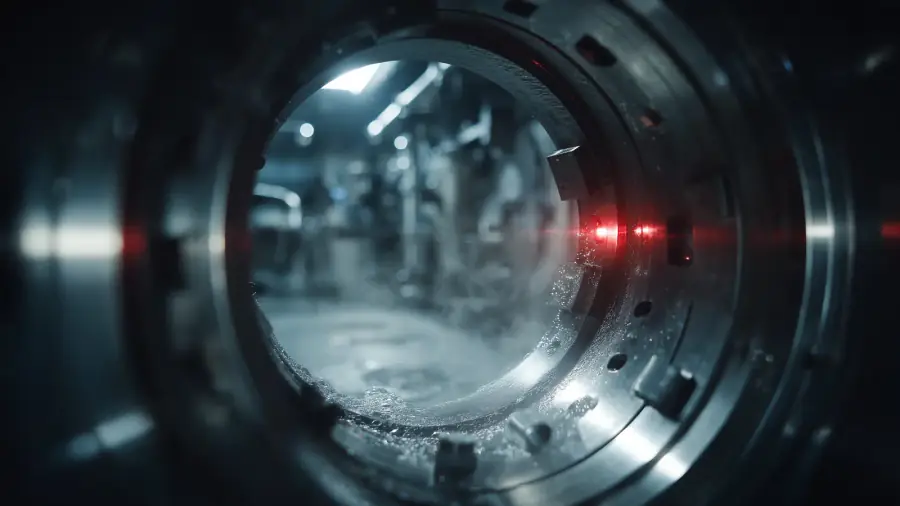
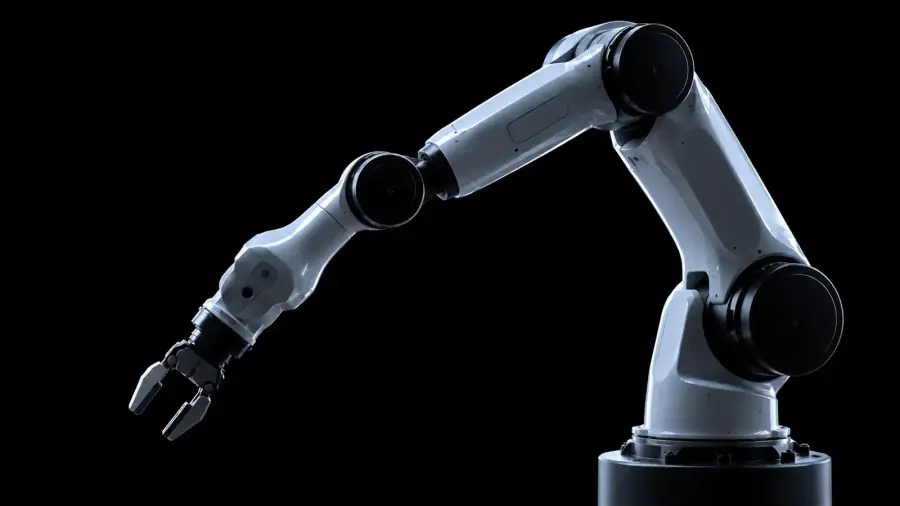
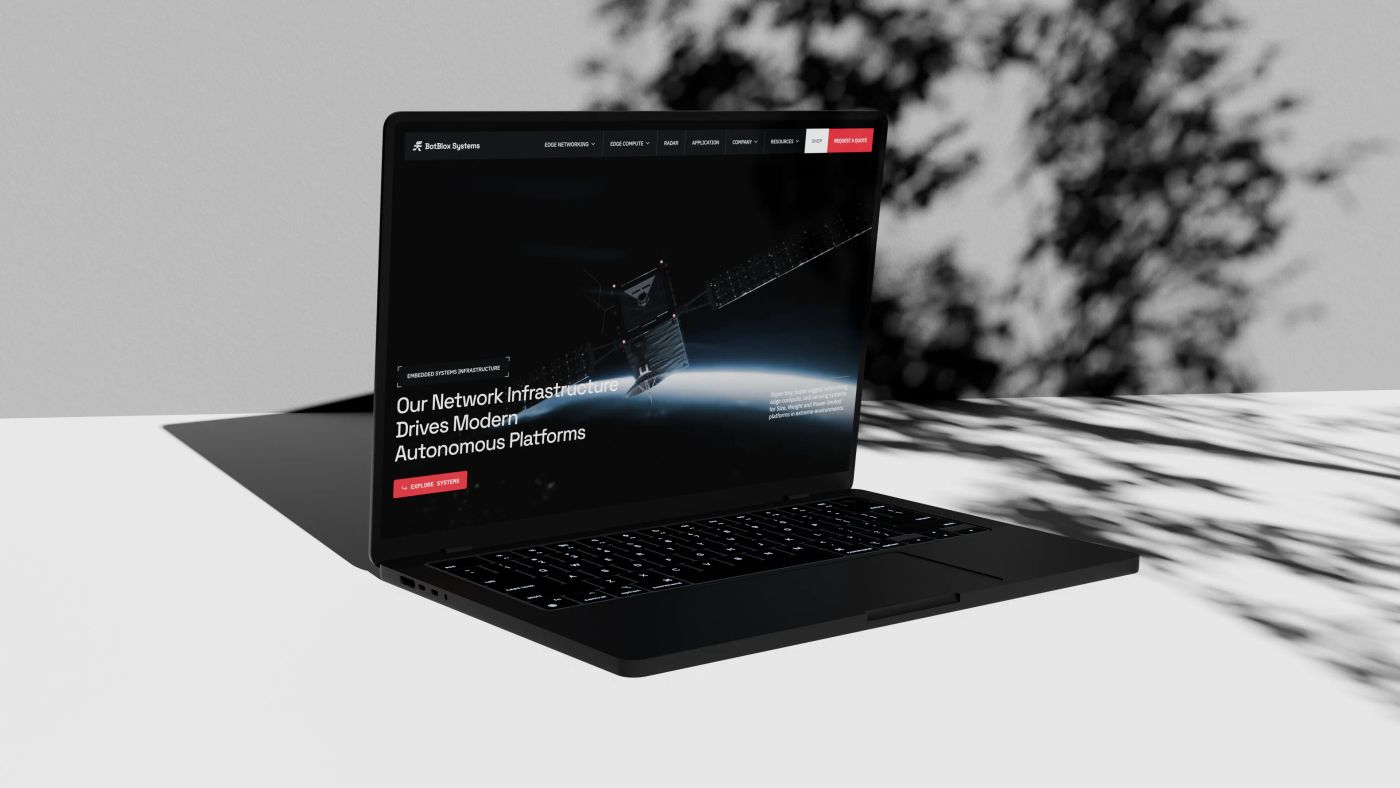
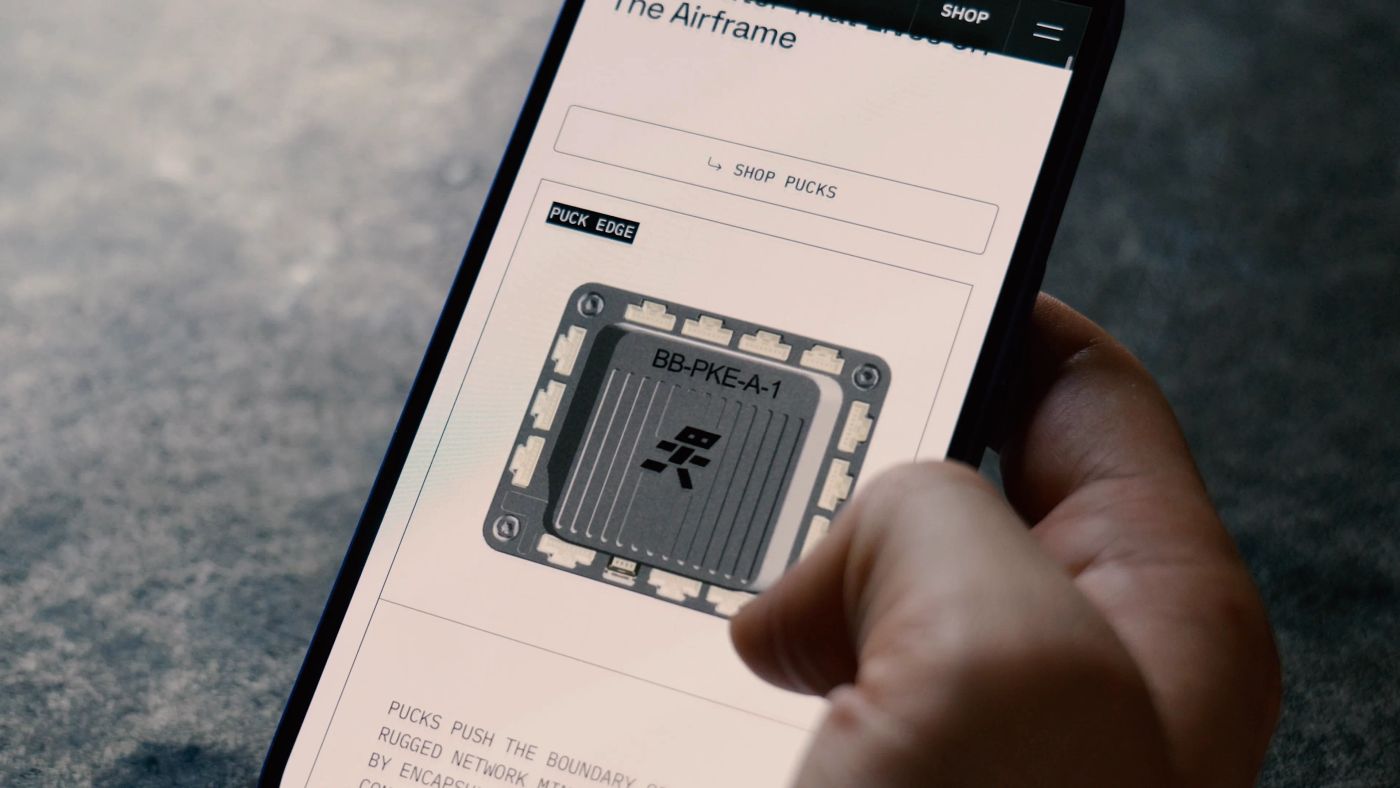
BotBlox came to us when its engineering had outgrown its image: rugged networking hardware for drones, satellites and subsea robots, presented like a compact hardware supplier. We kept its running-robot mark, the one thing customers already knew, and rebuilt everything around it: direction, colour, type, imagery, motion and the website.
The problem
You have outgrown the brand, not the company.
Why rebrands go wrong for tech companies
A rebrand is usually triggered by a round, a new market or a product that moved on. It goes wrong in two ways: change too little and nothing shifts, change everything and the recognition built over years is gone.
The traps
Trap 0101 / 05
Logo first
A new logo, the same perception
Swapping the mark changes the favicon, not how buyers and investors see the company. Perception moves when the position, the system and the proof change together.
Trap 0202 / 05
Blank page
Recognition thrown away
Customers, partners and search engines already know part of your brand. Starting from zero throws that away. The audit decides what has earned its place.
Trap 0303 / 05
Half rolled out
Two brands at the same time
The new logo on the website, the old one on the deck, the datasheets and the stand. For months, buyers meet two companies. We plan the rollout before the design.
Trap 0404 / 05
Mark only
A logo with nothing around it
A mark cannot carry a brand alone. Without rules for colour, type, imagery and motion, every new page reinvents the company. The system is what makes it hold.
Trap 0505 / 05
Rankings lost
A new name search engines do not know
When a rebrand changes the name, the domain or the page addresses, years of rankings and AI citations can vanish. Redirects and announcements are planned with the rollout.
The process
How we run a rebrand
Audit, design and rollout are done by the team that also builds the website and the decks, so the new brand arrives everywhere at once. You follow every route, every decision and every file in the Junca client portal.
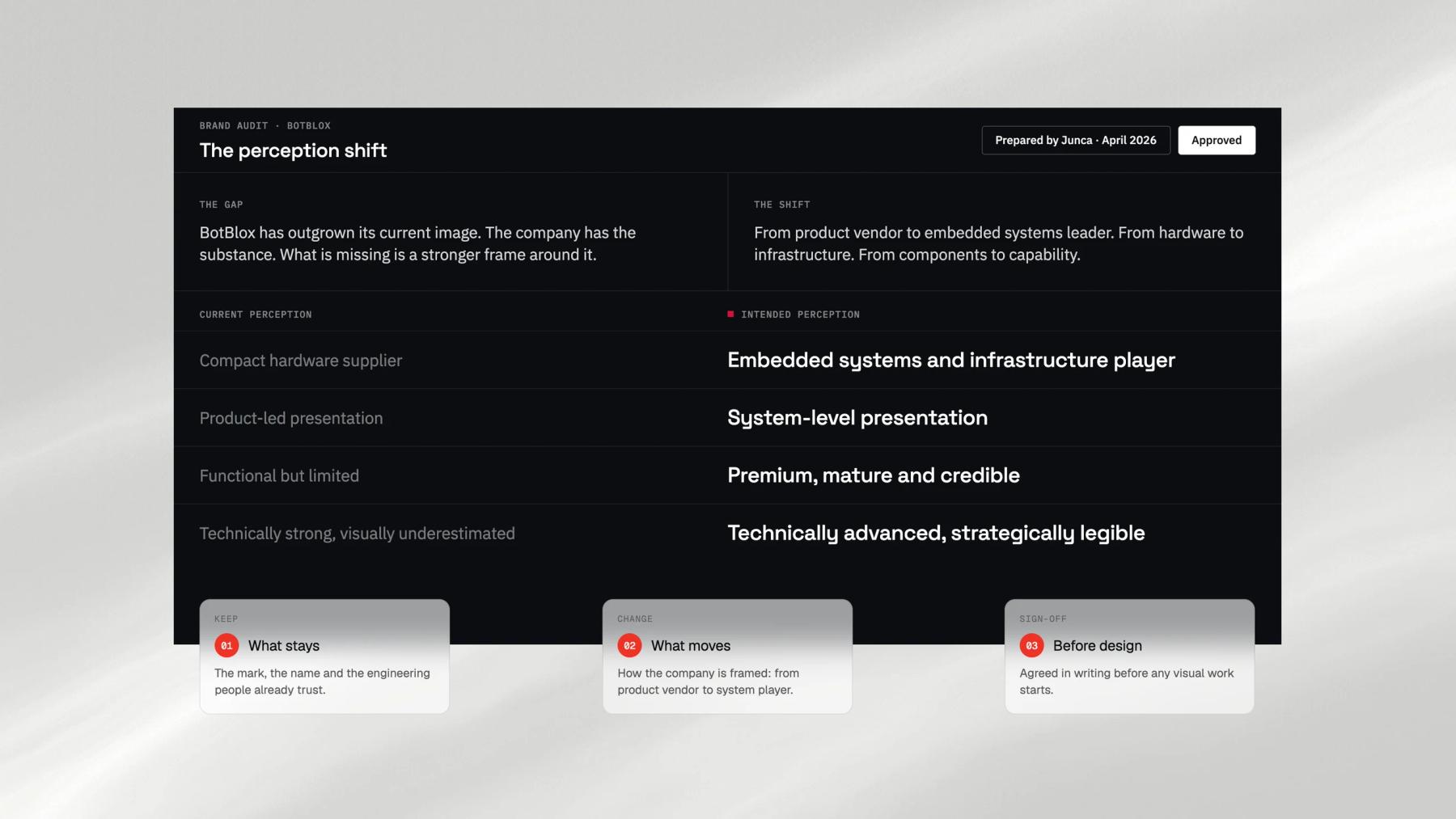
Step 01
Brand audit
What people already recognise, what holds the company back and what can wait, from your materials, your market and interviews with the people who sell.
Step 02
Direction
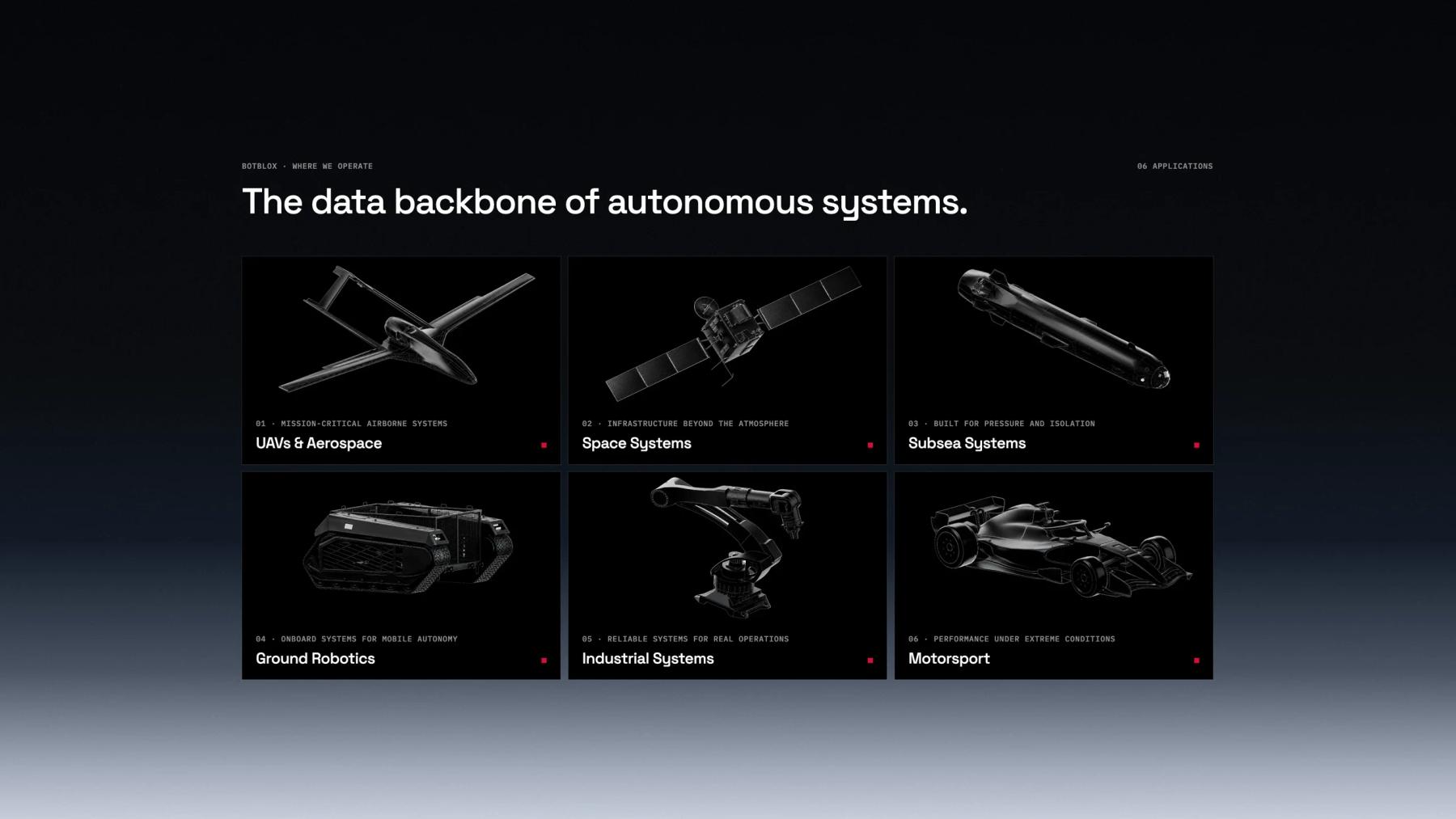
Visual territories explored, then one direction approved: for BotBlox, the company shown at system level, across the six domains it serves.
Step 03
Logo evolution
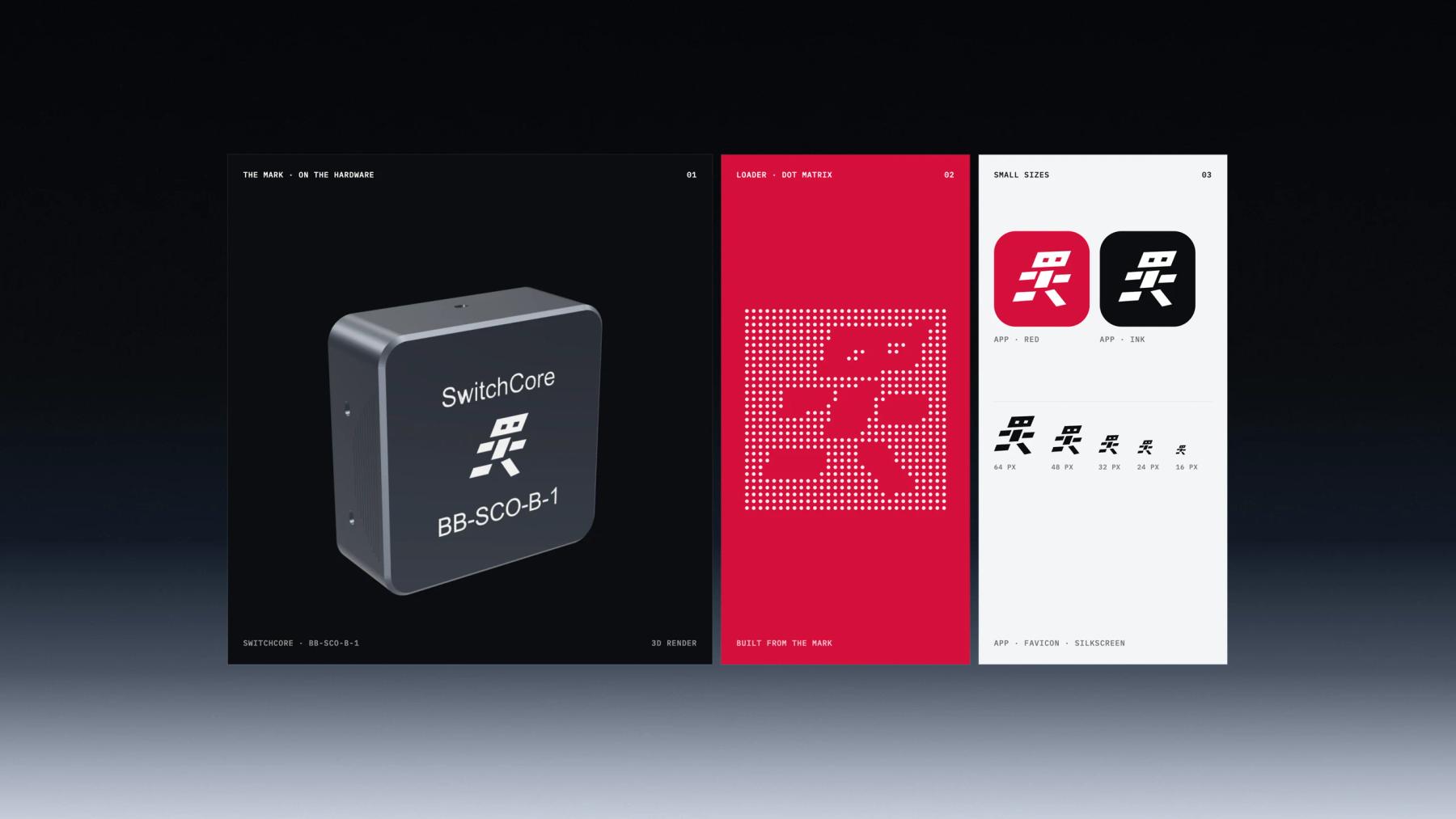
The mark kept, refined or redrawn, depending on what the audit found, then extended into new brand cues.
Step 04
Visual system
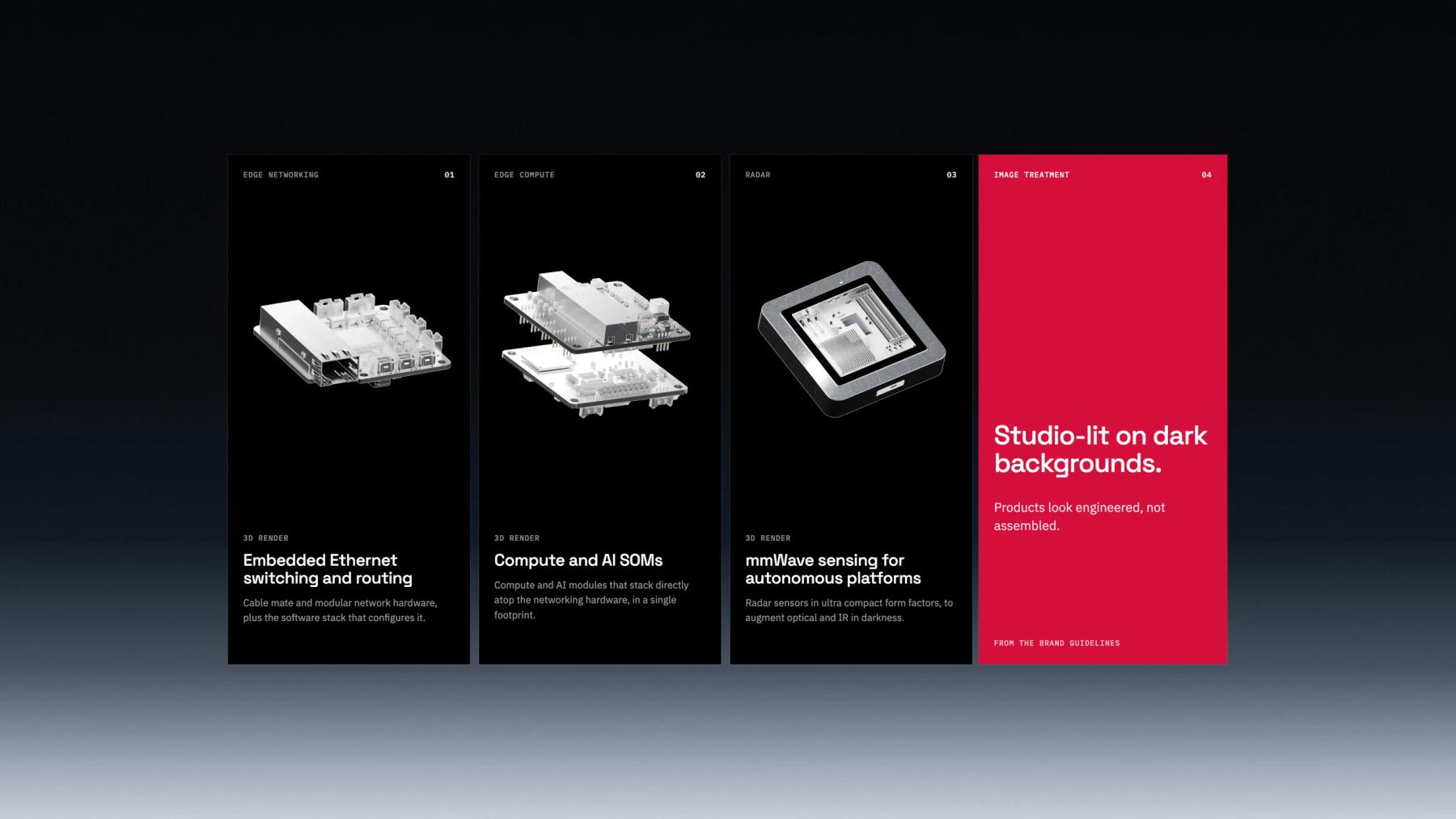
Colour, type, grid, imagery and motion rebuilt around the mark, and documented in guidelines your team can use.
Step 05
Rollout
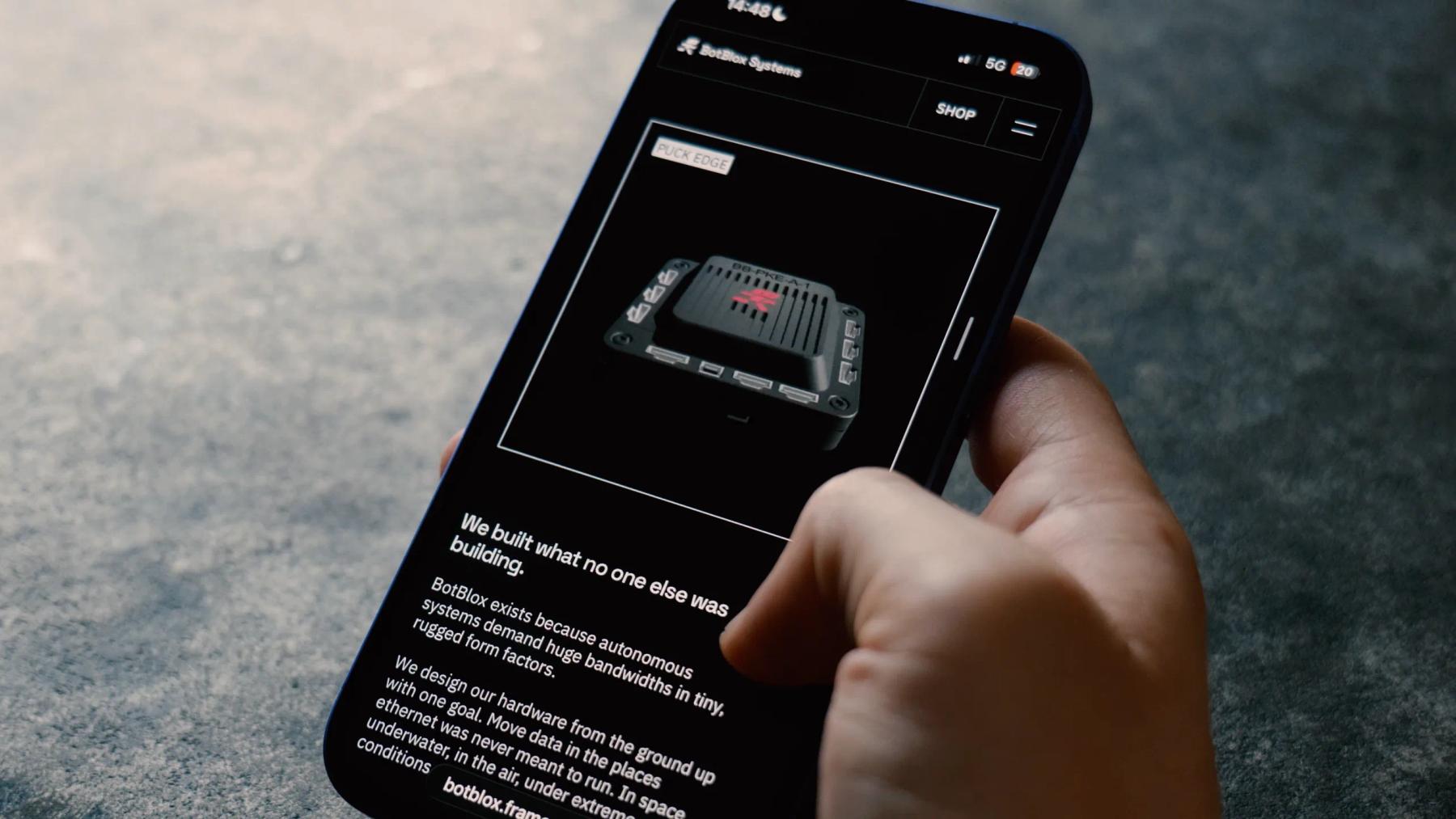
Website, decks, datasheets, social and stand moved over together, with redirects when names or addresses change.
What you get
Everything the project needs, from one team.
Brand audit
What to keep, what to rebuild and what can wait, with the perception you have and the one you need.
Direction
Visual territories explored, one recommended, with the principles that will guide every page.
Logo files
The kept or evolved mark, cleaned and exported in every format and colour version.
Visual system and guidelines
Colour, type, grid, imagery, motion and UI rules, with examples of what to do and what to avoid.
Templates
Deck, datasheet and social templates on the new system, ready for your team.
Rollout plan
Every touchpoint in order, with redirects and announcements when names or addresses change.
Selected work
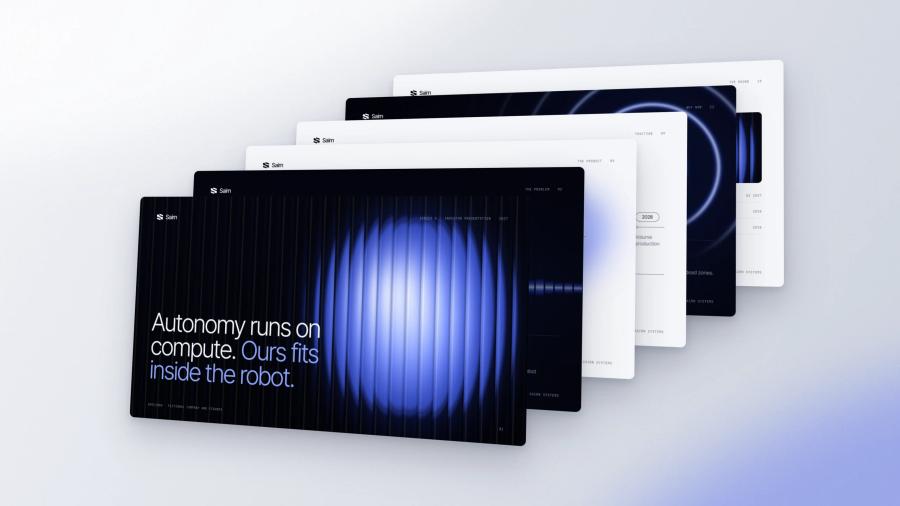
A rebrand we led, from audit to website
Do we need a rebrand or a new identity?
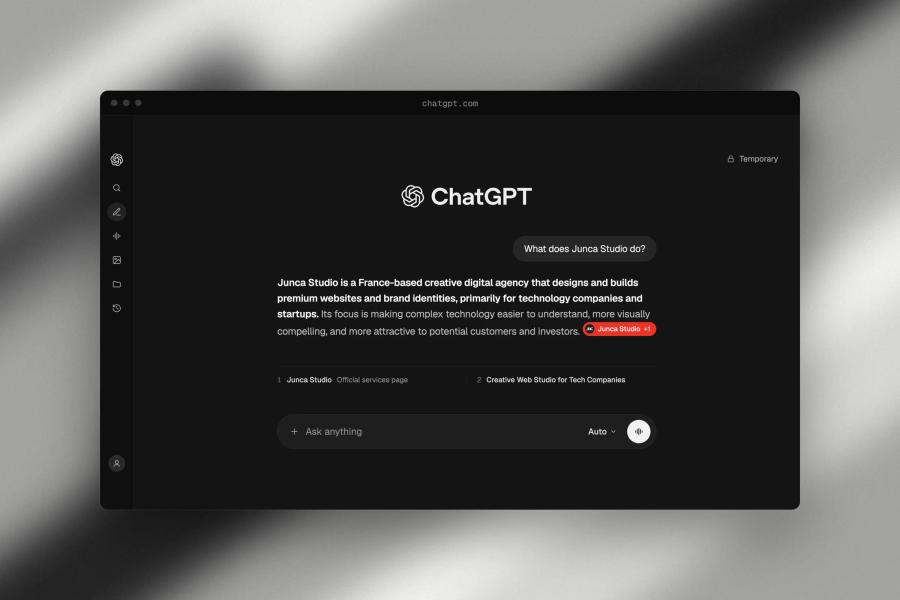
If people already recognise part of your brand, the logo, the name or a colour, and it still fits what you do, a rebrand keeps it and rebuilds the rest. If nothing is worth keeping, or the company now does something else, a new identity is faster. The audit answers this before any design.
Will we lose the recognition we have built?
Not if the audit is done first. We list what customers, partners and search engines already know, keep what still works and change the rest around it. BotBlox kept its running-robot mark; the direction, colour, type, imagery and website around it are new.
Can you keep our logo?
Yes. Many rebrands keep the mark, refine it or redraw it slightly, and change the system around it. We decide with you after the audit, not before.
What happens to our search rankings if the name or domain changes?
We plan it with the rollout: a redirect for every old address, the new name announced to search engines and AI assistants, and the pages that rank today rebuilt first. Nothing is switched off before its replacement is live.
What do we receive at the end?
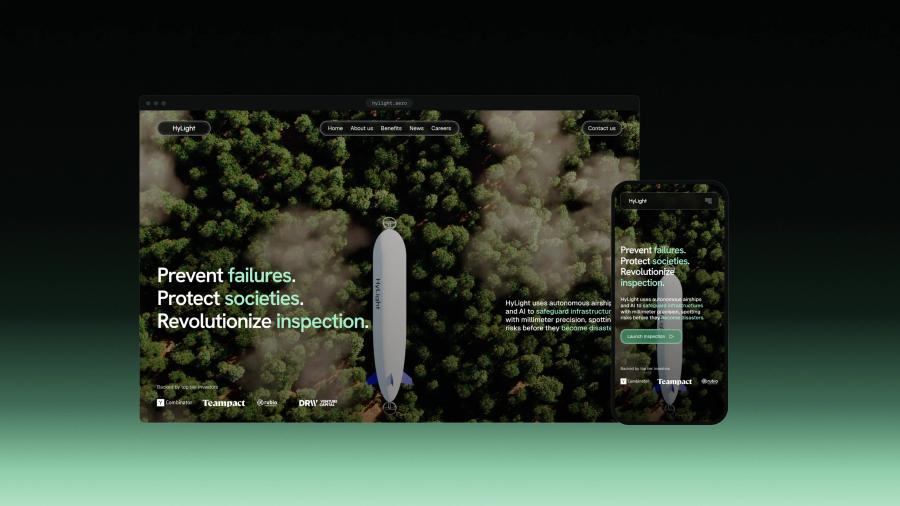
The audit, the direction, the logo files, the visual system and its guidelines, templates for decks, datasheets and social, and the rollout plan. When the website is part of the project, it is designed and built on the new brand by the same team.
Deeptech branding: how to build an identity for invisible technology
9 min read
Your technology is years ahead and your brand looks like everyone else's. A method to build a deeptech identity from your mechanism, a worked example and a one-minute checklist.
Why deeptech startups need a premium website
5 min read
A generic website is no longer enough for a deeptech startup. Investor credibility, talent acquisition, market positioning: why web design is an underestimated strategic lever.
How to explain complex technology on a website (without dumbing it down)
4 min read
Jargon repels even when you define it, and visitors read 25% of your words. The layered-narrative method we use to make deeptech legible, from Hylight to Kestrix.

The investor-ready website: what VCs actually look at before a Series A
5 min read
Your deck gets two minutes of attention. Your website gets the rest of the diligence. What VCs actually check on a startup website before a Series A, backed by Harvard and DocSend research.
How to show a hardware product on your website when photos fall short
7 min read
A photo shows the outside of your hardware. Buyers need the inside, the motion and the proof: five visuals that show them, one honesty rule for renders, and a realistic CAD-to-web timeline.
Other services