


The round opens in three months. The deck was made the night before the last one.
Pitch decks and fundraising materials for deep tech founders, ready before the round

What it is
Fundraising design for a tech company turns a technology investors cannot test into a story they can fund: the equity story, then a teaser, a pitch deck, a detailed deck for the investment committee and a one-pager, all on one identity, with a website and product visuals that say the same thing.
Junca writes the story with the founders, designs every document in-house and plans the work backwards from the date the round opens.
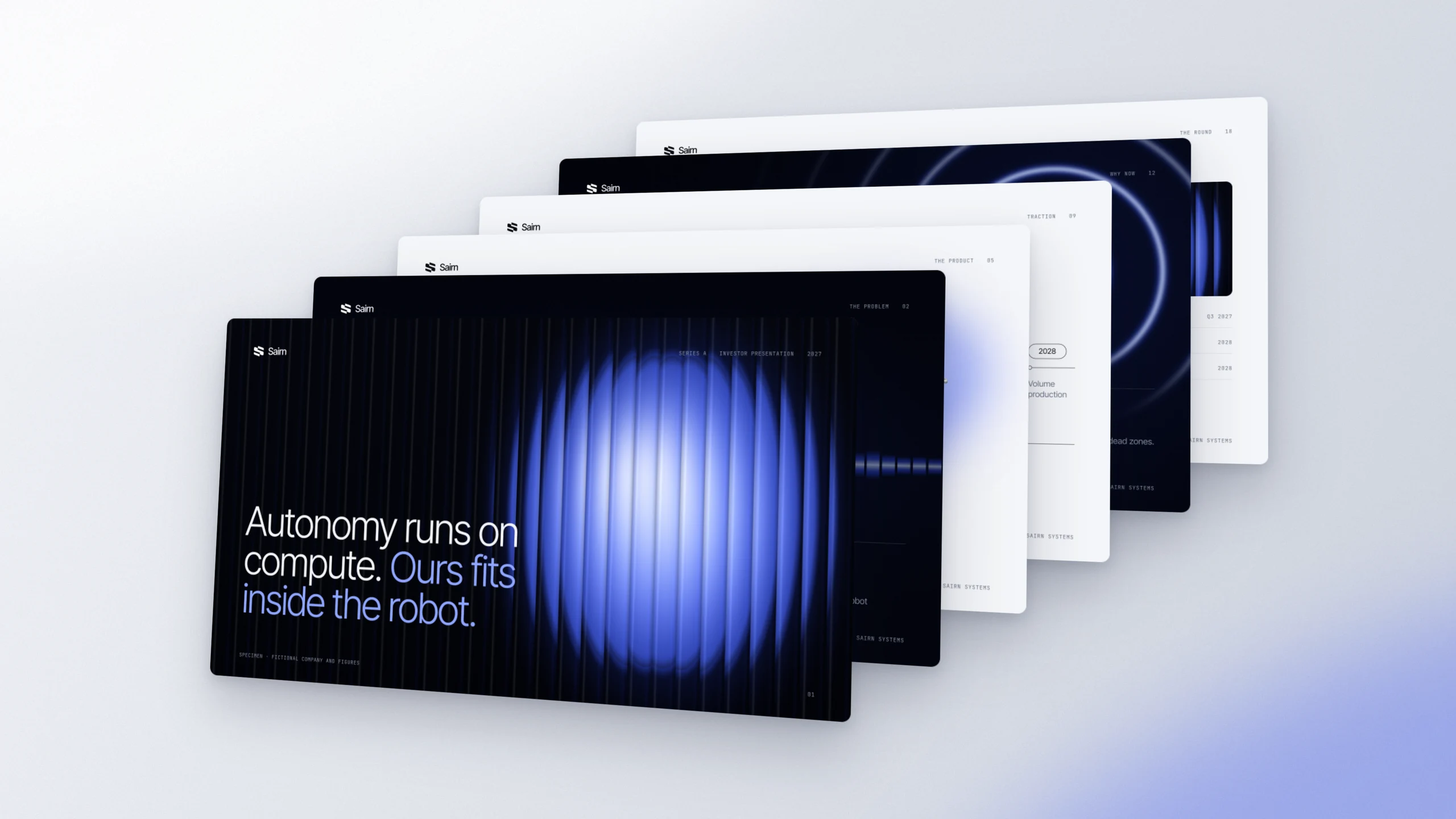
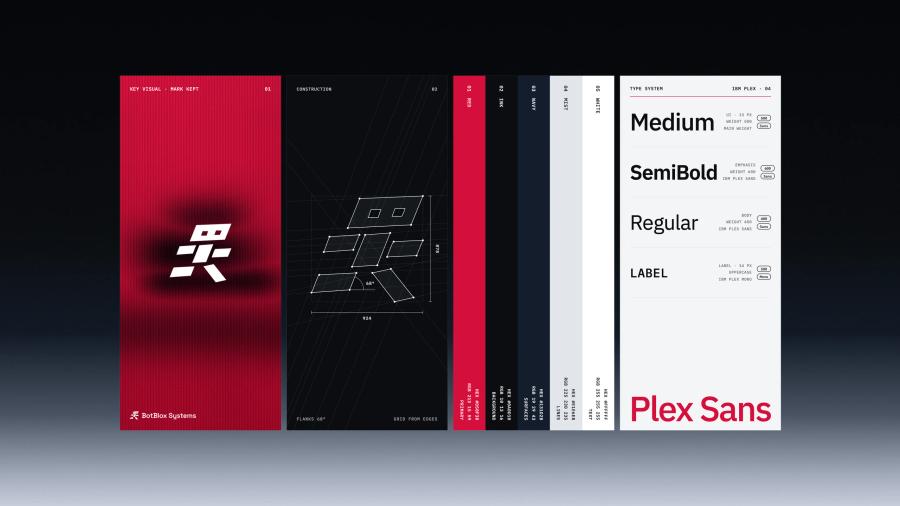
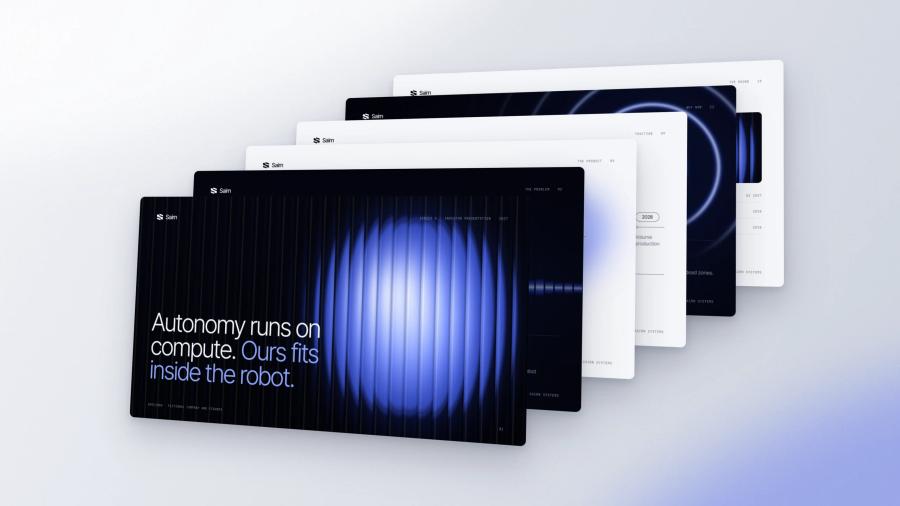
We do not show client decks: every fundraising project we take on is under NDA, and yours will be too. The deck on this page belongs to Sairn Systems, a company we invented to show the method, with the same structure and the same care, and figures that are not real. The story is ours to build with you; the numbers stay yours.
Fundraising services
Everything an investor opens, from one team.
The documents a fund reads at each stage of the round, the website it checks before and after the meeting, and visuals of a product you cannot show yet.
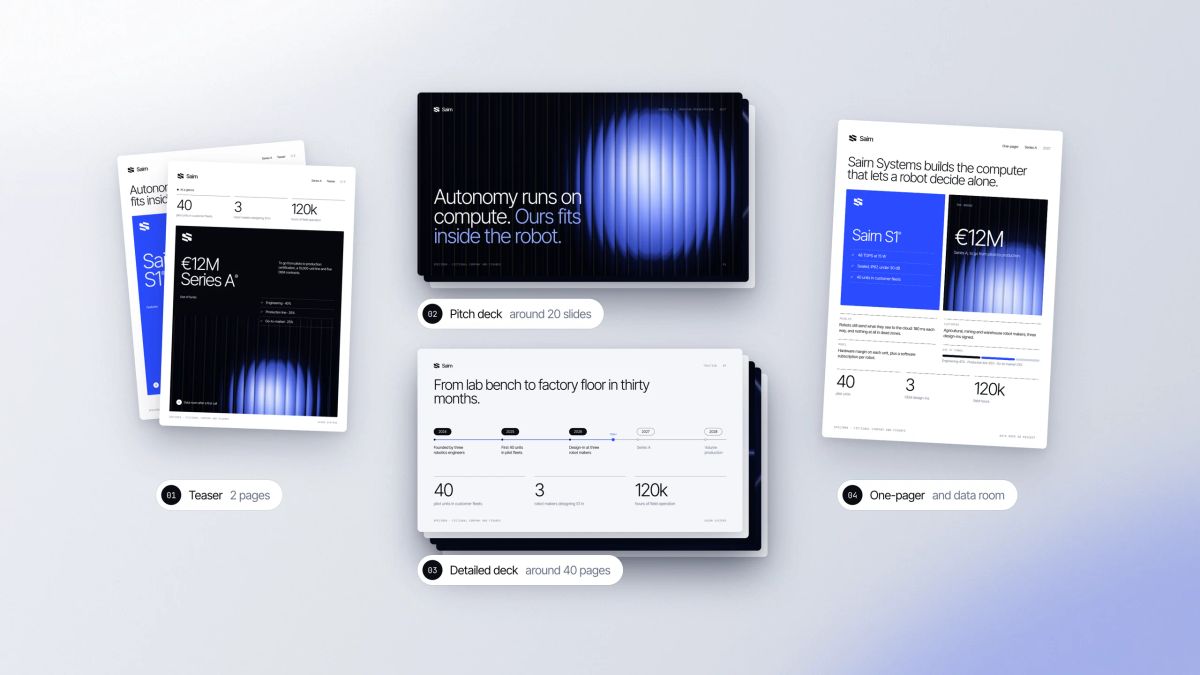 Pitch deck & investor kitThe equity story, then a teaser, a pitch deck, a detailed deck and a one-pager, one for each stage of the round.See the process
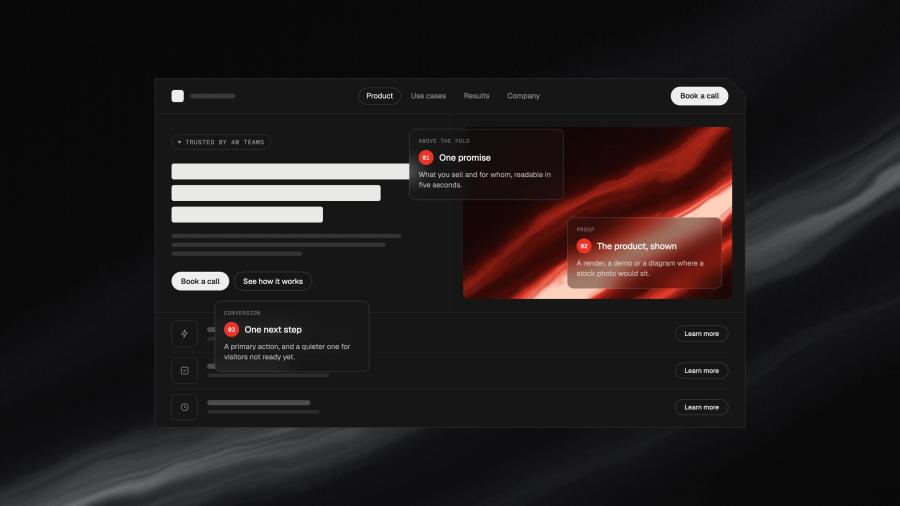
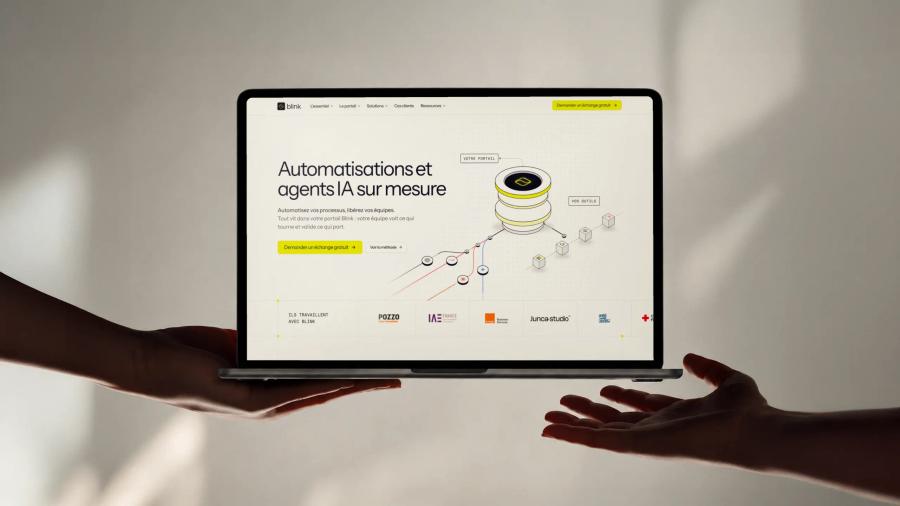
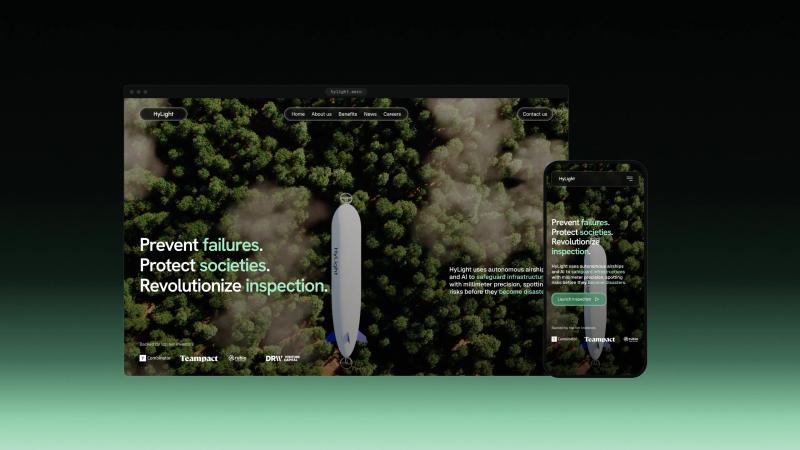
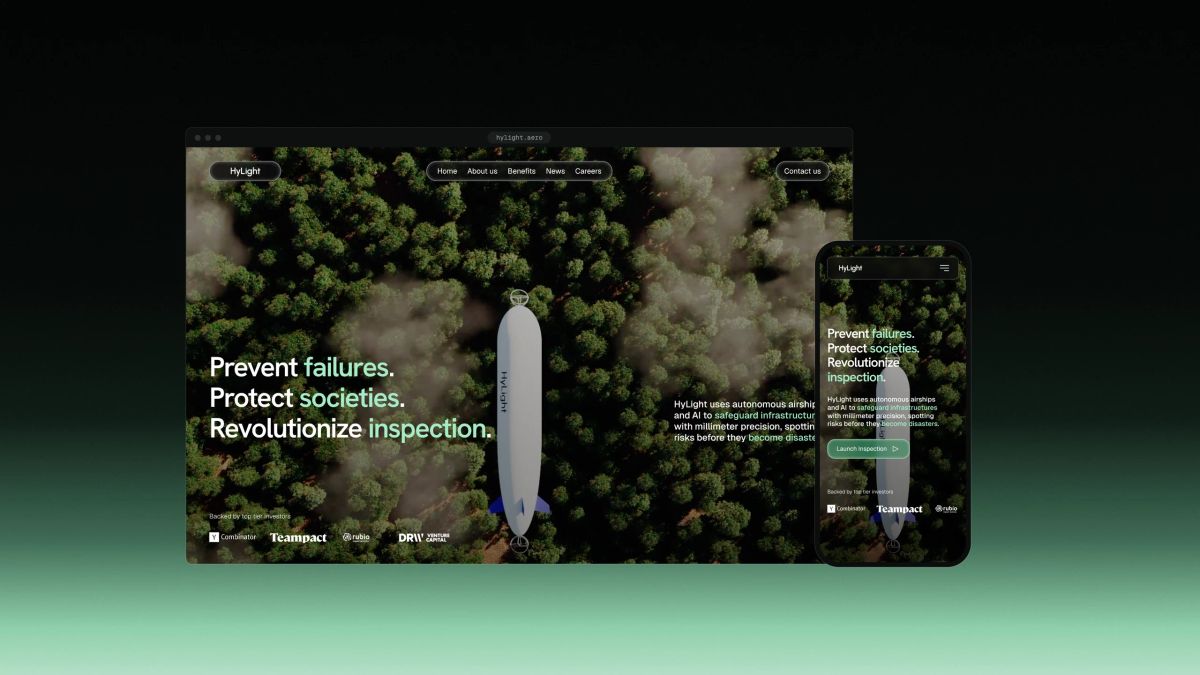 Investor-ready websiteThe site investors open before and after the meeting: the same story as the deck, and a page of their own.View service
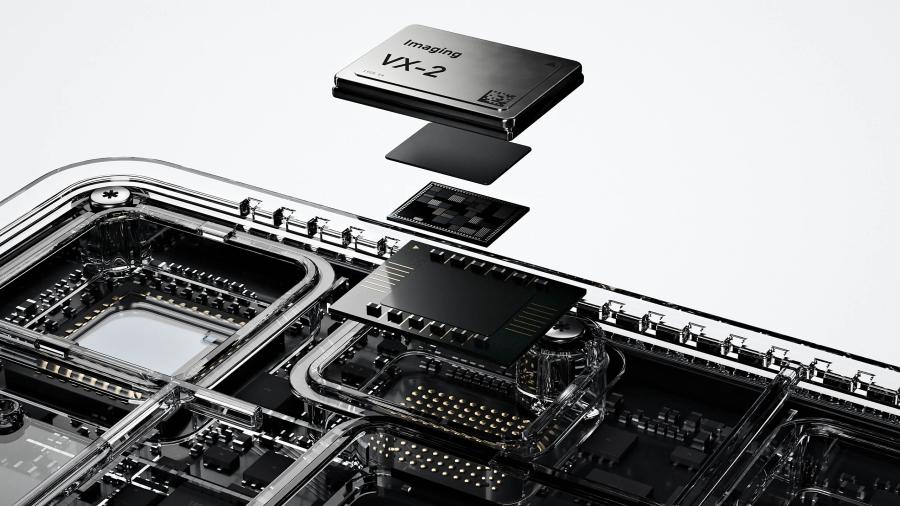
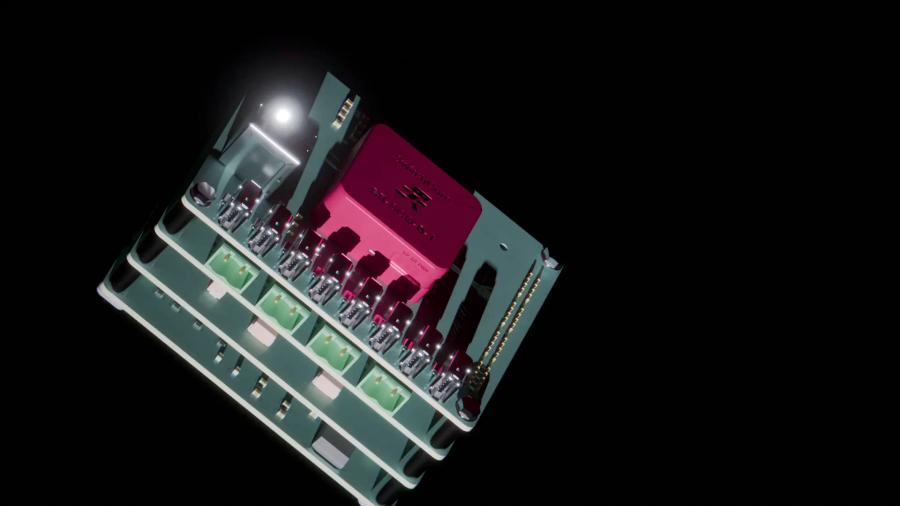
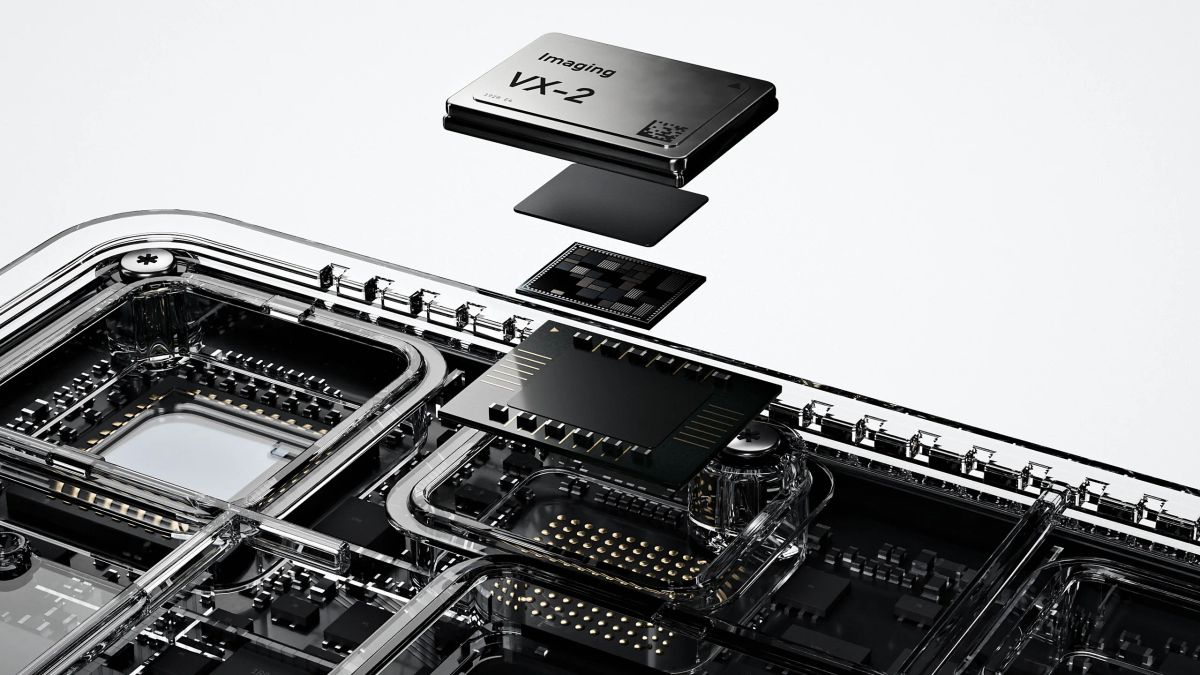 3D product visualsRenders and exploded views from your CAD, for the deck, the press and the website, showing only what you approve.See 3D & Motion
 Not sure where to start?Tell us when the round opens. We tell you which documents matter first, and what can wait.Ask us
The problem
The technology is ready for the round. The materials are not.
Why deep tech fundraising materials undersell the company
Founders spend years on the product and a weekend on the deck. Investors then judge a technology they cannot test from documents that contradict each other, a website that tells another story and photos of a prototype. The gap shows before the first question.
The traps
Trap 0101 / 05
Built for the team
A deck that explains the technology, not the investment
Founders write the deck in the order they built the product: science first, market last. A fund reads it the other way round: thesis, proof, round. We rebuild the story around the questions an investment committee asks.
Trap 0202 / 05

Four documents, four stories
Teaser, deck and memo that never match
Each document is made in a hurry, by a different person, for a different meeting. Numbers drift, claims change, the look changes. We write one equity story first, then every document draws from it.
Trap 0303 / 05

The website says otherwise
A website that contradicts the deck
Investors open your site before and after the meeting. If it still pitches the seed-stage product, or says nothing about the company, it undermines the deck. We align the site with the story and give investors a page of their own.
Trap 0404 / 05

Nothing you can show
A prototype under NDA
Pre-clearance, under NDA or still a prototype: the product is the hardest thing to put on a slide. We build 3D renders and exploded views from your CAD that show what you approve and nothing more.
Trap 0505 / 05

Seed-round look
A brand that still looks like the first pitch
Series A funds compare you with companies that have invested in design. A logo made in a weekend reads as early-stage, whatever the traction. We bring the identity up to the level of the technology before the round opens.
The process
How we prepare a tech company's fundraising materials
Story, documents, website and visuals are made by the same team and planned backwards from the date the round opens. You follow every step in the Junca client portal, under NDA from the first call.
Step 01
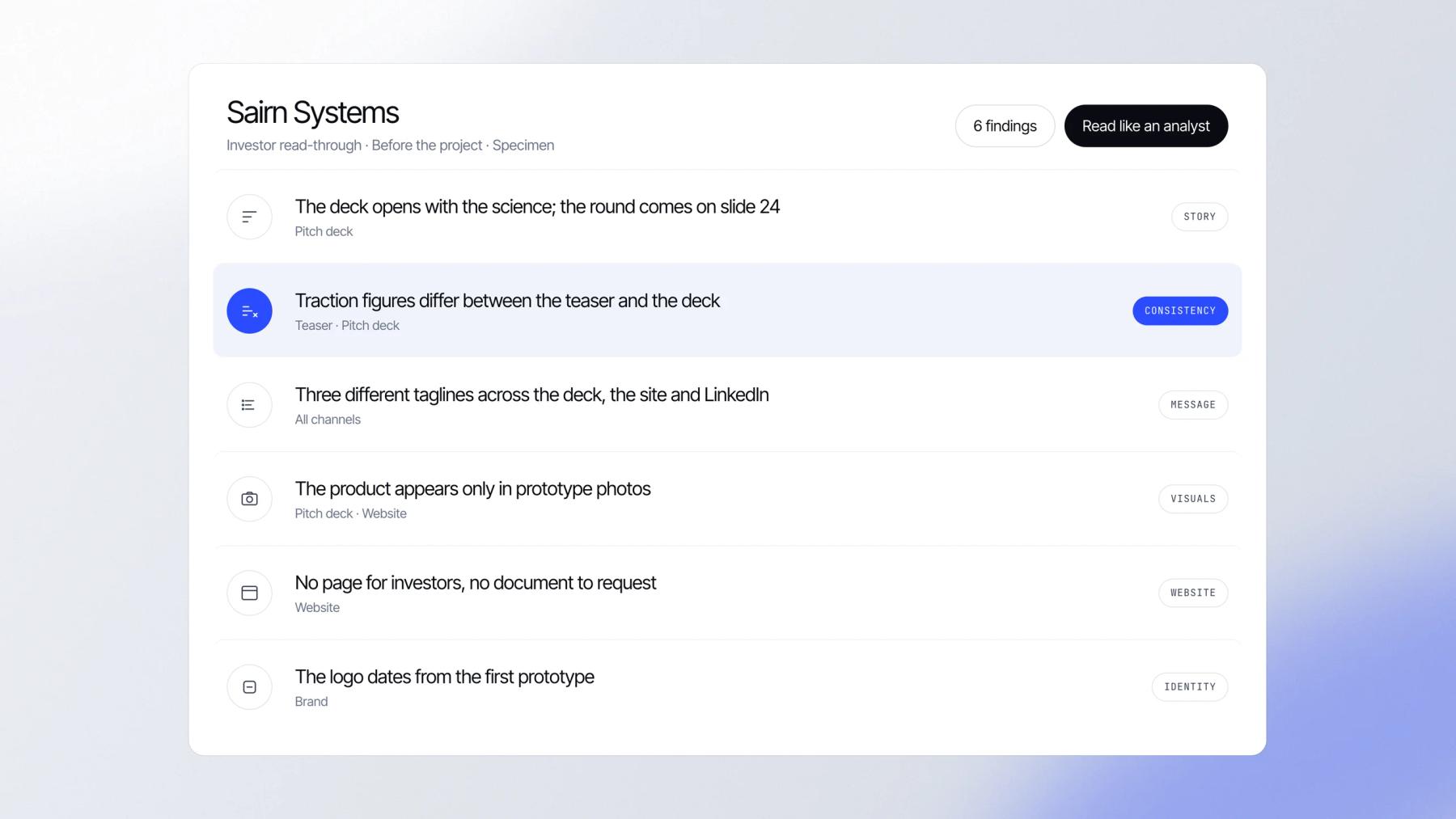
Diagnose
We read your deck, site and search results the way an analyst will before the first meeting, under NDA, then interview the founders.
Step 02
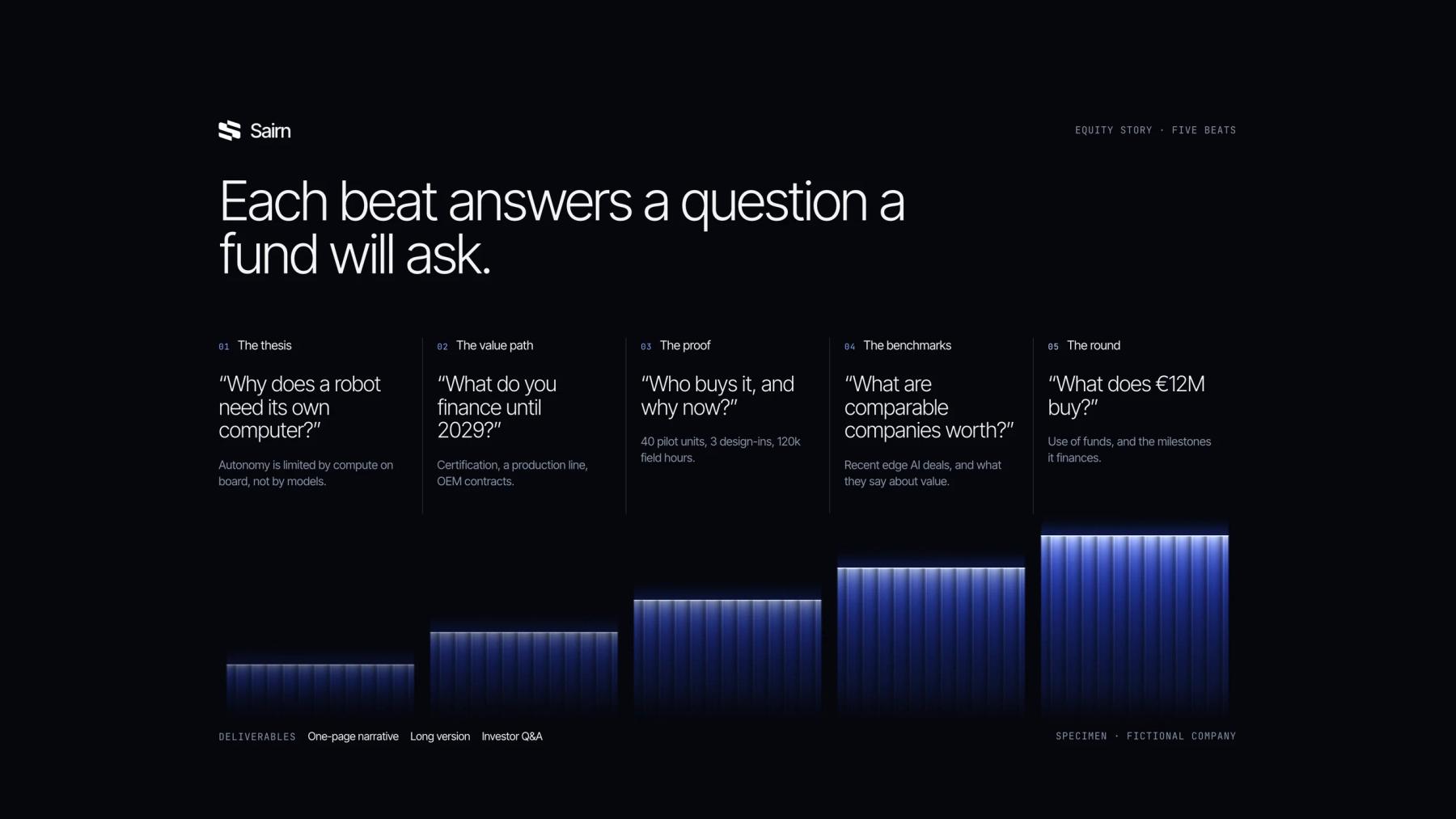
Equity story
The story in five beats, thesis, value path, proof, benchmarks and the round, with the questions a fund will ask and your validated answers.
Step 03
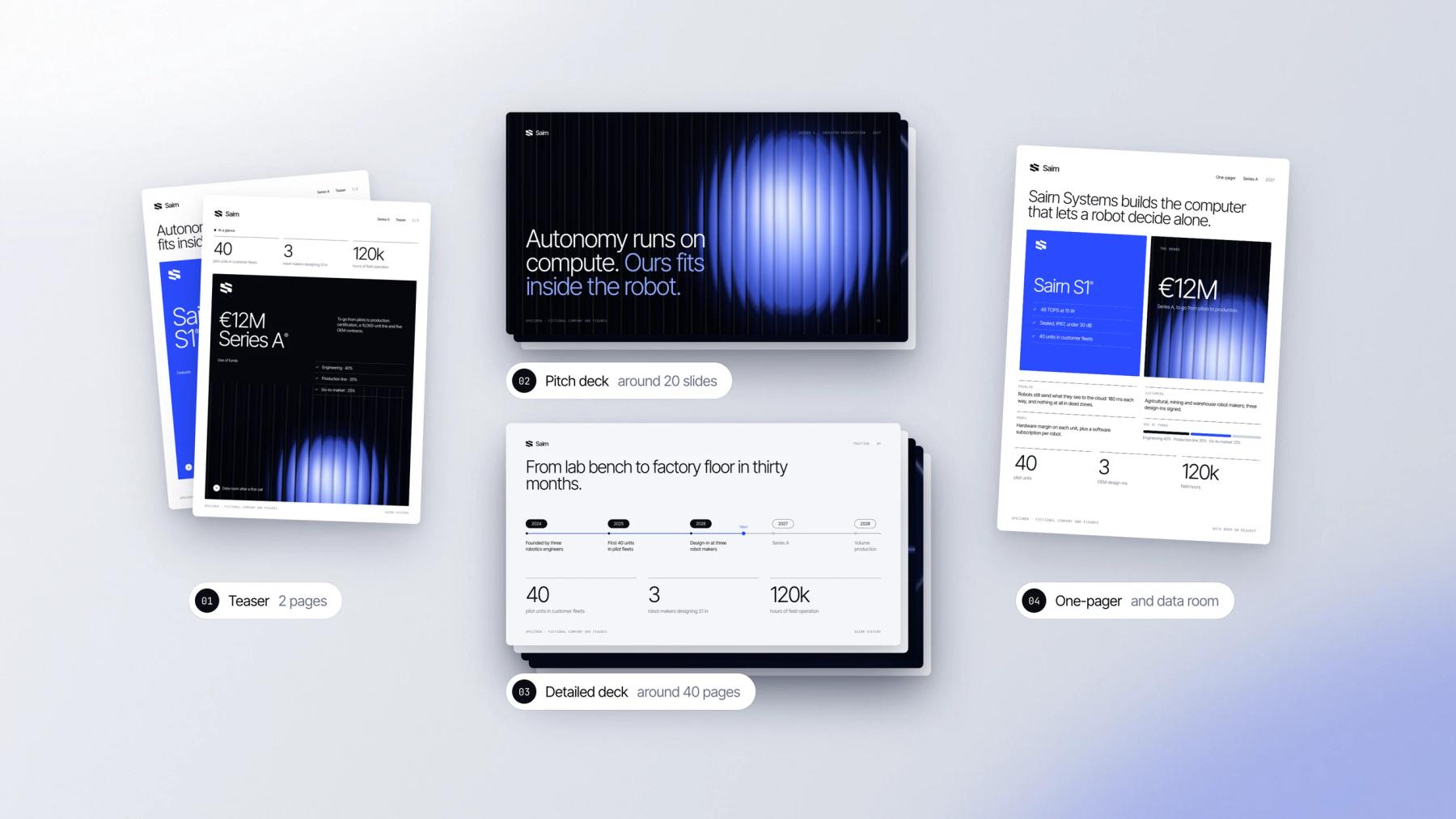
Investor materials
A teaser, a pitch deck, a detailed deck and a one-pager, one per stage of the round, designed in Illustrator and delivered as ready-to-send PDFs.
Step 04
Website and product visuals
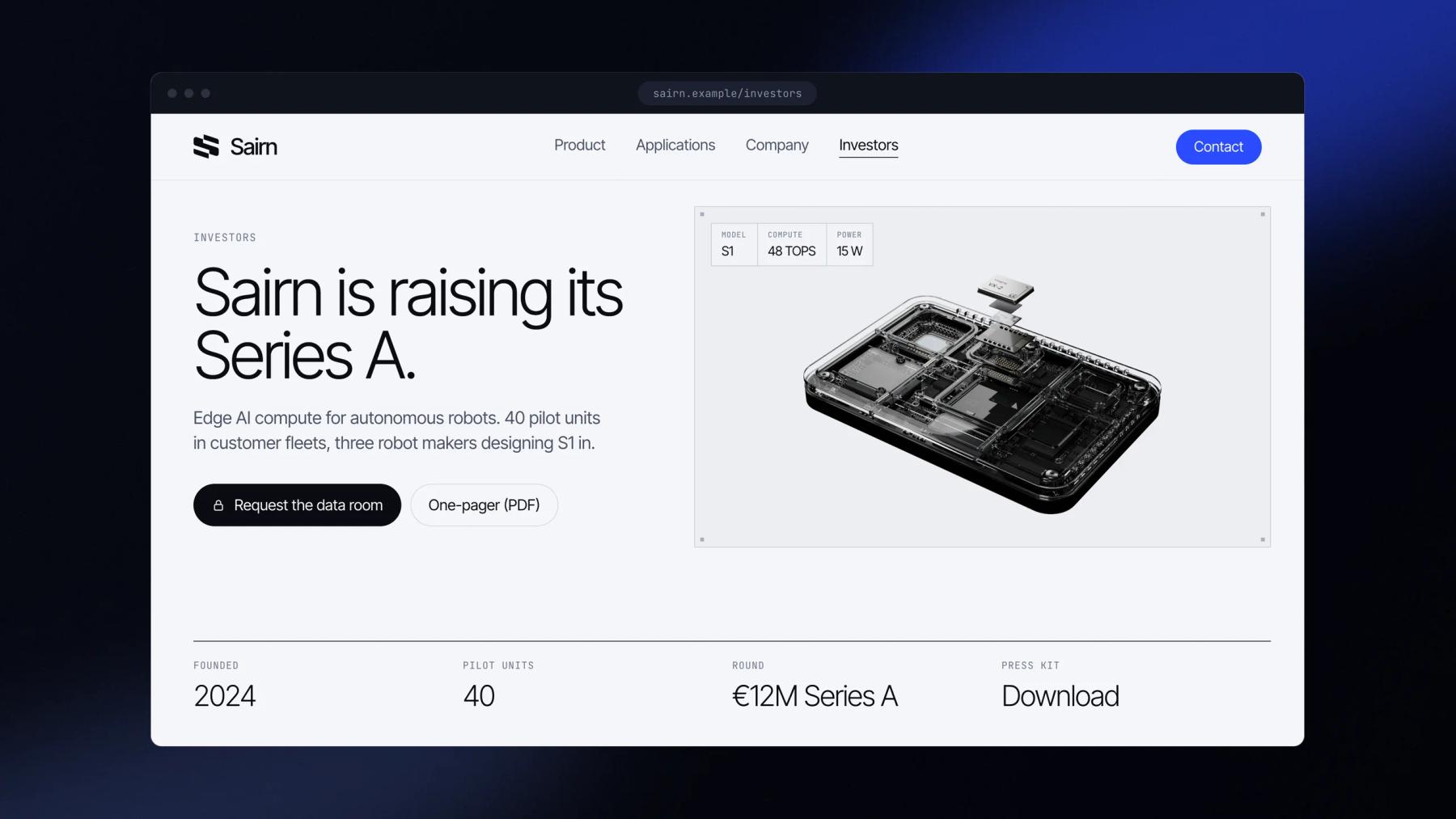
An investors page that tells the same story, the data room on request, and 3D renders of a product you cannot show yet.
Step 05
Roadshow
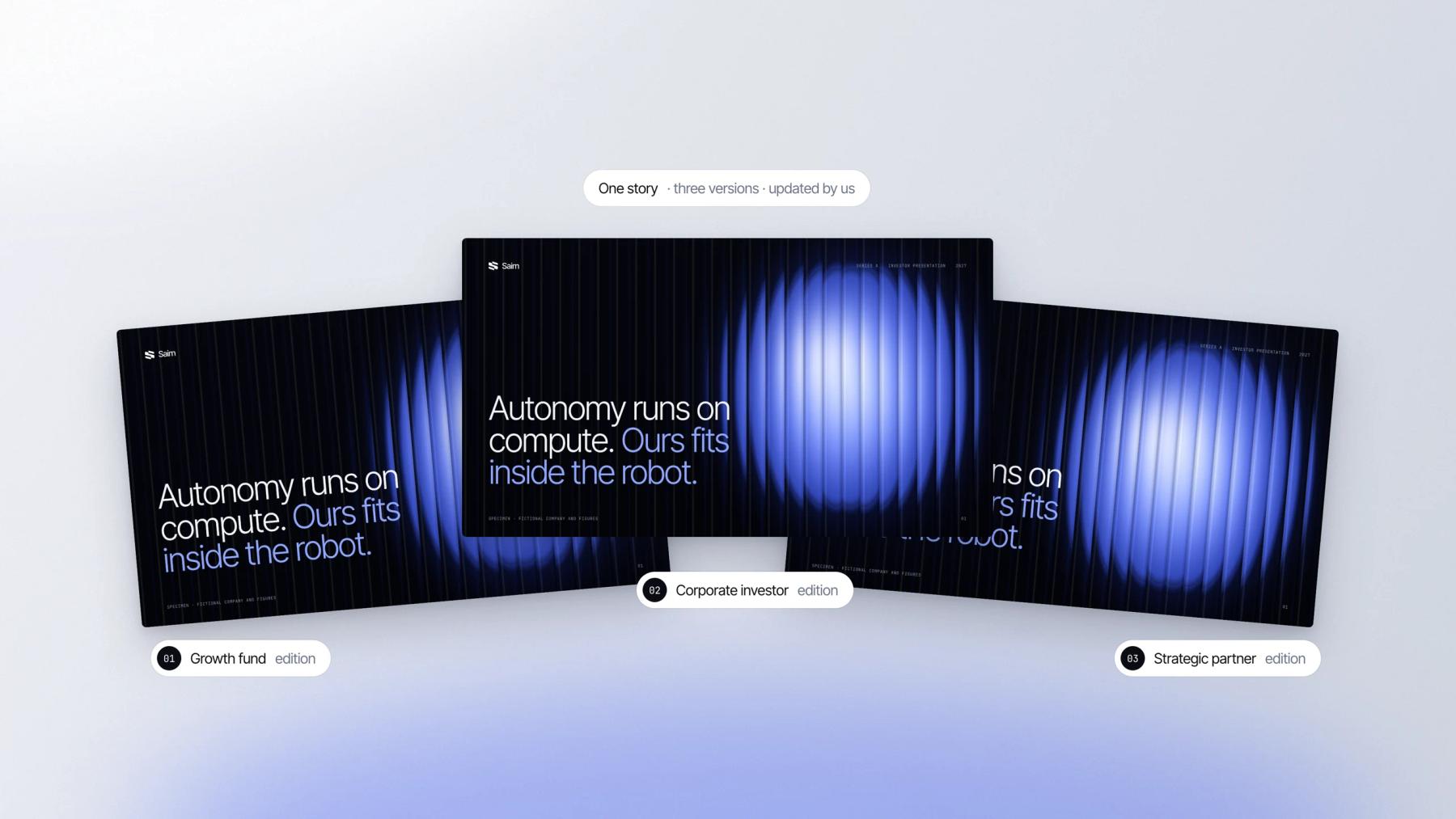
Versions by investor profile, updates from us when a figure moves, and every source file handed over at the end.
What you get
Every document a fund opens, on one story.
Equity story
A one-page narrative, a long version that feeds every document, and the questions a fund will ask, with your answers.
Teaser
Two pages sent before any meeting, written to get the deck opened.
Pitch deck
Around twenty slides presented by the founders, built so the product is understood in ten minutes.
Detailed deck
Around forty pages for the investment committee, so no question is left open.
One-pager and data room
The summary a partner forwards internally, and your data room documents formatted to match.
Investors page and renders
A page of your website for investors, and product renders for every document.
Source files
Illustrator files and renders, yours on final payment, with every version of each document.
Where to start
The deck, the website, or both?
Three questions. The answer comes with the services you can skip.
Often paired with
Same team
A round is judged on everything at once.
The people who write the equity story also design the identity, the website and the 3D, so every document an investor opens tells the same story.
- Brand identityAn identity at the level of the technology, in place before the deck is designed.
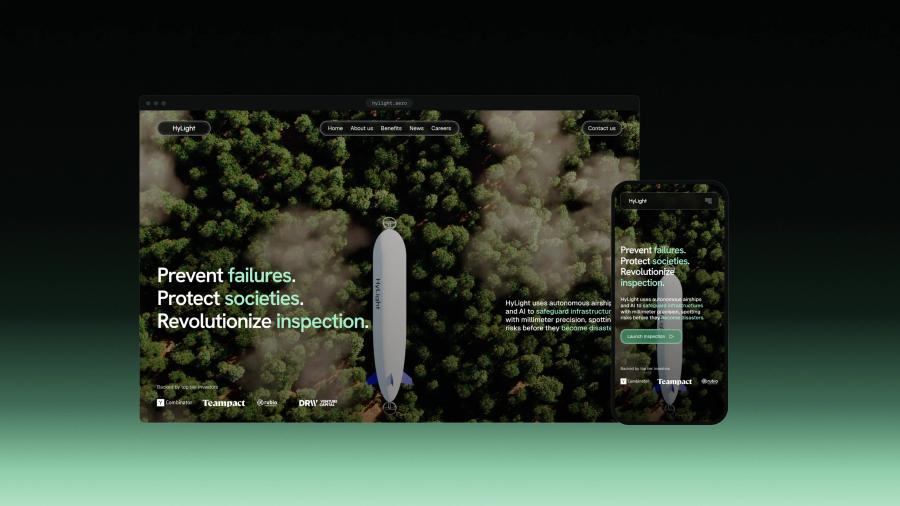
- WebsitesAn investors page and a site that tell the same story as the deck, in Framer or in code.
- 3D & MotionRenders and exploded views from your CAD, for the deck, the press and the site.
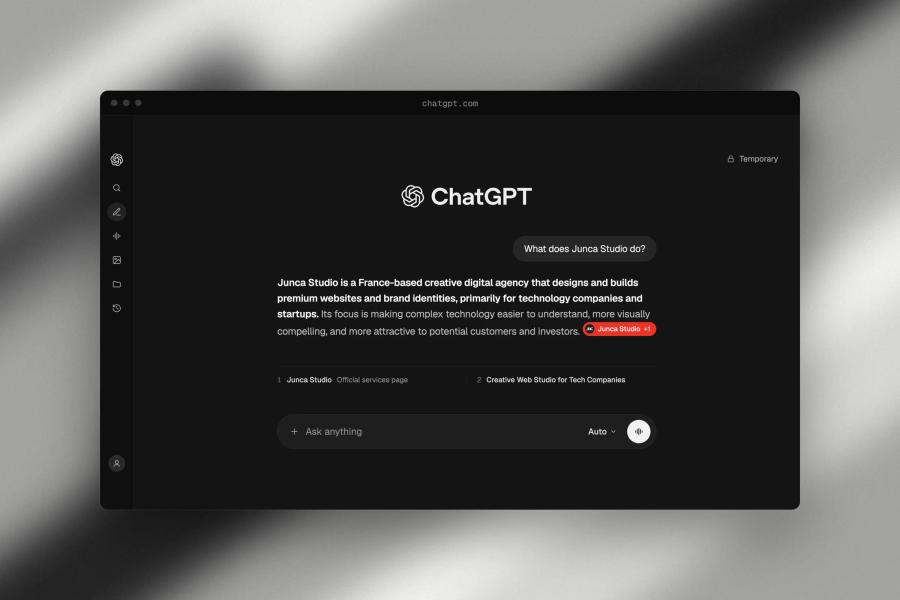
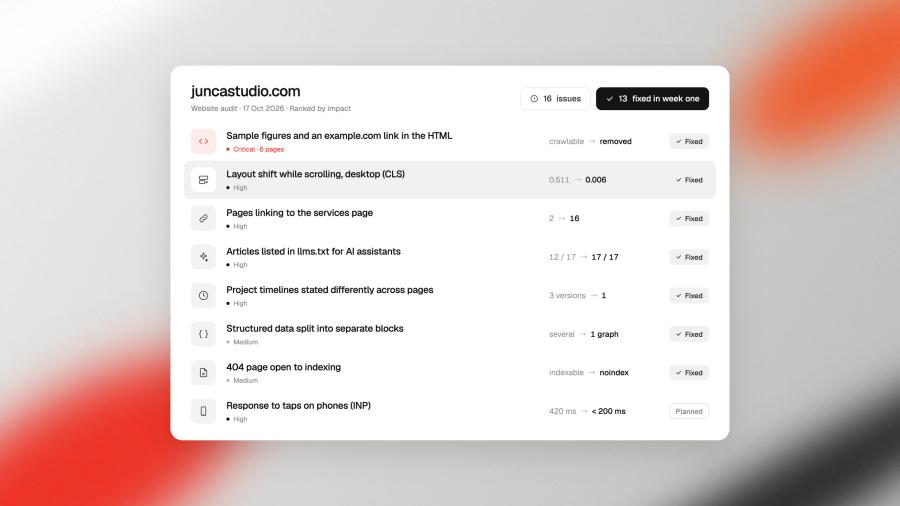
- SEO & GEOInvestors search you before the meeting: the right pages and an accurate AI answer are part of being ready.
Do you write the equity story, or only design the deck?
Both. We build the story with the founders: the thesis, the value path, the proof, the benchmarks and the round, and the questions a fund will ask. Then we design every document from it. The story is ours to build with you; the numbers stay yours.
Do you build the financial model or the valuation?
No. The story is ours, the numbers stay yours. We work from your model, your cap table and the figures your CFO or your bank validates, and we make them readable. We never produce, adjust or certify them.
When should we start before the round?
Count about three months for the full set, planned backwards from the date the round opens: the equity story first, then the documents, then the website and the visuals. A pitch deck on its own is faster.
Which documents do we actually need?
One per stage of the investor's journey: a two-page teaser for the first contact, a pitch deck of around twenty slides for the meeting, a detailed deck of around forty pages for the investment committee, and a one-pager they forward internally after the meeting. Not every round needs all four; we tell you which ones yours does.
Why can't we see decks you have made?
Because they are under NDA, and yours will be too. Every fundraising project we take on is confidential, from the first call. The Sairn Systems deck on this page is a specimen made for a company that does not exist, with the same method and the same care as a real one.
Can the deck show a product that is not yet cleared?
Yes. We build 3D renders and exploded views from your CAD, and they show only what you approve: a shape, a cross-section, a component, never the part you need to protect. The same model serves the deck, the press kit and the website.
We are in a regulated field. What changes?
Compliance is designed in from the first line: the right vocabulary, the mentions your regulator expects on each document, no claim you cannot make yet, and a review by your regulatory lead in the planning. We do not replace your regulatory counsel.
Do investors get a public page or a data room?
Both. A public page with the key facts, the round and the press kit, and the data room on request, after you have qualified who is asking.
Can we update the decks ourselves during the roadshow?
We design in Illustrator and deliver ready-to-send PDFs, so the documents keep their level. When a figure moves during the roadshow, we update it for you. The source files are yours at the end of the project.
How much does fundraising design cost?
It depends on the documents your round needs, the depth of the equity story and whether the website and the 3D are part of it. You get a detailed quote after a free first call.

The investor-ready website: what VCs actually look at before a Series A
5 min read
Your deck gets two minutes of attention. Your website gets the rest of the diligence. What VCs actually check on a startup website before a Series A, backed by Harvard and DocSend research.

Startup website after a seed round: what to change before Series A
6 min read
The median gap between seed and Series A is now 616 days. The site that helped you raise was written for investors; here is what to change so it sells, hires and prepares the next round.
Deeptech branding: how to build an identity for invisible technology
9 min read
Your technology is years ahead and your brand looks like everyone else's. A method to build a deeptech identity from your mechanism, a worked example and a one-minute checklist.
How to explain complex technology on a website (without dumbing it down)
4 min read
Jargon repels even when you define it, and visitors read 25% of your words. The layered-narrative method we use to make deeptech legible, from Hylight to Kestrix.
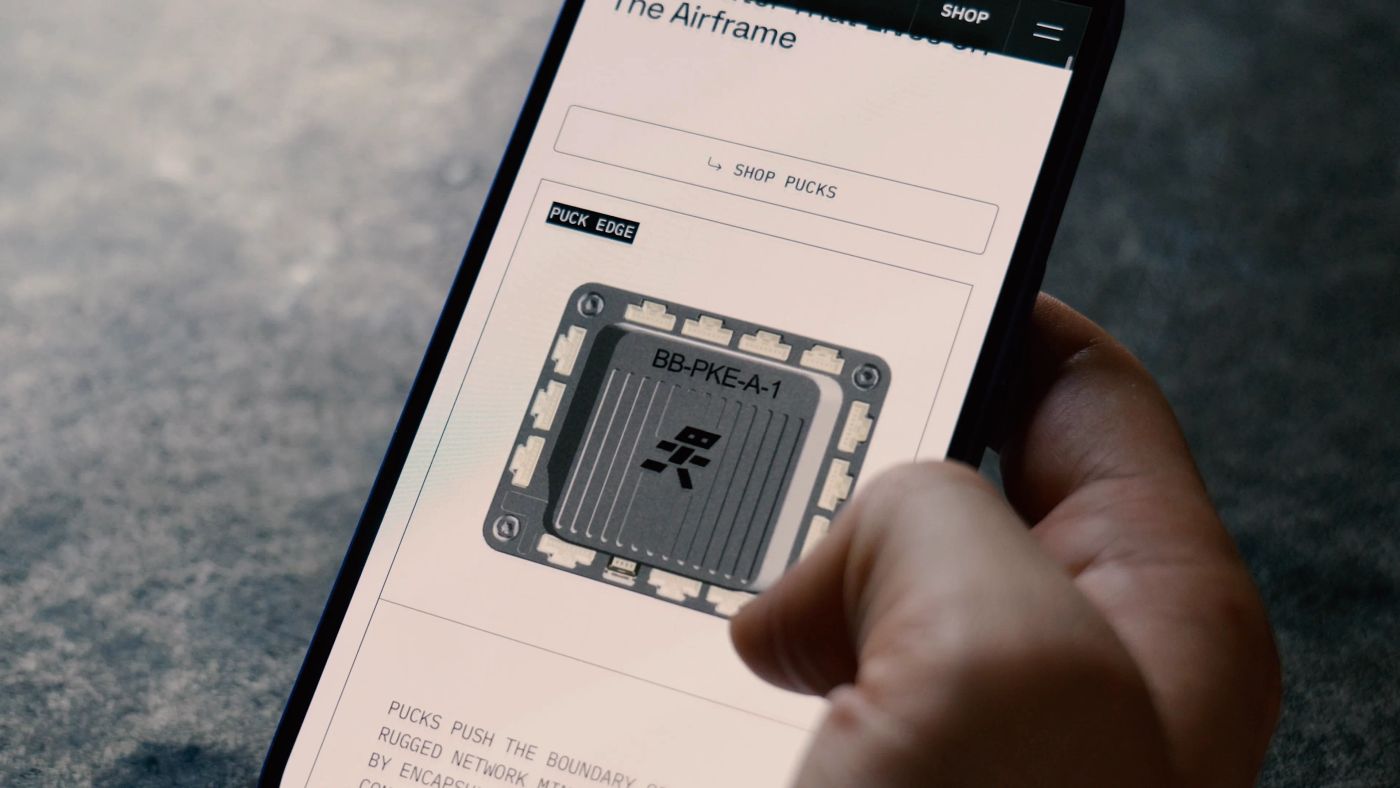
How to show a hardware product on your website when photos fall short
7 min read
A photo shows the outside of your hardware. Buyers need the inside, the motion and the proof: five visuals that show them, one honesty rule for renders, and a realistic CAD-to-web timeline.
Why deeptech startups need a premium website
5 min read
A generic website is no longer enough for a deeptech startup. Investor credibility, talent acquisition, market positioning: why web design is an underestimated strategic lever.
Other services