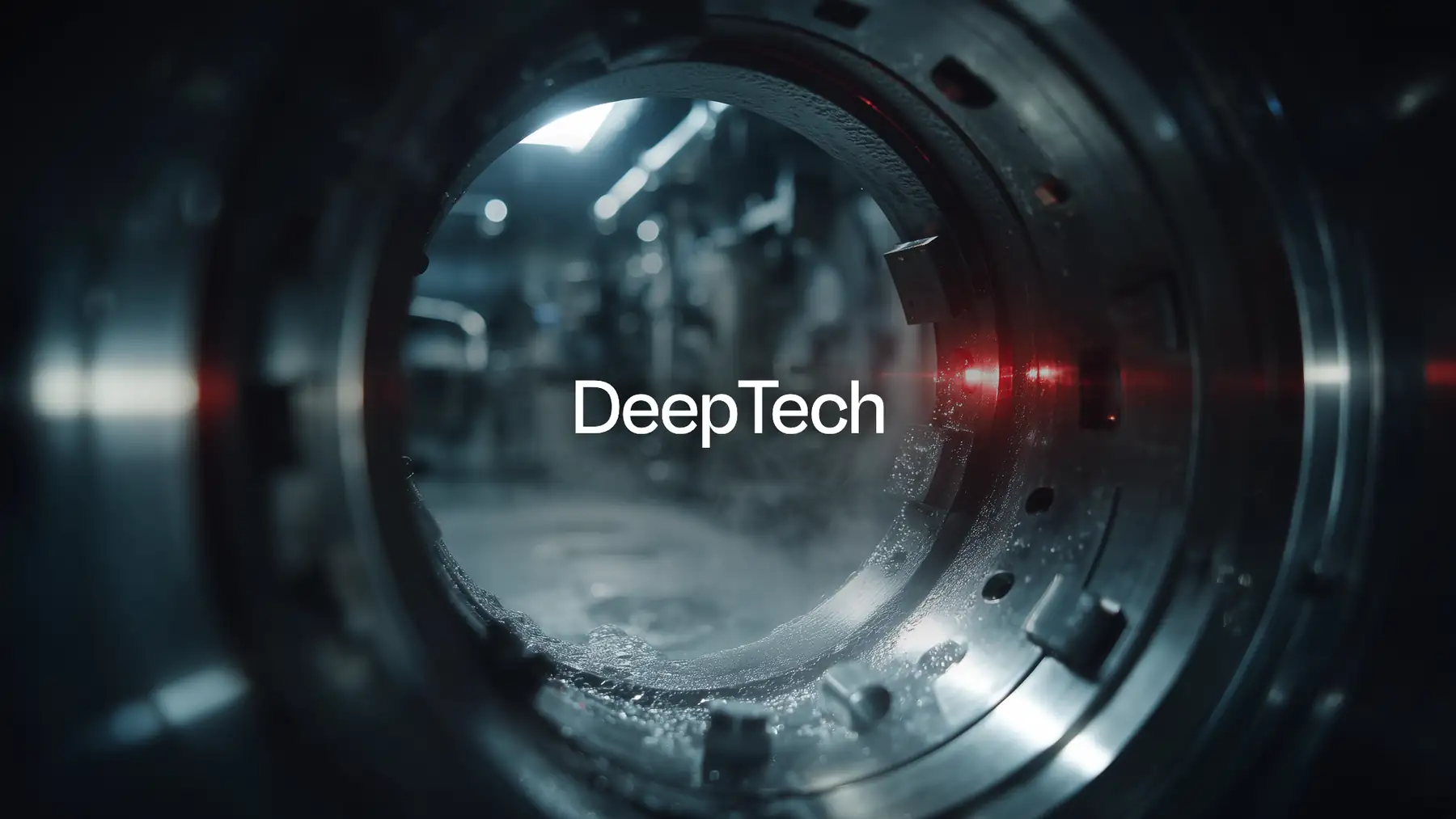
Why it matters
Most deeptech startups share the same problem: breakthrough technology, solid proof, yet a website that fails to make any of it legible to investors, partners, or enterprise buyers.
The problem
The technology is ready. The story that sells it usually isn't.
Where most deeptech websites fall short
Breakthrough technology rarely fails on the science. It fails on the page, when a website can't translate years of R&D into something an investor, a buyer, or a future hire can understand and trust in thirty seconds.
- The trap / 01
Too technical
Acronyms everywhere. The visitor gives up before they understand what you actually do.
- The trap / 02
No proof
Real technology, zero use cases or outcomes. There's nothing concrete to believe in.
- The trap / 03
Generic design
A SaaS template that signals lightness, when you need to signal rigor and depth.
- The trap / 04
Invisible tech
No diagrams, no architecture, no 3D. They never get to actually see the technology.
The deeptech market, in numbers
European deeptech is no longer niche. It's where the capital, the talent, and the scrutiny now concentrate. The bar for how you present your technology has never been higher. Standing out is no longer optional.
European VC, 2025
$20.3B
Invested in European deeptech in 2025, a record 32% of all VC. (Atomico / Dealroom)
Ecosystem value
$690B
The combined value of VC-backed European deeptech companies. (Dealroom, 2026)
Capital shift
36%
Of European VC went to deeptech in 2025, up from 19% in 2021. (Atomico / Dealroom)
First impression
50ms
The time a visitor takes to judge your site's credibility. (Stanford research)
- Pre-seed / Seed42%
- Series A25%
- Series B+22%
- Scale-up12%
Source: Sample data
Source: Sample survey, 2026
- 71%
- 16%
- 12%
- Desktop (71%)
- Mobile (16%)
- Tablet (12%)
Source: Sample analytics

03
Public sources behind the figures on this page (sample)
- 01Sample survey, 2026
- 02Sample analytics
- 03Sample data
We only publish figures we can trace: every number links back to a public report, dataset or survey.
How we work with DeepTech
We start by actually understanding your technology
We've built for Hylight (YC S23), Kestrix, and Skipper NDT. We read white papers, understand hardware and data pipelines, and we know what to keep, what to cut, and how to stage what's left.
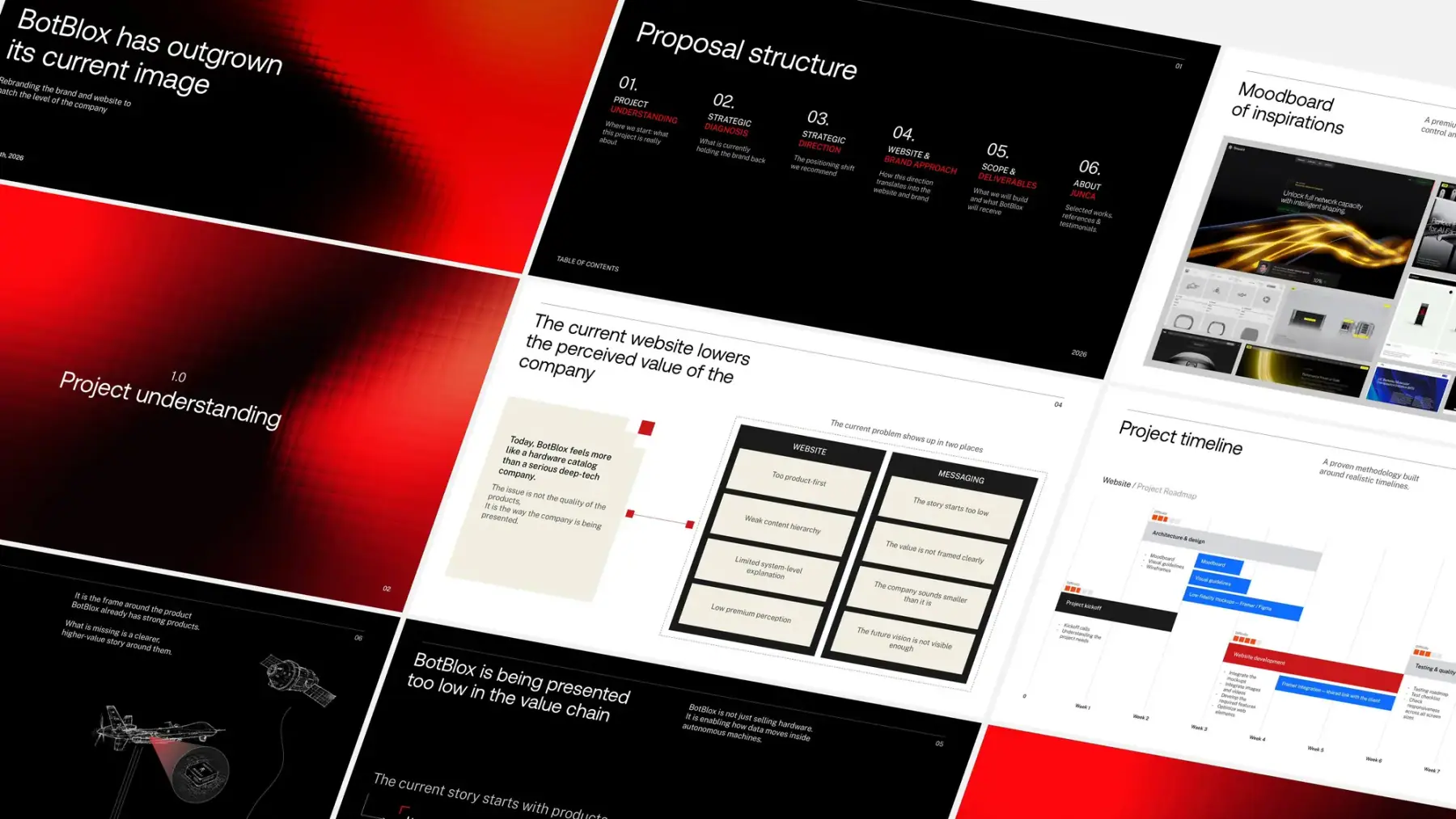
Kick-offResearch Step 01 / 05Brief & Immersion
We dig into your tech through your deck, publications and founder interviews before we design.
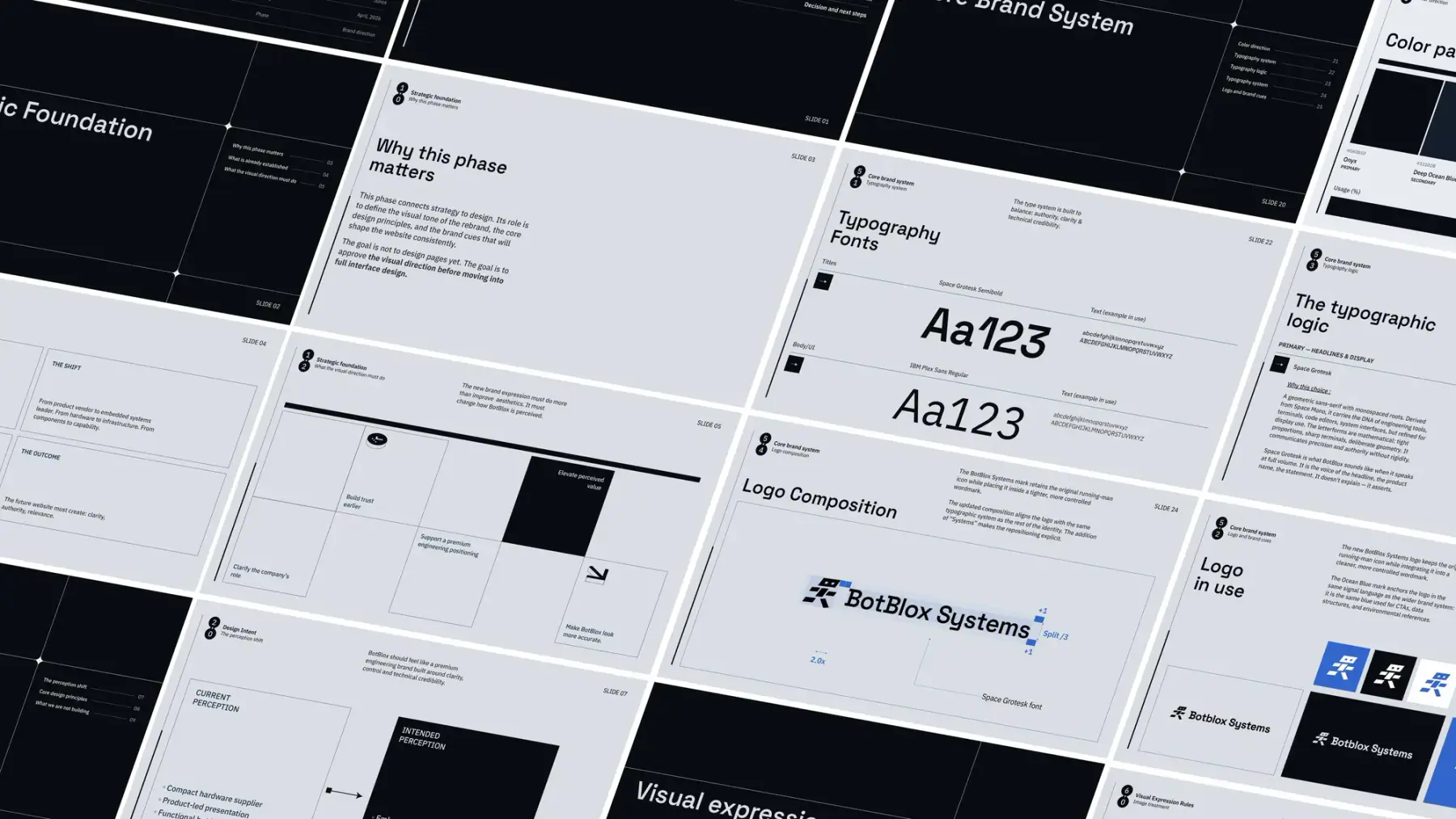
IdentityArt direction Step 02 / 05Branding & Art Direction
We craft your identity: logo, palette, typography, into a coherent, ownable direction.

UXStructure Step 03 / 05Wireframing
We map each page as a low-fidelity skeleton, locking the structure before any visuals.
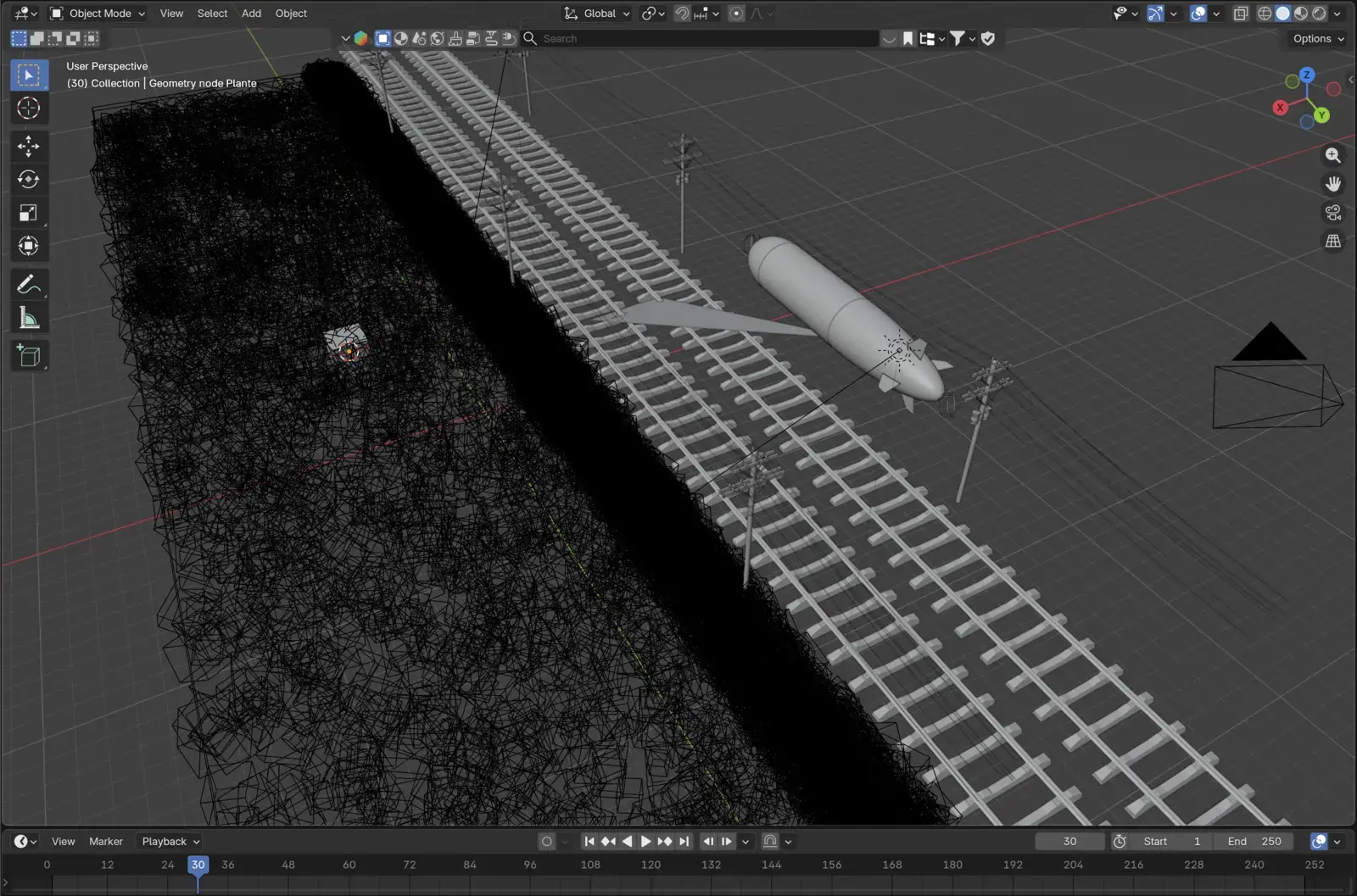
UI design3D & motion Step 04 / 05Design & 3D
We turn the brand into final UI, custom 3D scenes, and motion that brings it all to life.
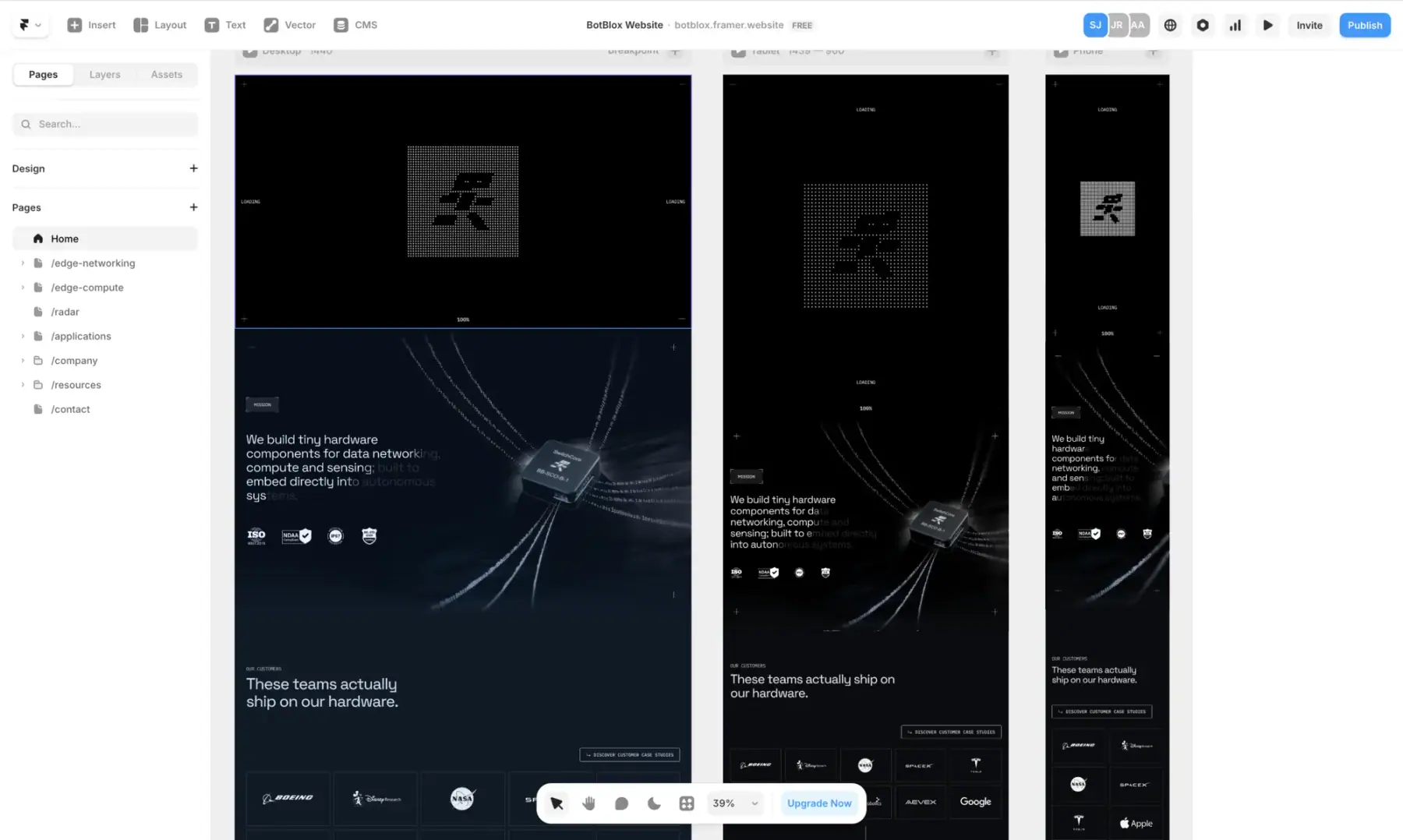
Astro · Next.js · FramerTechnical SEO Step 05 / 05Website Build & Integration
We ship a fast site on Framer, Astro or Next.js, with structured data and clean technical SEO.
Selected work
DeepTech projects we've shipped
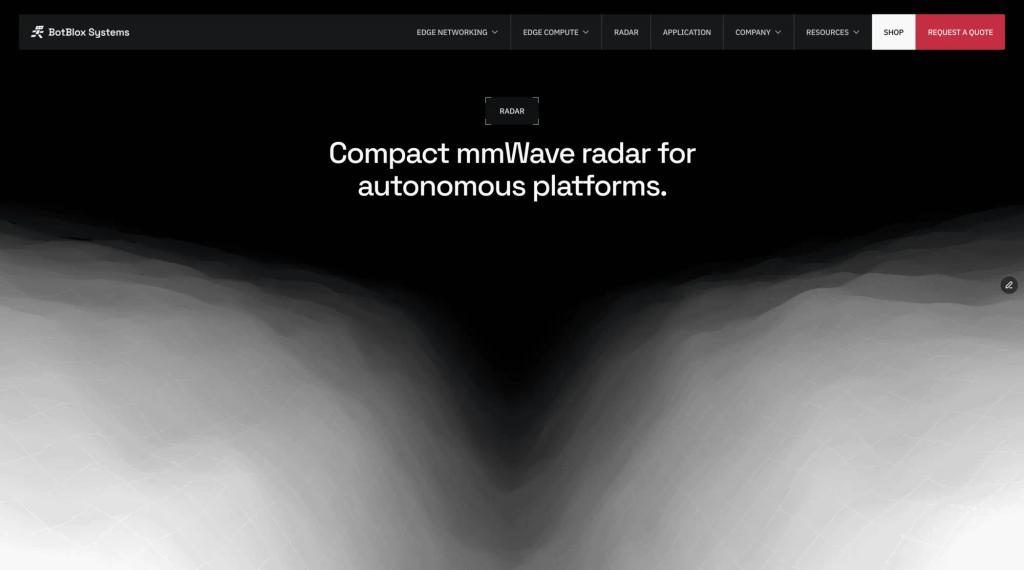
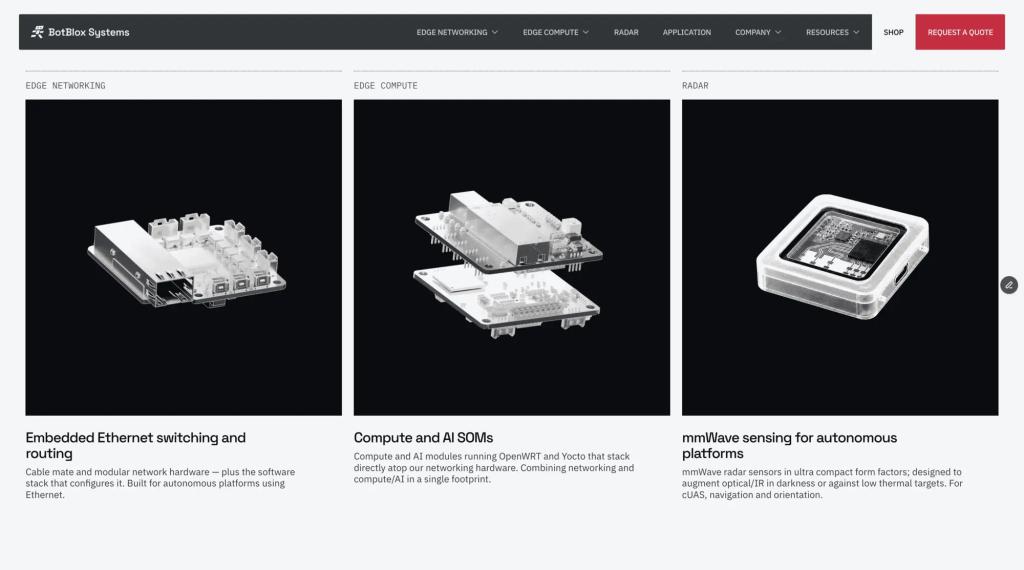
BotBlox: moving data where ethernet was never meant to run
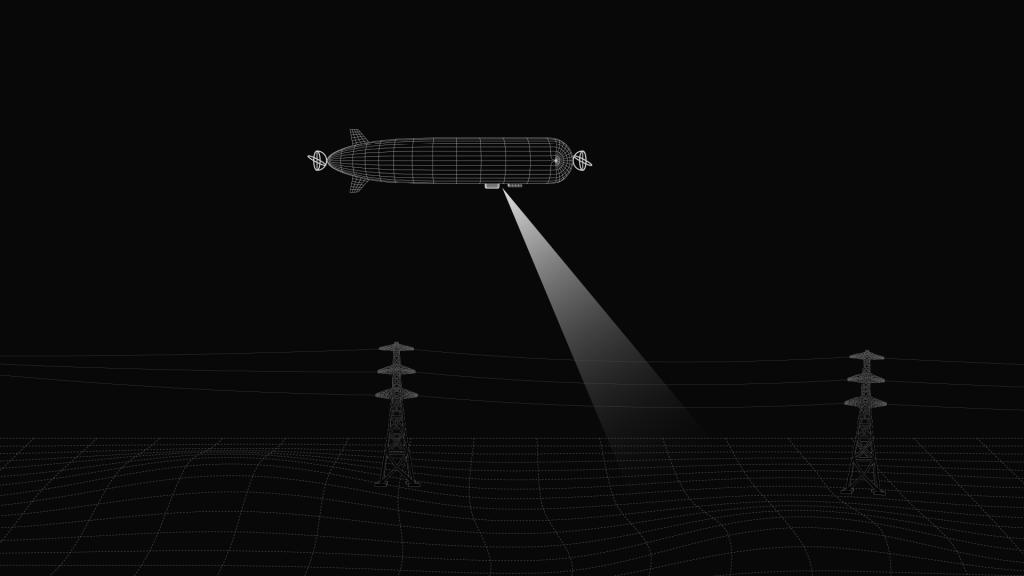
Hylight: an aerial inspection technology driven by design.

Skipper NDT: automating energy infrastructure maintenance
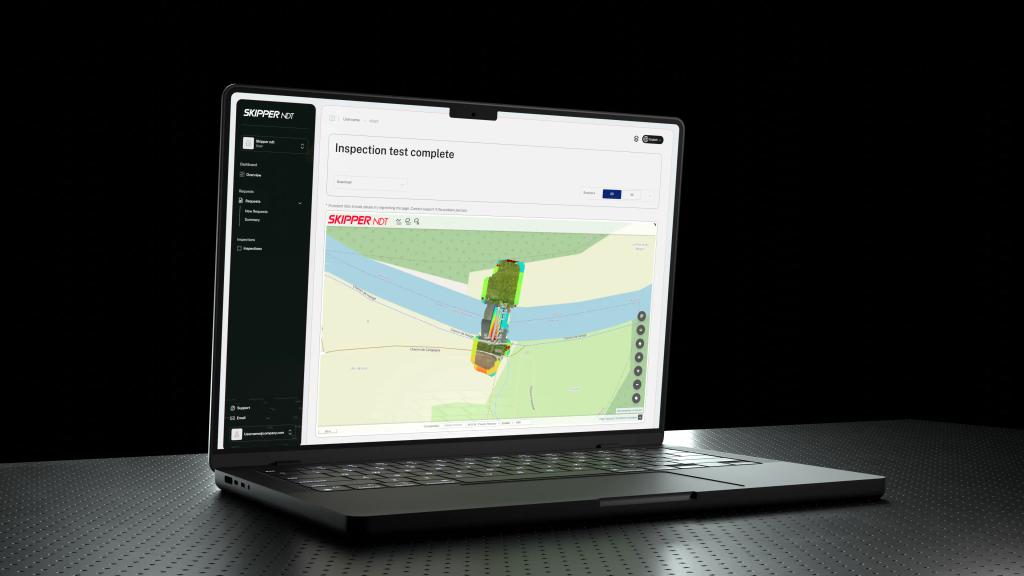
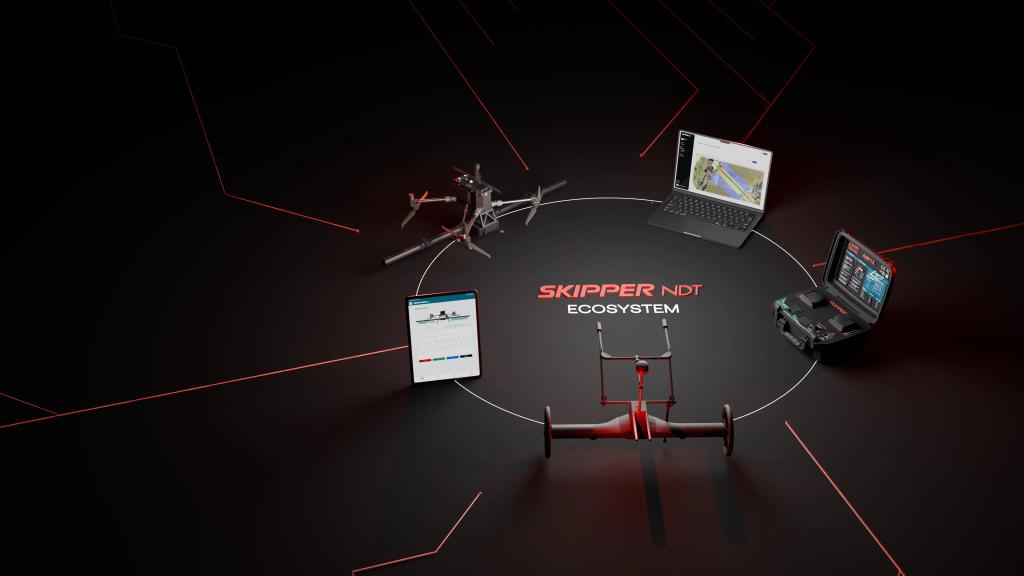
Kestrix: making thermal data readable to accelerate building retrofit
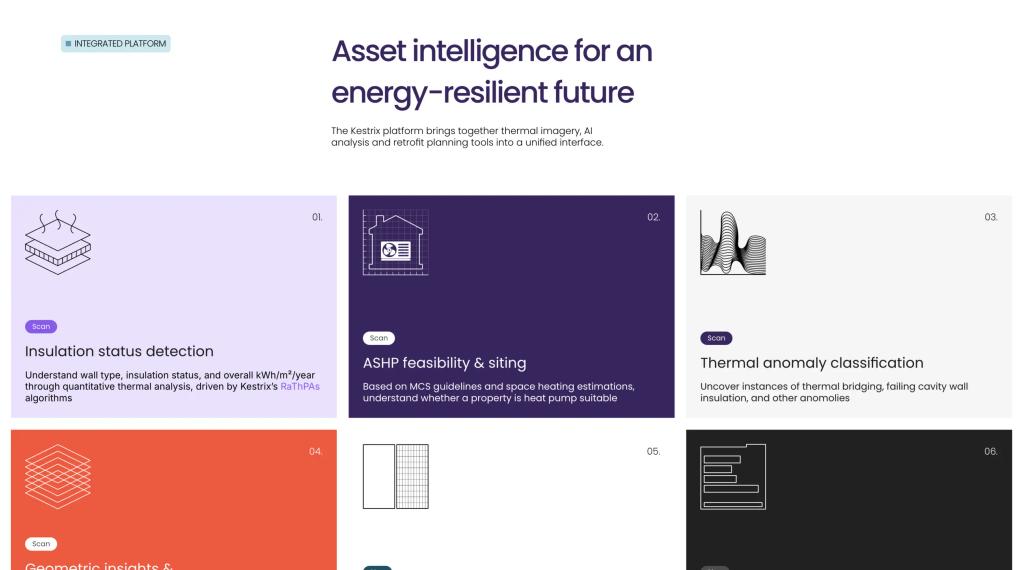
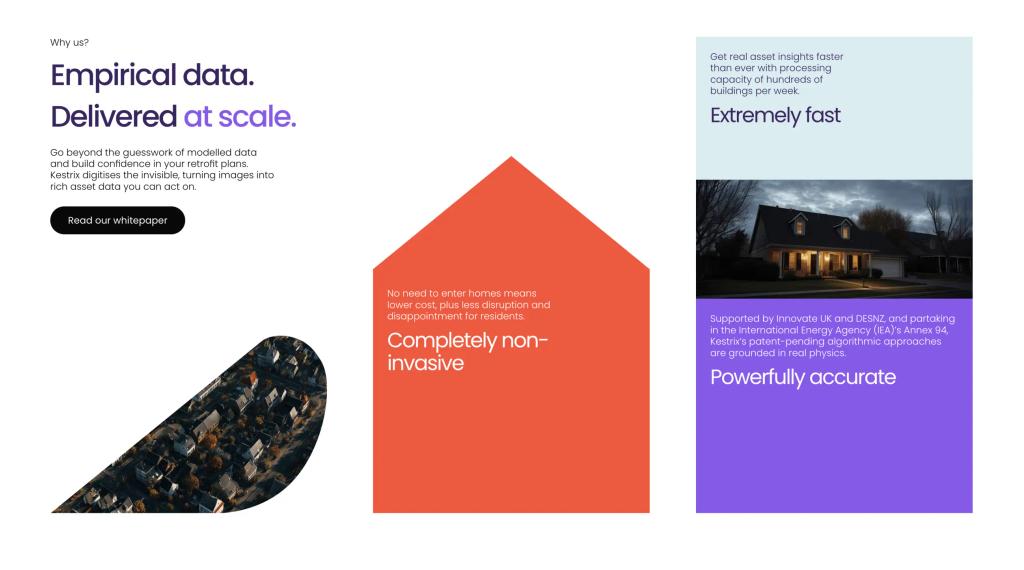
- Fundraising
- B2B sales pipeline
- Technical hiring
- Industrial partnerships
- Going international
How much does a deeptech startup website cost?
DeepTech websites start around $6,000 for a complete marketing site. The budget scales with custom 3D, page count and copywriting scope. The most ambitious projects, combining branding, WebGL and full technical storytelling, reach $20,000 and more. You get a detailed quote after a first call.
Can you build our website during a fundraise or accelerator batch?
Yes. We built Hylight's website during their Y Combinator batch (S23), under demo-day pressure. We know what investors check on a deeptech site: a value proposition they can repeat, a verifiable team page, and visible proof.
How do you explain complex technology without dumbing it down?
With a layered narrative: a plain-language sentence first, then the mechanism shown visually (3D, diagrams, scroll-driven animation), then specs and papers one click away. Generalist investors get it in seconds; technical reviewers find the depth they need.
Do you actually understand the science behind our product?
We're a team of designer-engineers. We read white papers and understand hardware, data pipelines and AI systems before designing anything. That's how we've built for hydrogen airships (Hylight), thermal mapping (Kestrix) and pipeline inspection (Skipper NDT).
How long does a deeptech website take?
Between 4 and 10 weeks. A standard marketing site takes 4–6 weeks; a project with custom 3D and full technical copywriting runs 8–10. We can compress for a funding deadline if you tell us early.
Why work with Junca for deeptech specifically?
Because deeptech is our core, not a side vertical: Hylight (YC S23), Kestrix and Skipper NDT trusted us to turn years of R&D into websites that investors, buyers and future hires understand in one scroll.
Other industries
Back to all industries